
How to Style a Linen Sofa: A Room-by-Room Guide to Getting It Right
A linen sofa changes the feel of a room the moment it arrives. The texture is different from anything else you own. It catches light unevenly, creases where you sit, and carries a softness that reads as deliberately imperfect. That quality is exactly what draws people to linen upholstery, and it is also what makes styling around it feel less straightforward than expected.
The challenge is not that linen is difficult to work with. It is that linen does something unusual: it relaxes everything around it. A room that felt balanced with a structured velvet sofa can suddenly feel unfinished when you swap it for linen. Cushions that looked intentional now look like afterthoughts. Side tables that held their own start to feel disconnected.
This guide covers how to style a linen sofa so that the room around it feels as considered as the piece itself. From cushion layering and colour palettes to lighting, side tables, and rugs, every suggestion here is grounded in what actually works in real rooms, not just in styled photographs.

Start with the Colour Palette, Not the Cushions
Most people reach for cushions first. That is the wrong starting point. A linen sofa has a naturally muted, textural presence, and the palette you build around it determines whether those cushions will land or compete.
For a white or cream linen sofa: Build outward in warm neutrals. Think oatmeal, soft clay, warm sand, and accents of muted olive or charcoal. Avoid anything too bright or saturated in the immediate vicinity of the sofa. Bright accent colours can work elsewhere in the room, but right next to linen they tend to make the fabric look washed out rather than refined.
For a grey or stone linen sofa: You have more range. Cool neutrals work naturally (concrete tones, soft blues, slate), but the real opportunity is introducing warmth through materials rather than colour. A natural oak side table, a rattan magazine rack, or a warm-toned rug beneath the sofa brings life without disrupting the palette.
For a terracotta, sage, or muted colour linen sofa: Let the sofa be the colour in the room. Keep surrounding pieces neutral and textural. The sofa itself becomes the focal point, and everything else supports it.
The principle across all three: linen works best when the palette around it feels tonal rather than contrasting. Subtle shifts in shade, not bold jumps.

Cushion Layering: Less Than You Think
Linen sofas invite a restrained approach to cushions. The fabric already has visual texture, so adding too many patterned or heavily textured cushions creates noise rather than depth.
The working formula for a two-seater linen sofa:
Three to four cushions, maximum. Two larger cushions (50x50cm or 55x55cm) placed at each end, and one or two smaller cushions (40x40cm or a lumbar) layered in front. This creates depth without clutter.
Materials that complement linen:
Bouclé adds a rounded, tactile contrast that sits beautifully against linen's flat weave. Washed cotton in a slightly different weight reads as layered without competing. Wool or cashmere-blend cushions bring warmth in cooler months. Velvet can work, but use it sparingly: one velvet cushion among linen and cotton reads as intentional; three velvet cushions overwhelm the sofa's character entirely.
Materials to use with caution:
Silk or high-sheen fabrics fight linen. The contrast is too stark. Heavily embroidered or beaded cushions can feel at odds with the relaxed quality of the upholstery. If your instinct is "this cushion would look amazing on Instagram," it may not be the right cushion for daily life with a linen sofa.
Colour approach:
Stay within two to three tones of your sofa colour. A Milk White linen sofa with cushions in oatmeal, warm grey, and a muted olive creates a layered, considered look. A Stone grey linen sofa with cushions in charcoal, cream, and soft rust brings warmth without jarring. Browse the textured cushion covers collection for tonal covers that layer against linen.
Arranging them:
Odd numbers read as considered rather than rigid, so three on a two-seater is the default. Offset them rather than centring one cushion between two matching ones: two at one end, one at the other. Then think in rows: larger, plainer cushions at the back for support, texture in the middle, and the one decorative piece at the front, where the eye lands first. If one cover is patterned, pick up at least one of its colours in the plain cushions around it, so the pattern reads as part of the palette rather than a stray.
On a pale linen sofa that might mean Sumi fringed linen covers in olive at the back, the Kohi herringbone cover in caramel for a denser texture, and the Edo patterned cover or the Ichi geometric cover at the front as the focal piece.

The Right Rug Beneath a Linen Sofa
A linen sofa without a rug beneath it will almost always feel like it is floating. The skirted base of many linen sofas (including designs like the Wabi Linen Sofa) already sits low and grounded, but a rug anchors the entire seating area and defines the space visually, particularly in open-plan rooms.
Size matters more than pattern. The rug should extend at least 15 to 20cm beyond each side of the sofa, and ideally sit beneath the front legs of any armchairs or side tables in the arrangement. A rug that is too small looks like an afterthought. When in doubt, go larger.
Pile and texture: A low to medium pile works best. High-pile shag rugs can look wonderful in a photograph but collect dust quickly under a sofa and create an uneven surface for side tables. Flat weave, jute, and low wool pile all complement linen's textural quality without competing.
Colour: Slightly darker than the sofa tends to work well. It grounds the piece visually and creates a natural hierarchy: rug as base, sofa as centrepiece, cushions as detail. A white linen sofa on a cream rug disappears; the same sofa on a warm taupe or soft charcoal rug gains presence.

Side Tables and Lighting: The Pieces That Complete the Picture
This is where many linen sofa arrangements fall short. The sofa looks right, the cushions are considered, and then the side table is an afterthought from a different visual language entirely.
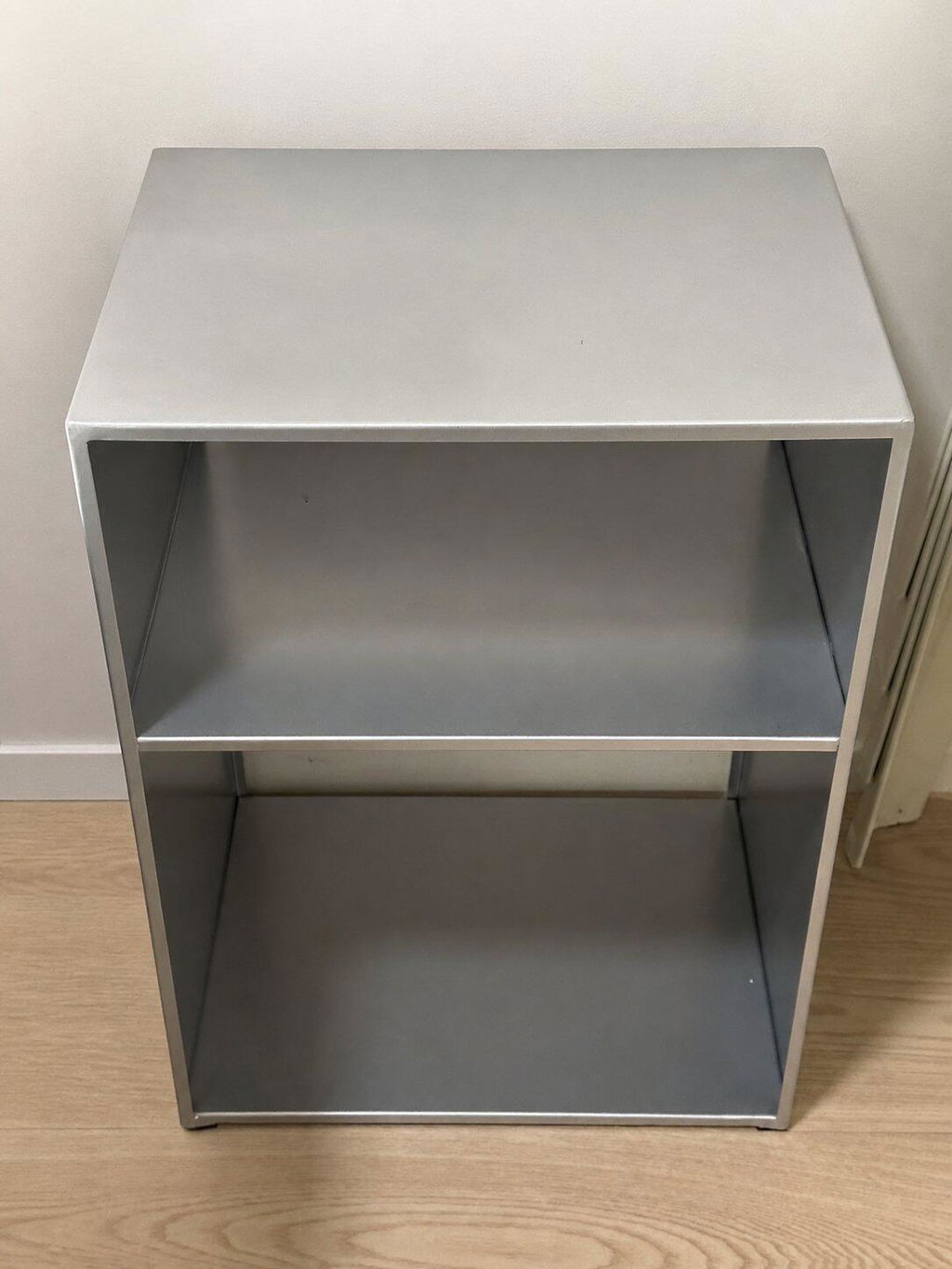
Side tables: The material of your side table should create a deliberate contrast with the linen. Linen is soft, yielding, and organic in texture. Place something with quiet structure beside it. A metal or brushed steel side table brings clean lines without heaviness. A rattan side table with a magazine rack introduces warmth and function. Solid oak or walnut anchors the corner with natural warmth.
The height should sit roughly level with the sofa arm. Too low and the table feels disconnected; too high and it dominates the sightline.
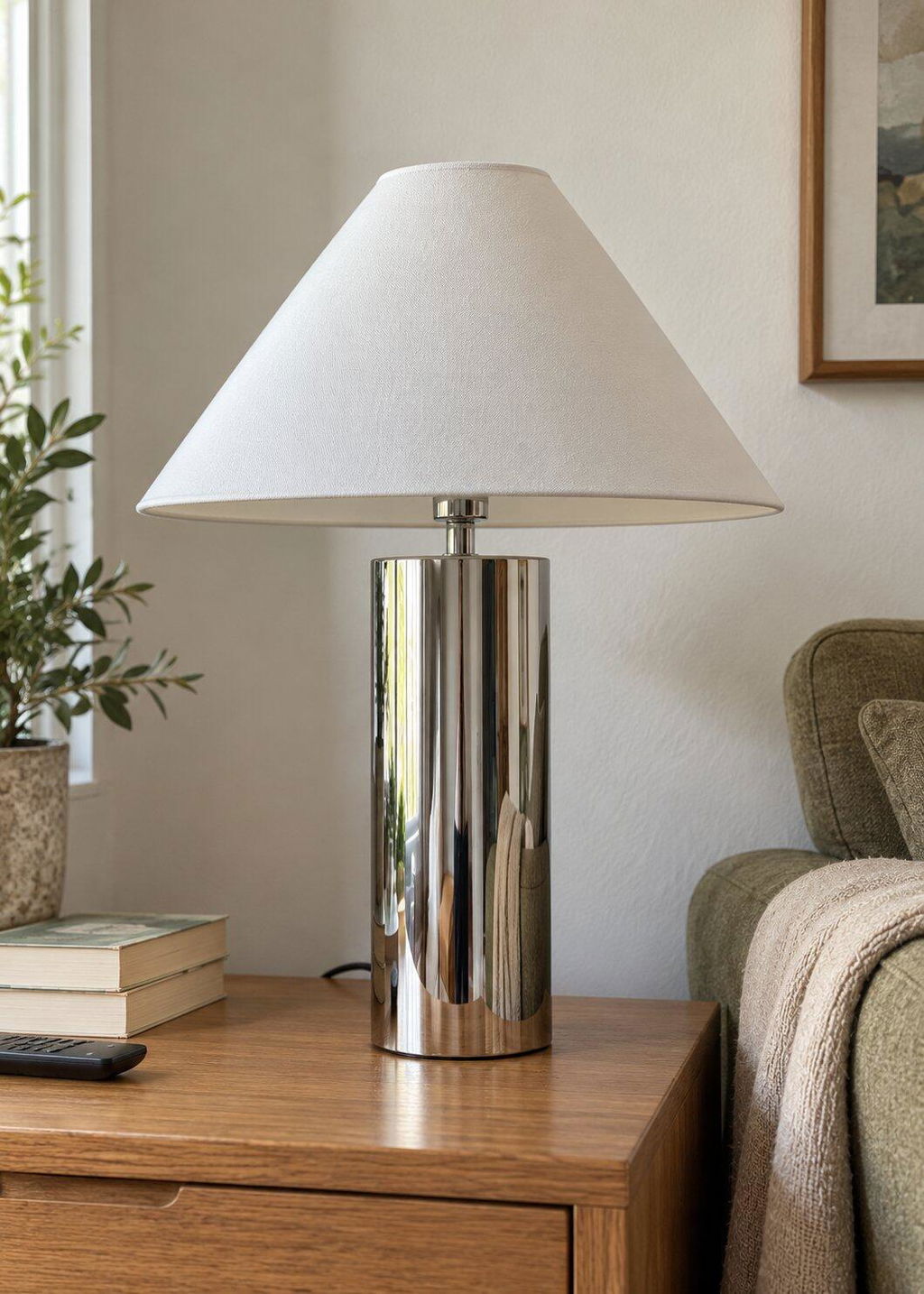
Floor lamps: A floor lamp beside a linen sofa does two things: it provides task lighting for the seating area, and it introduces vertical height to a composition that tends to sit low and horizontal. A slim chrome or brass column lamp, such as the Chrome Column Floor Lamp, works particularly well beside linen upholstery. The reflective surface plays against the matte texture of the fabric, and the vertical line draws the eye upward.
Avoid oversized lampshades that hang directly over the sofa. They crowd the space visually. A lamp that stands beside the sofa, not over it, preserves the openness that linen interiors depend on.
Coffee tables: Keep the proportions balanced. A linen sofa's low, relaxed profile pairs naturally with a coffee table that sits lower than standard (35 to 40cm rather than 45+). Materials that work: natural stone, light oak, concrete, or metal with a matte finish. Glass coffee tables can work but tend to feel slightly cold alongside linen's warmth.


Styling a Linen Sofa in Different Rooms
The Living Room
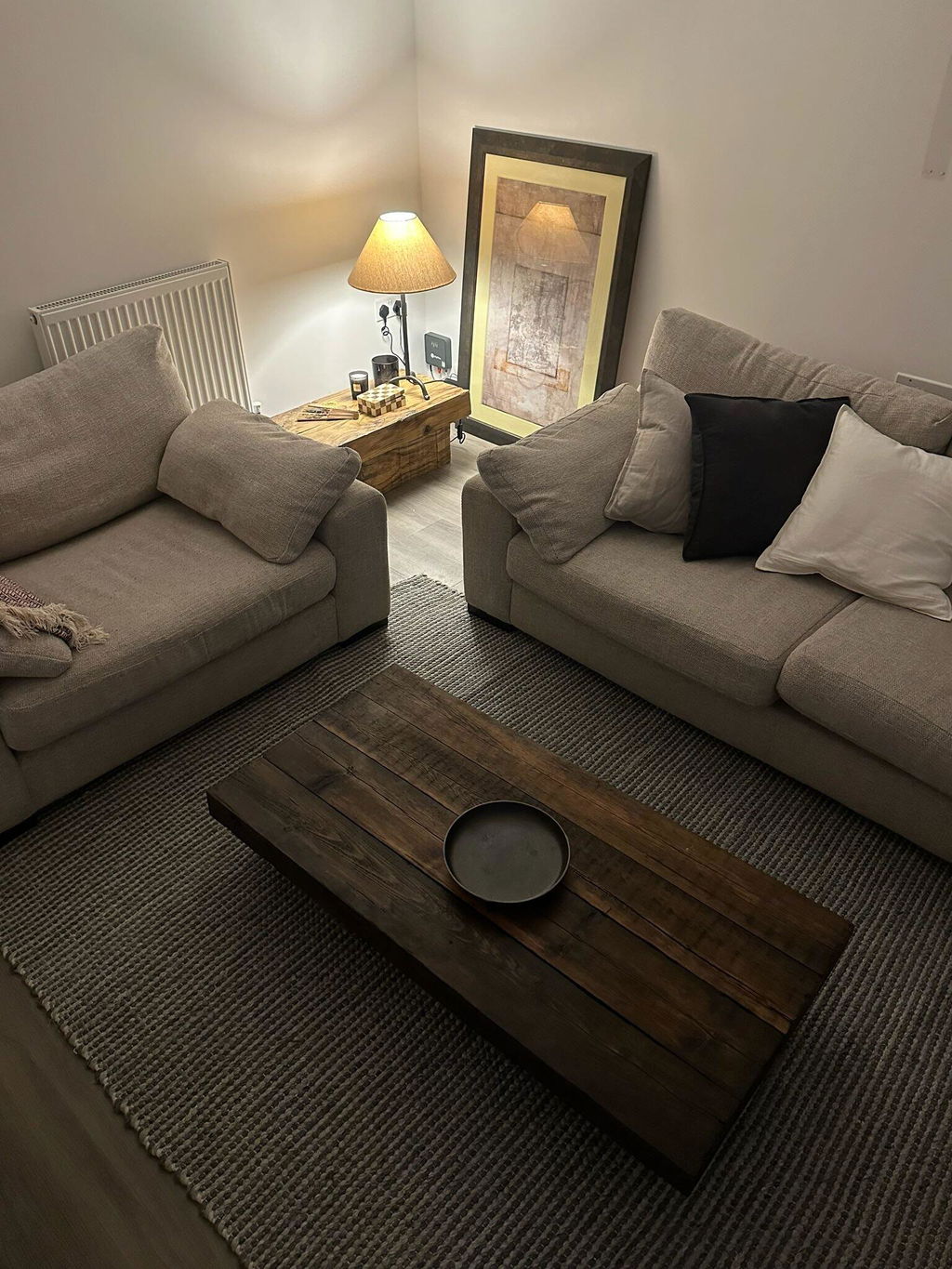
This is where most linen sofas live, and where the full styling toolkit comes into play. The key principle: create zones of texture and function around the sofa. A side table with a lamp on one end. A stack of two or three books on the coffee table. A throw folded (not draped) over one arm. Each element should feel placed, not scattered.
In a Japandi or Scandinavian-inspired living room, the linen sofa is often the largest textile in the space. Let it anchor the room. Keep walls relatively clear, use natural materials for surrounding furniture, and allow breathing space between pieces. For the full scheme around it, see our guide to Japandi living room ideas. If you are working with a deeper wall colour, our guide to dark Japandi covers how a stone or charcoal linen sofa anchors a moodier scheme.
The Bedroom
A linen sofa or armchair at the foot of a bed creates a reading corner that transforms the room from a place you sleep to a space you spend time in. Scale down: a single-seat linen armchair with one cushion, a small side table, and a reading lamp is enough. The key is that the linen on the seating piece connects with the bedding. If your bed has linen sheets or a linen duvet cover, the armchair extends that material language across the room.
The Home Office or Study
A single-seat linen armchair in a home office is the piece that gives you permission to step away from the desk. Keep the styling minimal here. One cushion, a small side table for a coffee cup, and good natural light. The linen texture softens what might otherwise feel like a purely functional room.
Throws and Blankets: The Finishing Layer
A throw on a linen sofa should add warmth, not decoration. The best throws for linen upholstery are lightweight, natural-fibre pieces that complement the fabric's breathability.
What works: Lightweight wool, washed cotton, or linen-blend throws in a tone one or two shades darker than the sofa. Fold it loosely over one arm or drape it across one seat cushion. One throw, one location. Two throws on a two-seater sofa is too much.
What to avoid: Chunky knit throws look appealing in styled photos but overwhelm a linen sofa visually. Faux fur or high-texture throws compete with the linen rather than complementing it. If the throw draws more attention than the sofa, it is doing too much.

Two-Seater or Single: Choosing the Wabi
If you are choosing the sofa as well as styling it, the Wabi two-seater measures W170 x D88 x H82cm and the Wabi single seat W82 x D88 x H82cm. Because the two share the same depth and height, they sit level with each other, which is what makes a pair feel composed rather than matched. Stone, a cool mid-grey, is the more forgiving colour in a busy family room; Milk White suits a light-filled room alongside natural timber. Both are made to order with a solid wood frame, linen upholstery and down filling.
Common Mistakes When Styling a Linen Sofa
Over-accessorising. Linen's beauty is in its restraint. Six cushions, two throws, a tray of candles on the coffee table, and a stack of magazines on the side table turns a considered space into a cluttered one. Edit ruthlessly. If you remove an item and the room feels better, it should stay removed.
Ignoring the crease. Linen creases. Fighting this with constant smoothing or overly structured styling works against the fabric's character. Style the room to embrace the relaxed quality of linen, not to apologise for it.
Matching everything. A linen sofa in cream with cream cushions, cream rug, and cream curtains reads as unfinished, not cohesive. Tonal does not mean identical. Introduce subtle shifts in shade, weight, and texture across the neutral palette.
Placing linen against high-gloss surfaces. A linen sofa beside a high-gloss TV unit or a mirrored coffee table creates a visual contradiction. One says relaxed and natural; the other says polished and reflective. The sofa will always look out of place. Choose matte, natural, or brushed finishes for surrounding furniture.

Caring for a Styled Linen Sofa
Once your linen sofa is styled, maintaining the look is straightforward. Vacuum the cushions and base weekly with a soft brush attachment. Rotate and flip cushions every two to three weeks to ensure even wear, particularly on down-filled pieces where the filling naturally settles. Plump down cushions daily by hand: thirty seconds of attention keeps the sofa looking full and inviting.
For throws and cushion covers, wash according to the fabric care label and replace seasonally if you want to shift the room's feel without changing the sofa itself. Swapping cushions from warm tones in autumn to cooler, lighter fabrics in spring is the simplest way to refresh the entire space. If a dog shares the sofa, our dog-friendly living room guide covers which fabrics hold up.
Frequently Asked Questions
What colour cushions go with a white linen sofa?
Warm neutrals work best: oatmeal, soft clay, warm grey, and muted olive or sage as an accent. Stay within two to three tones of white to keep the look cohesive. Avoid bright or saturated colours directly on the sofa, as they tend to make linen look dull by comparison.
Can you put a linen sofa in a south-facing room?
Yes. Linen handles light well and is naturally UV-resistant compared to many upholstery fabrics. Prolonged direct sunlight may soften the colour gradually over time, so rotate cushions periodically and consider sheer curtains or blinds during peak sun hours if you want to preserve the original shade.
How do you stop a linen sofa from looking messy?
You don't, entirely, and that is the point. Linen creases with use, and this gives it character. Keep the styling minimal, plump cushions daily, and fold throws neatly. A linen sofa with three well-placed cushions and a single folded throw looks effortlessly considered. The same sofa with six cushions and a draped blanket looks chaotic.
Is a linen sofa suitable for a family home?
Linen is one of the strongest natural upholstery fibres, and it resists pilling better than cotton or velvet. It is a practical choice for a family home, particularly in darker tones like stone or grey that are more forgiving with daily use. Treat the fabric with a protective spray after delivery, and address spills promptly by blotting with a dry cloth.
What style of rug goes best under a linen sofa?
Flatweave, jute, or low wool pile in a tone slightly darker than the sofa. The rug should extend at least 15 to 20cm beyond the sofa on each side. Avoid high-pile rugs, which collect dust under the sofa and create an uneven surface for side tables.
Shop the Look
Styling a linen sofa starts with the right piece. The Wabi Linen Sofa Collection is handmade with a solid wood frame, down filling, and a textured linen weave in Milk White or Stone. Available as a two-seater or single seat. Browse both in the linen sofa collection.
Complete the arrangement with pieces from the lighting collection.