
How to Arrange Cushions on a Sofa: A Guide for Every Size
Knowing how to arrange cushions on a sofa is less about buying more cushions and more about placing fewer of them well. The difference between a sofa that looks dressed and one that looks cluttered usually comes down to three decisions: how many, what size, and where each one sits. Get those right and the fabric, colour and pattern choices become much easier.
This guide works through those decisions sofa by sofa, from a compact two seater to a full corner sofa, then covers the layering, sizing and texture rules that apply to all of them.
One number to keep in mind before you start. Our own Wabi two seater is 170cm wide, and our cushion covers are all 45cm square. Three of them side by side take up 135cm; a fourth would take you to 180cm, wider than the sofa itself. That simple sum is why three is the ceiling on most two seaters, not a starting point for four.

How many cushions should go on a sofa?
Use the width of the sofa, not the size of the room, to decide. As a working guide:
- Armchair or single seat: one cushion, two at most if one is a lumbar.
- Two seater: two to three cushions.
- Three seater: three to five cushions.
- Corner sofa: five to seven cushions, depending on the length of each side.
Odd numbers are the usual default because they stop an arrangement looking stiff, but they are a habit rather than a law. A pair at each end of a long sofa can look calm and deliberate. What matters is that the arrangement looks chosen, and that there is still room to sit down.
How to arrange cushions on a 2 seater sofa
A two seater gives you very little width to play with, so restraint is the whole game. Two good options:
The offset three. Two cushions at one end, slightly overlapping, with a single cushion at the other end. Put the plainer, larger pair at the back of the group and let the single cushion be the more decorative piece. This is the arrangement we come back to most on our own sofa, because it looks relaxed without looking scattered.
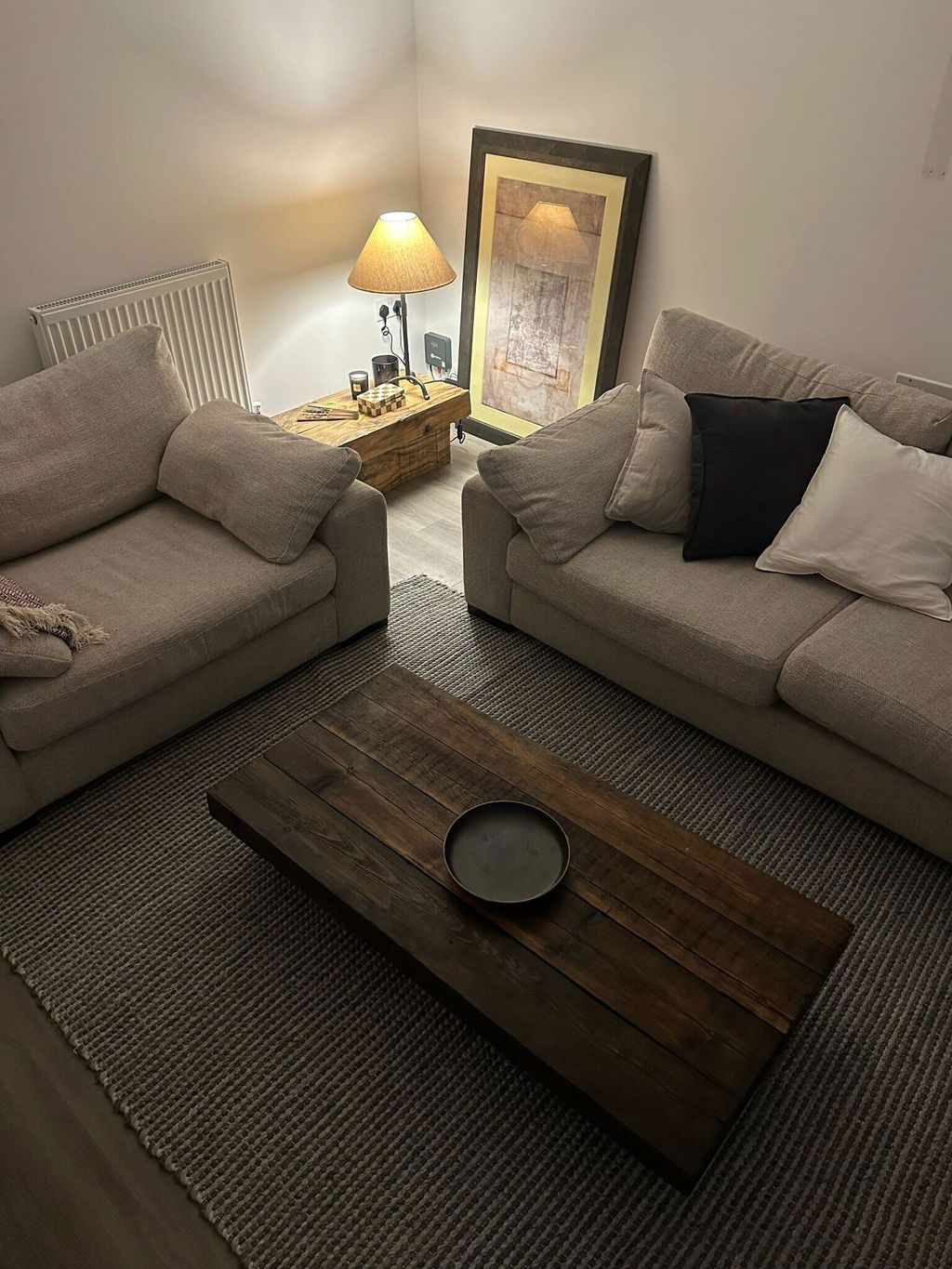
The simple pair. One cushion in each corner, the same size, in two different textures from the same colour family. A fringed linen cover in olive at one end and a herringbone chenille cover in caramel at the other reads as considered, where two identical cushions can look like they came with the sofa.
Avoid one cushion dead centre between two matching ones on a two seater. It splits the seat in half and makes the sofa look smaller.

How to arrange cushions on a 3 seater sofa
A three seater has room for a proper arrangement, and it is where the back, middle, front method (below) earns its keep.
Five cushions: a larger pair in each corner at the back, a medium cushion in front of each pair, and one decorative cushion at one end only. Leave the middle seat clear. That open centre is what stops five cushions from looking like a wall.
Three cushions: a pair at one end and a single at the other, as on a two seater, but with a wider gap between them. On a longer sofa this looks more relaxed than five, and it is the better choice if the sofa is used every day rather than kept for best.
Whichever you choose, keep the two ends related rather than identical. Repeat a colour or a fabric across both ends so the eye links them, but vary the size or pattern so they do not mirror each other exactly.
How to arrange cushions on a corner sofa
Corner sofas are where most arrangements go wrong, usually by spreading cushions evenly along every seat. Work from the corner outwards instead.
- Anchor the corner. The corner seat is the deepest and least used for sitting upright, so it takes your two largest cushions, angled slightly to fill the gap where the backs meet.
- Finish each end. Place one cushion, or a smaller pair, at the far end of each side. This frames the sofa and gives anyone sitting at the end something to lean on.
- Leave the runs clear. The seats between the corner and the ends can stay empty. Those are the seats people actually sit in, and cushions there just get moved to the floor.
- Use the corner for pattern. If you have one patterned cushion, put it at the corner, where it becomes the focal point of the whole sofa.
Five cushions suits most corner sofas: two at the corner, then a pair at one end and a single at the other. A large corner sofa with long sides can take seven.
Back, middle, front: how to layer cushions
Whatever the size of the sofa, a good arrangement has a logic from back to front.
Back row: the largest and plainest cushions. They support your back and form the backdrop. Plain linen in a tone close to the sofa works well here.
Middle row: texture. A herringbone, a chenille or a woven cover adds depth without adding noise.
Front row: the one decorative piece, because it is the first thing the eye lands on. A patterned cover such as the Edo cover in Maillard brown or the Ichi geometric cover in walnut belongs here, not hidden at the back.
The layering is practical as well as visual. You can lift the front cushion off when you sit down without dismantling the whole group.

Choosing cushion sizes and inserts
Varying size is what gives an arrangement depth. On a larger sofa, a common combination is 60cm cushions at the back, 50cm in the middle and 45cm at the front. On a two seater or a low sofa, 45cm works well as the main size throughout, because larger cushions eat into the seat depth.
A detail that changes everything: the insert. In our view an insert one size up from the cover, so a 50cm insert in a 45cm cover, is what makes a cushion look full rather than limp. It holds its shape, takes a soft chop at the top if you like that look, and does not slump into the corner of the sofa by the afternoon. Feather inserts give the most relaxed, slouchy finish; fibre inserts hold a firmer shape.

Mixing texture, colour and pattern
Start with texture, then colour, then pattern, in that order.
Texture first. A sofa dressed in one fabric throughout looks flat even when the colours are right. Pair a flat linen with something with more structure: a herringbone, a chenille or a jacquard weave. The contrast is what gives the arrangement depth.
Colour second. Stay within one colour family, or a run of closely related warm neutrals. Cream, caramel, chocolate and olive sit together easily because they share the same underlying warmth. Choose cushions to suit the sofa first and the room second; the upholstery is the backdrop every cushion is seen against.
Pattern last. One or two patterned cushions is plenty. To make a pattern sit comfortably, pick up at least one of its colours in the plain cushions around it, so it reads as part of the palette rather than a stray.

Arranging throws and cushions together
A throw is part of the arrangement, not an extra. Put it at the opposite end from your largest group of cushions, so the two balance each other. Fold it into thirds and lay it over the arm or across one seat, rather than draping it over the back, where it competes with the cushions. One throw is enough on a two or three seater; a corner sofa can take one at the end of the longer side.

For the wider room around a pale sofa, including rugs, lighting and side tables, our guide on how to style a linen sofa covers the full picture, and our Japandi living room guide takes the same calm approach to the whole scheme.
Shop the look
All of our cushion covers are 45cm square, so they layer together easily in any of the arrangements above. Inserts are sold separately.
- Sumi fringed linen cushion covers, olive, set of 2
- Sumi fringed linen cushion covers, chocolate, set of 2
- Kohi herringbone cushion cover, caramel
- Shop all textured cushion covers
- Shop linen sofas
Frequently Asked Questions
How many cushions should you put on a 3 seater sofa?
Three to five. Five suits a sofa kept for best: a large pair at each end with a medium cushion in front, plus one decorative piece at one end, leaving the middle seat clear. Three suits a sofa used every day: a pair at one end and a single at the other.
How do you arrange cushions on a corner sofa?
Work from the corner outwards. Put your two largest cushions in the corner, angled to fill the gap where the backs meet, then finish each end with a single cushion or a smaller pair. Leave the seats in between clear, because those are the seats people sit in.
Should cushions on a sofa be symmetrical?
They do not need to be. An asymmetric arrangement, such as two cushions at one end and one at the other, usually looks more relaxed. Symmetry works on a long sofa in a formal room, but keep the two ends related in colour rather than identical.
How do you arrange scatter cushions on a leather sofa?
Use fewer cushions and choose textured fabrics such as linen, chenille or wool, which contrast well with smooth leather and are less likely to slide. Fuller inserts help too, because a firm cushion stays upright against a slippery back.
What size cushion insert should I use?
One size up from the cover, so a 50cm insert in a 45cm cover. The cushion looks fuller, holds its shape longer and does not slump into the corner of the sofa.