
How to Style a Holiday Let
The booking decision for most short-let properties is made in under ten seconds, based almost entirely on the listing photos. Guests are not reading your description first. They are scrolling images, and they stop when something looks genuinely different from the forty properties they have already passed. Knowing how to style a holiday let is, in practical terms, knowing how to make a property photograph well enough to stop that scroll.
Japandi is the aesthetic that does this most consistently. Its combination of natural materials, muted tones, and deliberate negative space produces images that read as calm and considered rather than busy or over-styled. It is not trend-dependent in the way that maximalist or heavily coloured schemes are, which means a Japandi short-let will look as relevant in three years as it does today. If you are weighing it against a glossier, more polished look, our guide to Japandi vs quiet luxury explains why Japandi's natural materials tend to age better under guest use. And because the aesthetic is still underrepresented in the UK short-let market, a property styled this way stands out visibly against the sea of grey sofas and generic scandi-lite interiors that dominate most listing platforms.

Why Japandi photographs better than other aesthetics
Photography flattens a room. Texture, depth and material quality are all compressed into a two-dimensional image, which is why spaces that rely on colour or pattern to create interest often look ordinary in photos while rooms built around texture and natural light look exceptional.
Japandi's material palette: linen, oak, ceramic, woven hemp, brushed steel, plays directly to this. Each material has a surface quality that reads in photography even when colour does not. A hand-thrown ceramic vase catches light differently across its uneven glaze. A woven hemp pendant casts a pattern of shadows. A linen sofa holds the creases of its weave. These are the details that make a listing image stop a viewer mid-scroll, and they cost far less to achieve than a full renovation. The same logic carries over when a home goes on the market: see our guide to home staging in Japandi style.

The living area: your hero shot
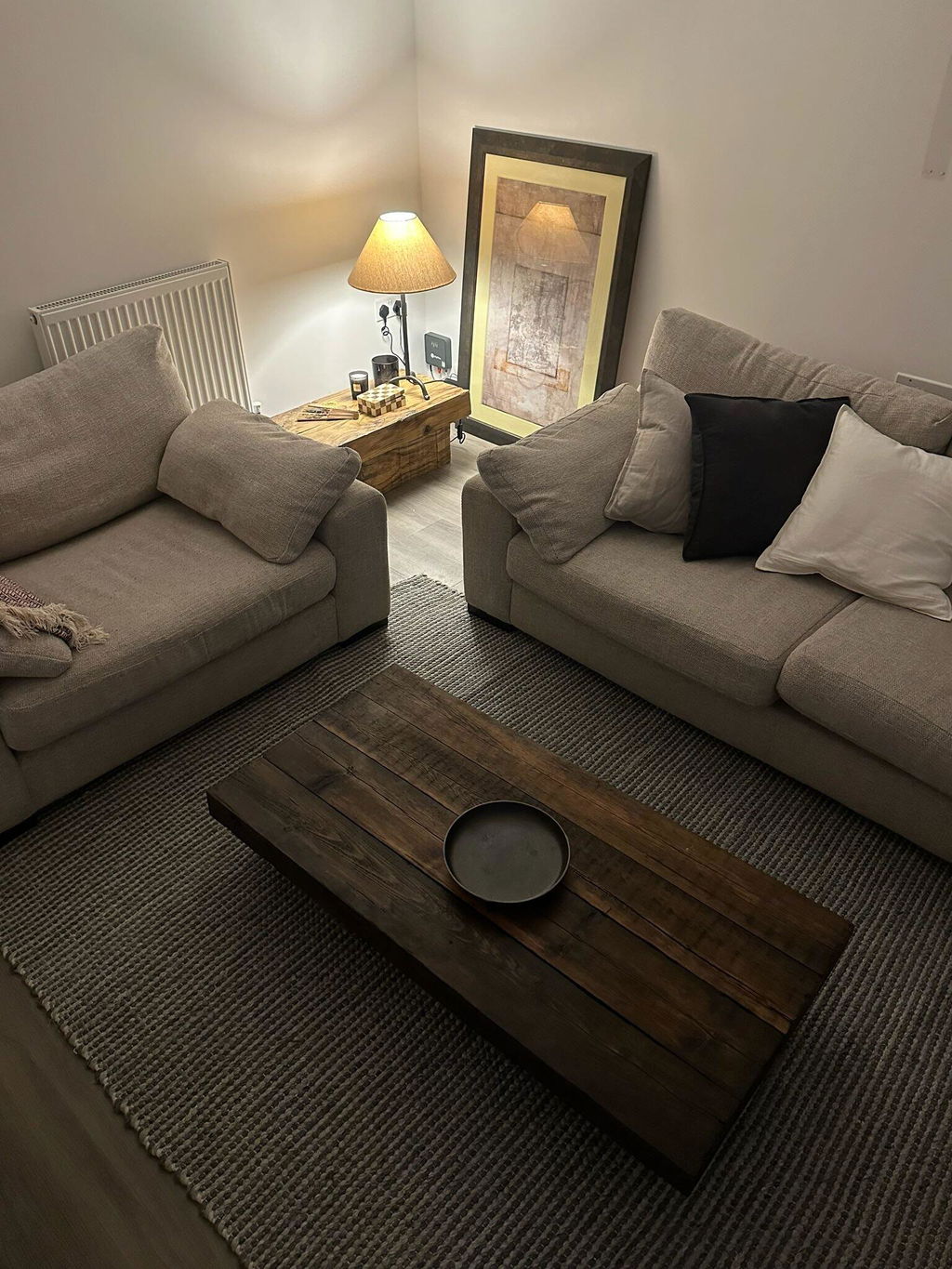
The living area image is the one that leads your listing and carries the most weight in a guest's first impression. It needs to communicate comfort, cleanliness, and a clear point of view in a single frame.
Start with the sofa. It is the largest piece in the room and the one that sets the aesthetic register for everything else. The Wabi Linen Sofa in Milk White works particularly well in short-let photography because the pale linen reflects light cleanly and reads as fresh rather than stark. Style it with two or three cushions in a warm-neutral palette: the Sumi Fringed Linen Cushion Covers in olive add texture and a grounding earth tone without competing with the sofa. For more guidance on building out the full sofa look, our post on how to style a linen sofa covers this in detail.

Add one accent chair to the opposite side of the room from the sofa. The Aki Rattan Cane Lounge Chair is the right piece here: the low profile and hand-woven backrest read as considered and unusual in a listing photo, the kind of detail that makes a guest think "this place has been properly designed." It also photographs well from multiple angles, which matters when you are shooting the room from different positions.

Keep the coffee table clear except for one or two considered objects. A tray with a candle, a small plant, a book left open on a stand. The Hon Crossed Wooden Book Stand is the kind of detail that reads as personal without being intrusive, which is exactly the register a short-let living room needs.

The bedroom: where five-star reviews are earned
Guests rate their stay based on how they feel when they wake up. The bedroom is where that experience is formed, and it is disproportionately responsible for your review score relative to its share of the listing photos.
In a Japandi bedroom the brief is calm. Nothing should draw attention to itself; everything should contribute to a sense of quiet. White or warm-white linen bedding is the foundation. Layer a textured throw at the foot of the bed in a complementary tone: caramel, chocolate, or stone. Two cushions at the head in a contrasting texture, not print.
A full-length mirror is a practical requirement that doubles as a design statement. The Mizu Floor-Standing Mirror in brushed steel earns its place in both functions: guests need a full-length mirror, and in the listing photo it reflects light back into the room and makes the space feel larger than it is. At £510 it is one of the highest return-on-investment pieces you can put in a short-let bedroom.

Keep surfaces deliberately sparse. A bedside lamp, a small ceramic object, and nothing else. Clutter in a bedroom listing photo reads as insufficient storage, which guests interpret as a practical problem even when it is not.
Lighting: the fastest way to lift your listing photos
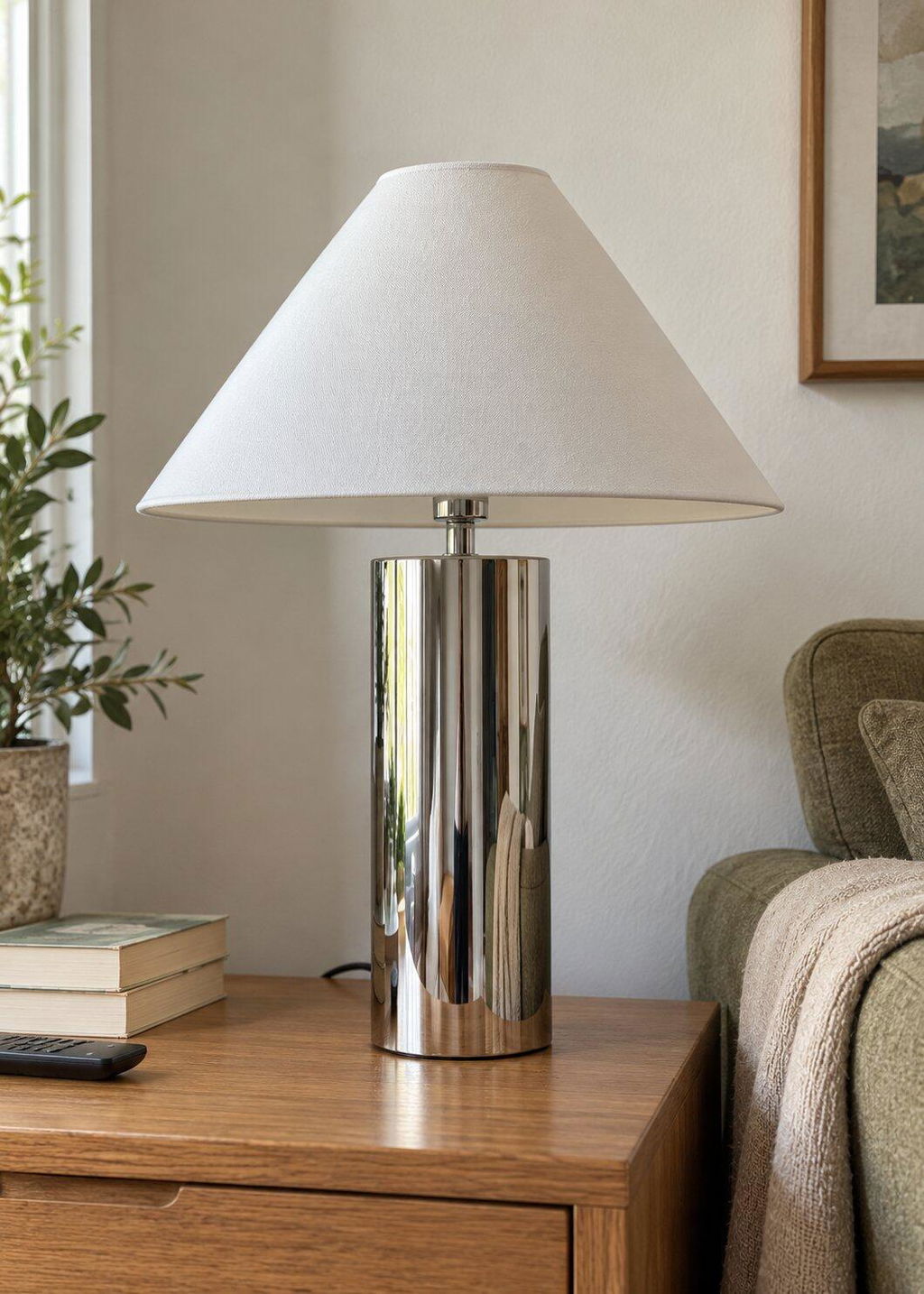
Most short-let properties are photographed with overhead lighting on and all other lights off, which is exactly the wrong approach. Overhead lighting flattens a room and removes all the warmth and shadow that makes a space feel inviting. The properties that look exceptional in listing photos almost always have layered lighting: a pendant, a floor lamp, and a table lamp or candles, all running simultaneously during the shoot.
A statement pendant in the living area or dining space is the single most impactful lighting investment for a short-let. The Kumo Gathered Fabric Pendant at £580 has a gathered, hand-finished fabric shade that diffuses light into a soft, even glow. It is distinctive enough to be a recognisable feature of your listing photos, which helps returning guests identify the property and gives new guests a design reference point that signals quality.

For the bedroom and living corners, a floor lamp provides the secondary light source that separates a well-photographed space from a flat one. The Kose Fabric Floor Lamp at £690 delivers the soft, diffused warmth that characterises Japandi interiors. Specify warm white bulbs throughout at 2700K; this temperature flatters every surface and reads as inviting rather than clinical in photos. If your let targets autumn and winter bookings, a deeper, moodier scheme photographs especially distinctively; our guide to dark Japandi covers the palette and low warm lighting it needs.

Tableware and kitchen details
Self-catering guests pay close attention to the kitchen and tableware, partly because they will use it daily and partly because it signals how much care has gone into the property overall. A short-let with beautiful tableware feels like a host who thought about every detail. A short-let with mismatched mugs and chipped plates feels neglected even when everything else is well-designed.
The Yume Stoneware Dinner Set at £120 for twelve pieces provides a complete service for four in cream white stoneware that is both practical and visually coherent. It stacks cleanly, washes well, and the square profile means it photographs well on a set table. Pair it with the Sui Embossed Steel Serving Tray at £30, which works as a breakfast tray, a kitchen organiser, and a decorative element on the worktop simultaneously. Small purchases like this have an outsized effect on guest perception. For the wider look around them, our japandi kitchen ideas guide covers the palette, the materials and keeping worktops clear.

The finishing details that photograph best
Once the furniture and lighting are in place, the final layer is the objects that give a Japandi short-let its personality. These are the details guests photograph and share, and the ones that appear in the review photographs that future guests use to verify that a property looks as good in person as it does in the listing. The materials that photograph best are the same ones that survive guest turnover; our guide to wabi-sabi in commercial design explains why natural linen, timber and hand-thrown ceramic read as premium in listing photography.
Keep to a tight palette: natural ceramic, brushed steel, living plants, and one or two pieces with visual weight. A ceramic vase of real substance, a candle holder, a plant. Avoid collections of small objects that create visual noise; three considered pieces will always outperform ten random ones. The Tsuchi Stoneware Chamberstick at £30 and a textured stoneware planter with a trailing plant are the kind of additions that cost very little and read very well in photographs.

What to avoid
Motivational wall art. It dates quickly, reads as generic in photos, and appeals to nobody in particular. If you want something on the walls, choose one unframed canvas or a single piece of art with real presence over a gallery wall of prints.
Feature walls in bold colours or busy patterns. They photograph well in the week after decoration and dated within two seasons. Japandi's muted palette holds its relevance because it is not anchored to a trend cycle.
Too much of the same material. An all-rattan room, an all-linen room, an all-white room: each reads as underdeveloped. The contrast between materials is what creates visual interest. Mix linen with woven hemp, ceramic with brushed steel, pale wood with dark textile.
Excessive personal touches. Framed family photos, ornaments with obvious personal significance, specific sports team memorabilia: these make a guest feel like they are borrowing someone else's home rather than staying somewhere designed for them. A Japandi approach is by definition impersonal in the best possible way: neutral enough for any guest, considered enough to feel like a destination.

A Japandi short-let checklist
Use this as a room-by-room reference before your listing photos and before each new guest arrival.
Living area
- Sofa styled with an odd number of cushions in a tonal palette
- Coffee table clear except for one tray and one or two objects
- Accent chair positioned to create a conversation area, not pushed against a wall
- Floor lamp switched on for photos, positioned to create a warm corner
- No visible cables, remotes, or chargers
Bedroom
- Bedding freshly pressed, centred on the bed, with a throw at the foot
- Two cushions at the headboard, removed before guest arrival if preferred
- Bedside surfaces clear except for a lamp and one small object
- Full-length mirror clean and positioned to reflect natural light
- Wardrobes and drawers emptied of owner storage
Kitchen and dining
- Tableware complete and matched; replace any chipped or mismatched pieces before listing
- Worktops clear except for one or two considered objects (tray, plant, oil and salt)
- Dining table set for photography even if guests will reset it on arrival
Throughout
- All bulbs warm white, 2700K to 3000K
- All overhead lights off, all lamps and pendants on for listing photos
- Plants watered and healthy; remove any that are struggling
- Scent neutral before arrival; avoid heavy air fresheners
Shop the spec
Key pieces from this guide are available now. Browse the full new arrivals for the complete range, or visit the trade page if you are furnishing multiple properties.
- Wabi Linen Sofa Two Seater, Milk White from £2,300
- Kumo Gathered Fabric Pendant Light from £580
- Yume Stoneware Dinner Set, 12 Piece from £120
Frequently Asked Questions
How do I style a holiday let to increase bookings?
Focus on the listing photos first. Choose an aesthetic that photographs well: Japandi's natural materials and muted palette are particularly effective because they read as calm and considered in images. Layer your lighting (pendant, floor lamp, table lamp) rather than relying on overhead lighting, and keep surfaces deliberately clear. A well-photographed living area and bedroom will do more for your occupancy rate than any description you write.
Is Japandi a good style for an Airbnb or short-let?
Yes, for several reasons. The aesthetic is photogenic, durable, and not anchored to a trend cycle that will date it quickly. Natural materials like linen, oak and ceramic age well under guest use. The muted, neutral palette appeals to a wide range of guests rather than a specific taste. And the style is still underrepresented in the UK short-let market, which means a Japandi property stands out clearly in platform search results.
What furniture is best for a short-let property?
Prioritise pieces made from durable natural materials: solid wood rather than veneer, tightly woven fabrics rather than lightweight linen, ceramic and steel rather than painted finishes. Choose pieces that are easy to clean and do not show minor wear quickly. A statement sofa, a distinctive accent chair, and a full-length mirror in the bedroom will give you the most return per pound spent on listing photo quality.
How much should I spend on furnishing a holiday let?
The right budget depends on your nightly rate and occupancy target. As a rough guide, properties charging £150 or more per night in the UK typically need to invest £8,000 to £15,000 in furniture and decor to compete at that level. Prioritise the living area and bedroom, as these are the spaces that appear most in listing photos and matter most to guest experience. Kitchen and tableware have a disproportionate effect on review scores relative to their cost.
What makes a short-let property photograph well?
Layered lighting rather than overhead-only, clear surfaces with a small number of considered objects, and a coherent material palette throughout. Shoot with all lamps and pendants on and all overhead lights off. Style the space as if a guest has just stepped out: beds made, tables set, cushions arranged. Remove anything that reads as personal or cluttered. The goal is a space that looks inhabited but not lived-in.