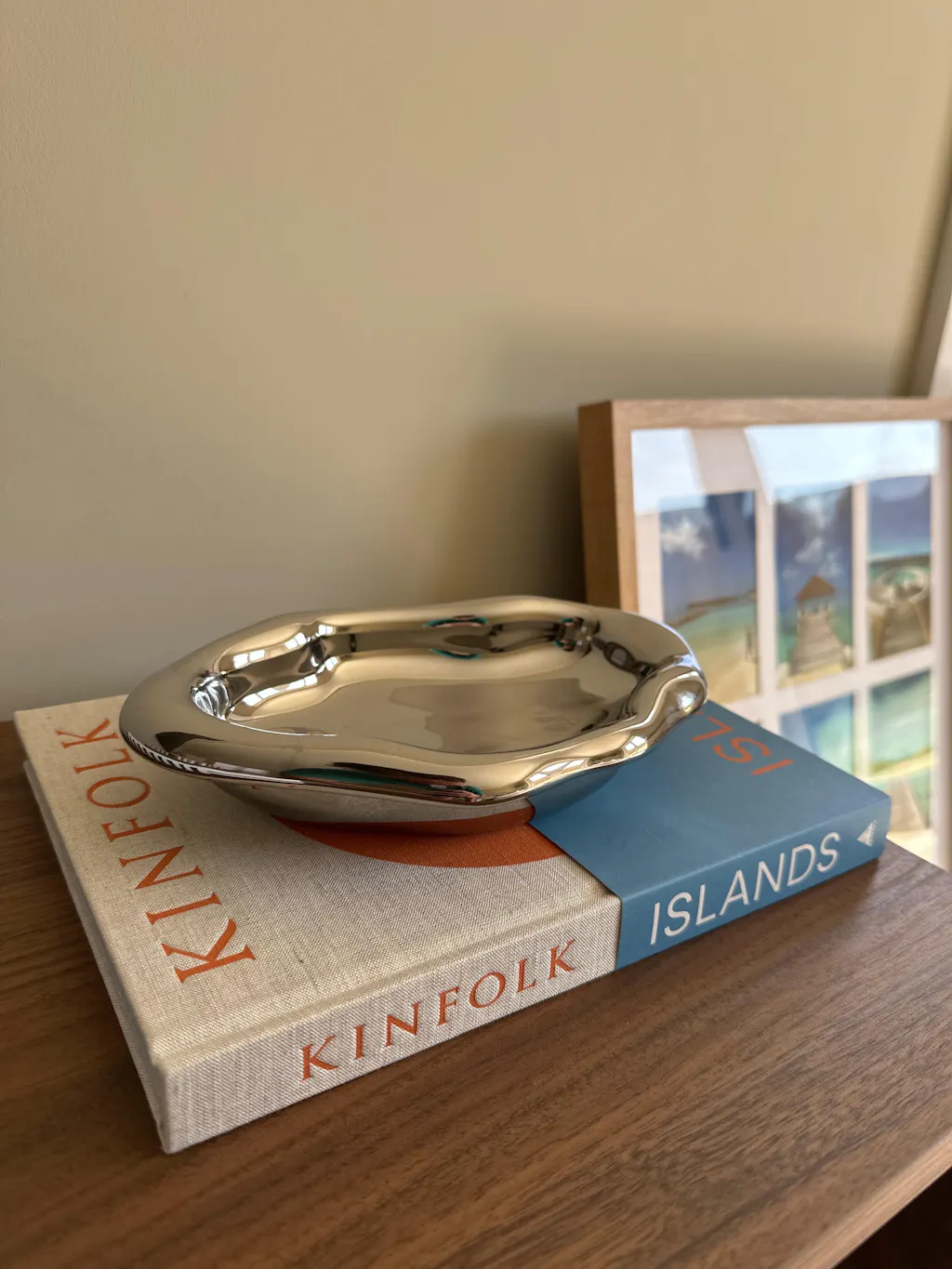

Chrome is back. After a decade in which warm woods, clay and matte everything defined the considered interior, polished steel and chrome have returned as the surface of the moment, and chrome interiors are one of the defining looks of 2026. The shift is not a wholesale reversal. It is the reintroduction of one reflective, light-catching material into rooms that remain grounded in natural textures. Used well, a single polished steel piece sharpens a space. Used badly, it tips a room into the cold, hard register that put people off chrome in the first place. The difference is entirely in how it is handled.
This is a guide to doing it well: why the trend has returned, the difference between polished and brushed finishes, how to style reflective metal so it reads warm rather than clinical, and where the look earns its place in commercial and hospitality interiors.
Why chrome has returned
The current chrome moment grows directly out of the quiet luxury aesthetic. As interiors moved away from obvious branding toward materials, proportion and finish, polished metal re-emerged as a way to signal quality without ornament. A mirror-polished steel surface is unforgiving to make well, so it reads as considered in the same way a heavy linen or a solid timber does. The trend is less about the brash chrome of previous decades and more about restraint: one reflective object in an otherwise calm room.
It also answers a practical fatigue. Rooms built entirely from soft, warm, matte materials can begin to feel flat, with nothing to catch the eye or the light. A polished steel side table or a chrome tray introduces contrast and reflection, giving a scheme a focal point and a sense of depth. For more on where this sits relative to the warmer end of the spectrum, our piece on Japandi vs quiet luxury covers the shared territory, and our dark Japandi guide shows how reflective metal behaves against a deeper palette.
Polished or brushed: two finishes, two jobs
The single most useful distinction in this trend is between polished and brushed steel. They are the same material doing opposite visual work, and choosing the wrong one is the most common mistake.
Polished, mirror-finish steel is bright and reflective. It catches light, throws it back, and reads as a quiet mirrored object from across a room. The Hashi Polished Steel Side Table is the clearest example: a sculptural bridge form lifting a flat surface above an open lower shelf, in high-polish stainless steel, at W45 x H45 x D35 cm. Up close the form is the work; from across the room it is a point of light. Polished steel is the statement finish, best used as a single anchor rather than repeated around a room.

Brushed steel is the opposite. The fine directional grain of the finish reads matte and soft, absorbing light rather than throwing it back. The Hako Brushed Steel Side Table, a compact cube at W40 x H55 x D30 cm with an open lower storage section, is the brushed counterpart to the polished Hashi. It sits comfortably in a room rather than competing with it, and pairs easily with oak, walnut and linen without trying to dominate them. Brushed steel is the everyday finish, the one you can use in more than one place without a scheme tipping into hard.

A useful rule: one polished piece per room as the focal point, brushed steel for anything you want to use more freely. The Brushed Steel Round Table, a 60 cm round top on a single central column and wide disc base, is a good example of brushed steel doing real work as a compact dining or corner table without demanding to be the centre of attention.

How to style chrome without it feeling cold
The whole risk with this trend is coldness. Reflective metal has no inherent warmth, so the warmth has to come from everything around it. Three principles keep a chrome interior feeling considered rather than clinical.
First, pair metal with warm natural materials. A polished steel side table reads completely differently next to a linen sofa, an oak floor and a walnut chair than it does in an all-white, all-hard room. The reflective surface picks up and returns the warm tones around it, so the metal itself takes on the warmth of the scheme. Surround it with timber, linen, wool and ceramic, and the steel becomes a highlight rather than the whole story.
Second, use restraint. One or two reflective pieces in a room is a focal point. Five is a showroom. The polished surface does a lot of visual work, so a single piece carries further than you expect. This is the same principle of considered curation that governs the warmer aesthetics, applied to a louder material.
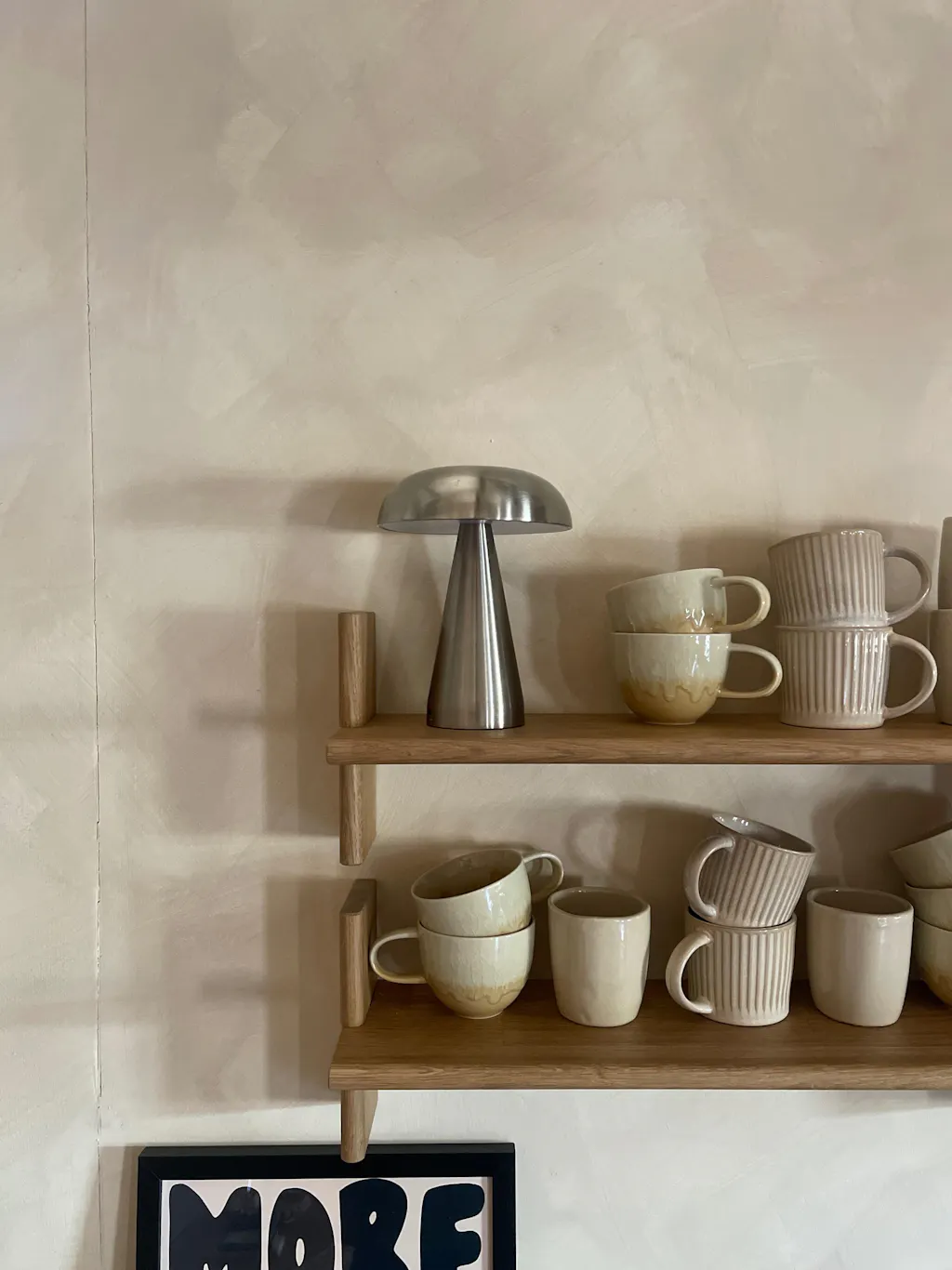
Third, let it work with light. Reflective metal is at its best where it has something to catch: a warm lamp nearby, a window, the glow of an evening interior. Position a polished piece where it can pick up a warm light source rather than a cold overhead one, and it will read as warm metal rather than hard chrome. For the lighting side of a reflective scheme, our Chrome Column lamp collection covers how polished lighting behaves in a room.
The lowest-commitment way in: trays and small accents
Most people should not start a chrome interior with a piece of furniture. The easiest, lowest-risk entry point is a small reflective object on a surface you already have.
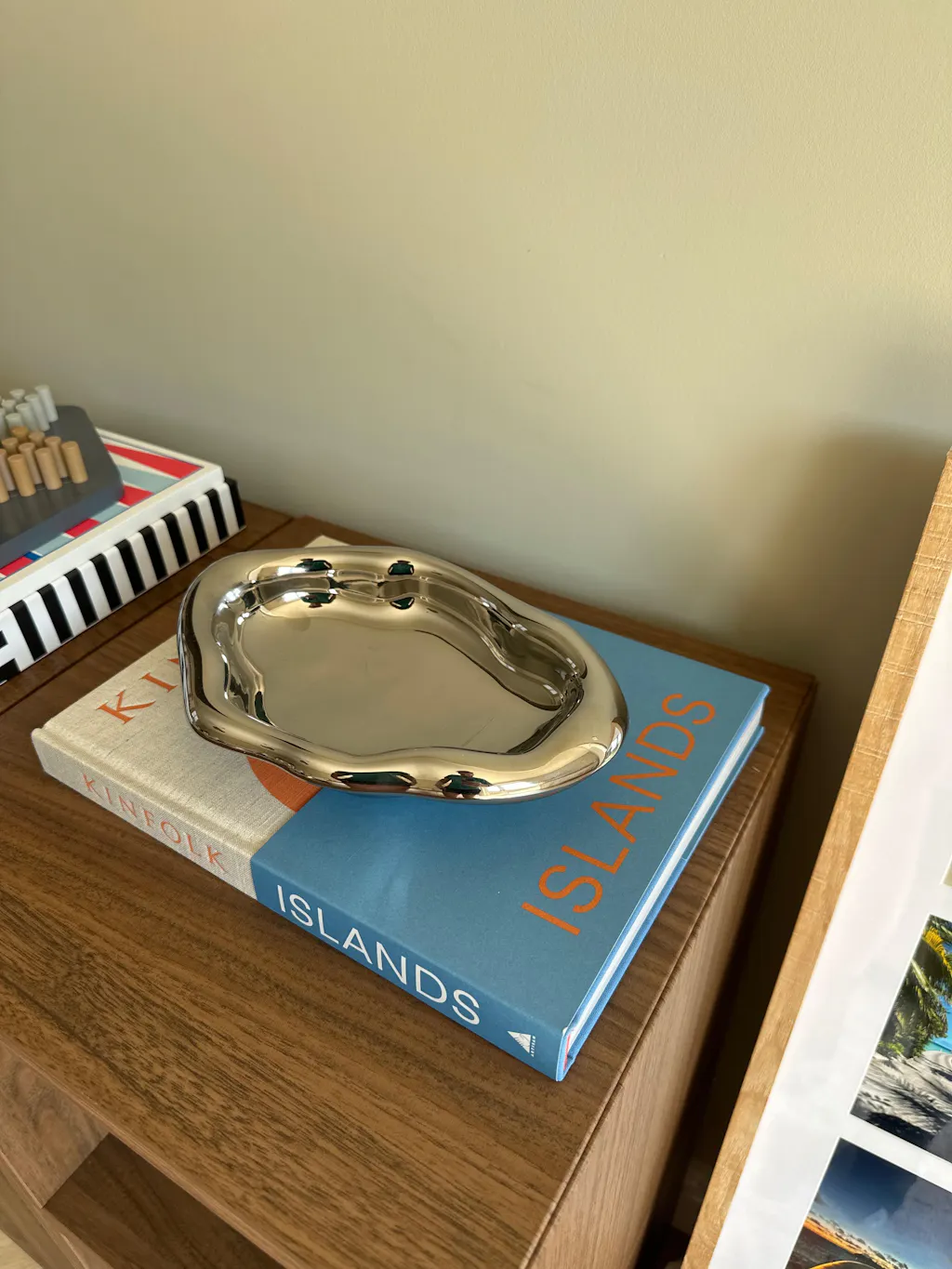
The Shizuku Polished Chrome Tray is the natural starting point. Worth noting it is a chrome-finished ceramic rather than solid metal, with an organic lobed silhouette at 23 x 15.5 cm, so it carries the mirror finish at the scale of an accessory. The curved edge breaks and softens reflections in a way a clean rectangle does not, so it reads as a small sculptural object as much as a catch-all for keys, rings or a watch. On a console, a bedside table or a coffee table, it introduces the reflective note without committing to a whole piece of furniture.
For a warmer, more textured take on the same idea, the Sui Embossed Steel Serving Tray is stamped from 304 stainless steel with a vintage embossed border, an oval at 28 x 19.5 cm in a brushed finish that ages and resists everyday marks. The Metal Shell Plate, a scalloped shell form in 304 stainless steel at 13 x 9.5 cm, works as a small serving dish or a jewellery tray. None of these asks you to rethink a room. Each lets you test the reflective note before scaling up to furniture.

Chrome and reflection at full height
Once the small-scale note is established, reflective metal scales up most naturally through mirrors and lighting, both of which are reflective by nature so they extend the trend without adding more hard surfaces.
The Mizu Floor-Standing Full Length Mirror sets a clear rectangular pane in a slim brushed steel frame on a low wheeled base, so the frame nearly disappears and the reflective work is done by the glass itself. A full-length mirror also bounces light around a room, which suits the way the whole trend trades on reflection. Reflective lighting works the same way: a polished lamp is a light source and a reflective object at once. The broader range sits in our chrome collection.
Chrome for commercial and hospitality interiors
For trade buyers, restaurant and bar operators, retailers and hospitality designers, polished and brushed steel offer a combination that few materials match: a current, photogenic look and genuine commercial durability.
The durability case is the strongest argument. The trays and accents here are stamped from 304 stainless steel, the grade specified for commercial kitchens and high-traffic environments precisely because it is rust-resistant, food-safe and built to take daily use without ageing into something else. A brushed steel surface holds its character through real use rather than degrading, and a polished surface returns to a mirror finish with a wipe. In a bar, a restaurant or a retail interior where surfaces take constant contact, that is a specification advantage, not just an aesthetic one.
The look also photographs well. A single polished steel piece reads as distinctive and current in listing photography and editorial images, which matters in hospitality where the interior is part of what the guest is paying for. Against the market standard of warm, matte, neutral interiors, a considered reflective accent stands out without tipping into the brash. For the wider case on specifying materials for commercial settings, our post on wabi-sabi in commercial design covers the durability and finish considerations in detail, and our boutique hotel buyer's guide addresses the furniture and accessory decisions specific to hospitality.
The same restraint that governs the residential version applies commercially. One reflective anchor per space, surrounded by warmer materials, reads as considered. Reflective metal used everywhere reads as a fit-out on a budget. The discipline is the point.

Shop the chrome edit
The polished and brushed steel pieces that anchor the look, available now.
- Hashi Polished Steel Side Table from £395
- Hako Brushed Steel Side Table from £460
- Brushed Steel Round Table from £495
- Shizuku Polished Chrome Tray from £55
- View the chrome collection
Frequently Asked Questions
Is chrome in style for 2026?
Yes. Polished steel and chrome have returned as one of the defining interior surfaces of 2026, growing out of the quiet luxury aesthetic. The current version is restrained rather than brash: a single reflective, light-catching piece used as a focal point in a room that otherwise stays grounded in warm, natural materials.
What is the difference between polished and brushed steel?
Polished steel has a bright mirror finish that reflects light and reads as a statement object, best used as a single anchor in a room. Brushed steel has a fine directional grain that reads matte and soft, absorbing light rather than returning it, so it sits quietly alongside timber and linen and can be used more freely. Polished is the focal finish, brushed is the everyday one.
How do you style chrome so it does not look cold?
Surround it with warm natural materials. Reflective metal has no inherent warmth, so it takes on the tones of what is around it. Pair a polished piece with oak, walnut, linen and wool, use only one or two reflective pieces per room, and position metal where it can catch a warm light source rather than a cold overhead one. Restraint and warm surroundings are what keep chrome from reading clinical.
What is the easiest way to try the chrome trend?
Start with a small reflective accent rather than furniture. A chrome tray or a steel dish on a console, bedside table or coffee table introduces the reflective note at the scale of an accessory, with no commitment to a larger piece. If it works in the space, scale up to a side table, a mirror or reflective lighting.
Is stainless steel furniture suitable for commercial use?
Particularly so. The 304 stainless steel used in these pieces is the grade specified for commercial kitchens and high-traffic environments because it is rust-resistant, food-safe and durable. Brushed surfaces hold their character through constant use and polished surfaces return to a mirror finish with a wipe, which makes steel a strong specification for bars, restaurants, retail and hospitality interiors where surfaces take daily contact.