
A coffee table is the surface everyone looks at but nobody thinks about. It sits in the centre of the room, at eye level when you are seated, and it collects whatever you put down on it: remote controls, mugs, post, a phone, keys. Left unstyled, it becomes a dumping ground. Overstyled, it becomes a display case you are afraid to touch.
The goal is somewhere between those two: a coffee table that looks considered without looking staged. A surface where every object has a reason to be there, where you can still put a cup of tea down without rearranging the composition, and where the table itself contributes to the room rather than simply occupying space.
This guide covers how to style a coffee table using a simple framework that works regardless of your table's size, shape, or material.
Start with the Table Itself
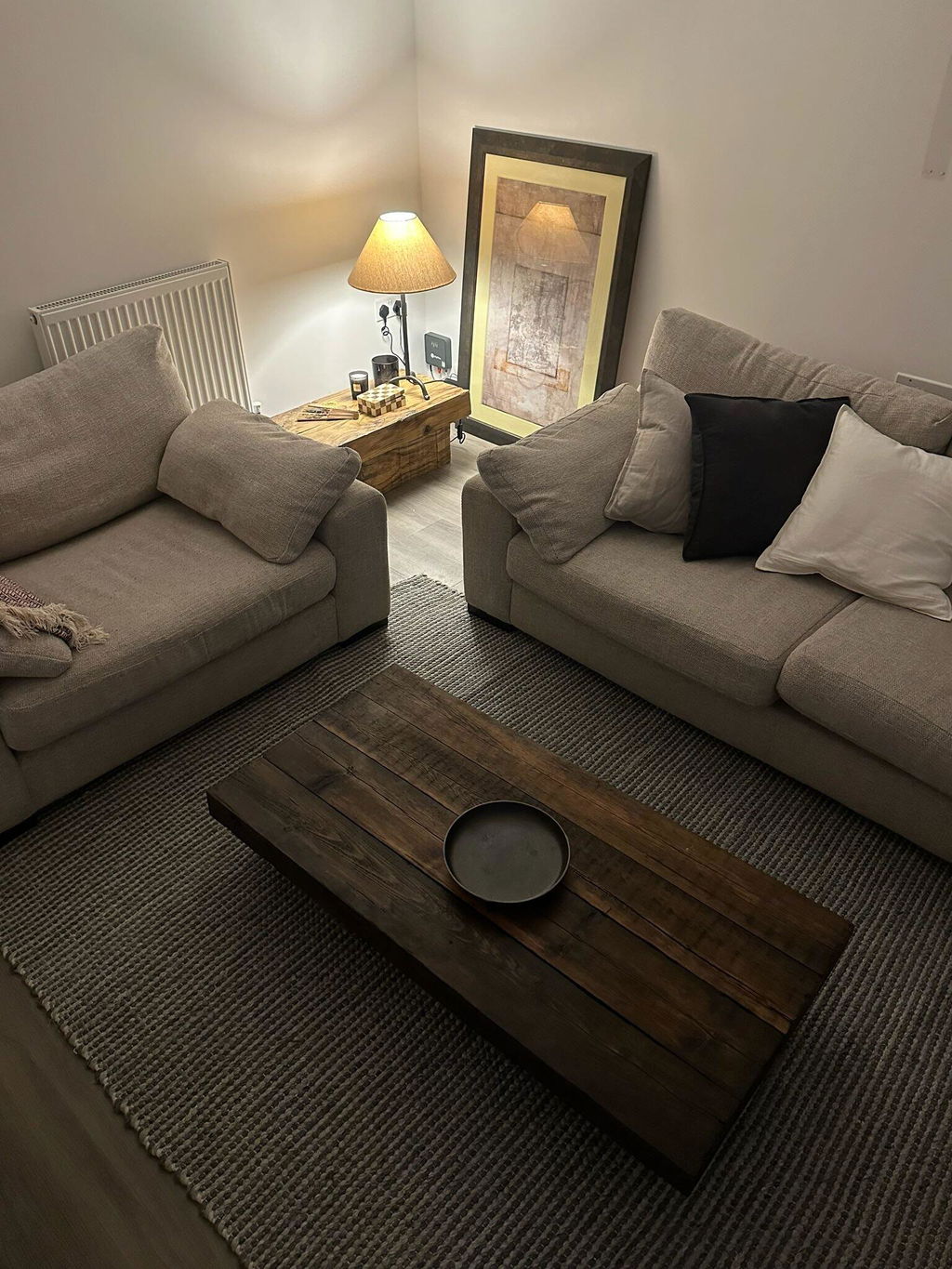
The material and shape of your coffee table determines what sits well on it. A glass table needs objects with weight and substance to ground it. A solid wood table can handle lighter, more delicate pieces. A rattan coffee table with its woven texture already has visual interest built in, so it needs fewer objects on its surface than a plain, flat-topped table.
Before placing anything, consider the table as an object in the room. If it already has strong material character (visible grain, woven texture, a stone top), you are adding to an existing conversation. If it is simple and clean (glass, plain metal, painted wood), the objects you place on it carry more visual responsibility.
Height matters too. A lower coffee table (35 to 40cm, which is typical of Japandi interiors) has a smaller surface relative to sightlines, so fewer objects work better. A standard-height table (45cm+) has more room to work with.

The Three-Object Rule
The simplest framework for styling a coffee table is to choose three objects from three different categories:
Something organic. A plant, a vase with a single stem, or a small ceramic object. This introduces natural texture and softens the geometry of the table and the room. A small ceramic plant pot with a trailing plant or a handmade vase with one dried stem both work. The key is a single organic element, not a cluster.
Something functional. A tray, a box, or a stack of books. This is the piece that gives the arrangement purpose beyond decoration. A chrome tray corrals smaller items (a candle, a coaster, a remote) into a single composed group. A stack of two or three books adds height and personality. The functional object anchors the arrangement and makes it feel lived-in rather than staged.
Something with light or warmth. A candle, a candle holder, or a small lamp. This provides atmosphere in the evening and a focal point during the day. A silver candle holder or a ceramic candlestick brings a subtle reflective or textural element that draws the eye without dominating the table.
Three objects. Three categories. That is enough. If you remove one and the table feels incomplete, you have the right three. If you remove one and nothing changes, you had too many to begin with.

Layout: Where to Place Things
Object placement on a coffee table follows a few spatial principles that make the difference between "arranged" and "dumped."
On a rectangular table: Divide the surface into thirds visually. Place the tray or largest object in the centre third. Place the organic element and the candle/light in opposite end thirds. This creates balance without symmetry, which reads as natural rather than forced.
On a round table: Work from the centre outward. Place the tray or primary object slightly off-centre (not dead middle, which looks static). Place the remaining two objects on opposite sides of the tray, creating a loose triangular arrangement. Leave at least a third of the surface clear.
On a small table: One object is enough. A single vase, a single candle holder, or a small tray with one item on it. Trying to fit three objects on a table that is too small for them creates clutter, which defeats the purpose. A Cognac Step Vase on its own makes more of a statement on a compact table than three smaller pieces crowded together.
The critical principle: Leave empty space. The surface of the table that is not covered by objects is as important as the objects themselves. A coffee table that is 60% empty reads as considered. A coffee table that is 80% covered reads as cluttered, regardless of how beautiful the objects are.
Materials That Work Together
The objects on your coffee table should create a small material story that connects to the wider room. This does not mean everything should match. It means the materials should feel like they belong in the same conversation.
On a wooden coffee table: Introduce one contrasting material. A chrome or metal tray, a glazed ceramic vase, or a glass candle holder. The contrast between the warmth of the wood and the coolness of the metal or glass gives the arrangement tension and interest. A chrome tray on a rattan coffee table is a particularly effective pairing: the polished metal against the woven natural fibre creates exactly the kind of material dialogue that Japandi interiors are built on.
On a metal or glass coffee table: Bring warmth with organic textures. Raw ceramic, like the Dented Vase from the Bare Collection, softens a hard surface. A woven coaster or a wooden tray achieves a similar effect. The goal is to prevent the table from feeling cold.
On a stone coffee table: Stone already has weight and presence. Keep objects light and minimal. A single candle, a small vase, or a stainless steel shell plate used as a catch-all. Stone surfaces absorb visual attention, so the objects on them need to recede slightly rather than compete.

Seasonal Adjustments
One of the easiest ways to refresh a living room without buying new furniture is to change what sits on the coffee table with the seasons.
Spring and summer: Fresh greenery, lighter candles (white or cream), and glass or metal objects that reflect the longer daylight. A clear glass vase with a single green stem and a small plant pot is enough to shift the table from winter to spring.
Autumn and winter: Warmer tones, heavier textures, and candlelight. Swap the glass for ceramic. Introduce a cognac or terracotta vase. Add a coloured glass candlestick for an accent of deeper colour. The change does not need to be dramatic. One or two swaps shift the feel of the entire surface.

Common Mistakes
Too many small objects. Five tiny items look like a collection of things that have not been put away. Three larger, more deliberate objects always read better than a scattering of small ones.
Everything the same height. A flat arrangement has no visual movement. Vary the height: a tall vase, a low tray, a mid-height candle holder. The eye moves across objects at different levels, which creates the impression of a composed arrangement rather than a row.
Matching everything to the table. A wooden tray on a wooden table with a wooden vase looks monotonous. Introduce at least one contrasting material. The contrast is what makes the arrangement feel intentional.
Forgetting that the table is functional. If there is no room to put a cup down, the table is overstyled. Always leave a clear landing zone. A styled coffee table that cannot be used as a coffee table has failed at its primary job.
Frequently Asked Questions
How many objects should you put on a coffee table?
Three is the ideal number for most tables. One organic element (plant or vase), one functional piece (tray or books), and one atmospheric object (candle or candle holder). On a very small table, one object is better than forcing three. On a large table, you can expand to five, but keep them grouped rather than scattered.
What size tray works on a coffee table?
The tray should cover roughly a third to a half of the table surface, no more. On a standard 120cm rectangular coffee table, a tray of 30 to 40cm works well. On a round table of 80cm diameter, aim for a 25 to 30cm tray. A tray that is too large dominates the table; too small and it looks lost.
Should coffee table decor match the rest of the room?
It should connect to the room without matching it exactly. Pick up one material or colour from elsewhere in the space. If you have a chrome floor lamp, a chrome tray on the coffee table creates a link. If the sofa is linen, a ceramic vase with a similar muted tone extends the palette. The connection should feel natural, not forced.
How do you style a round coffee table?
Work from a slightly off-centre point outward. Place the primary object (tray or largest piece) just off the middle, then position two smaller objects on opposite sides to create a loose triangle. Leave at least a third of the surface empty. Symmetrical arrangements on round tables look static, so aim for balance without perfect symmetry.
What should you not put on a coffee table?
Anything that does not earn its place. Remote controls belong in a drawer or a tray, not scattered on the surface. Stacks of post and unopened mail turn a coffee table into an inbox. If an object is not decorative, functional, or both, it does not belong on the table permanently.
Shop Coffee Table Styling
Find trays, vases, candle holders, and ceramics for your coffee table in the Fjord & Fuji decor collection.
Chrome Tray | Cognac Step Vase | Silver Candle Holders | Rattan Coffee Table | Shop All Decor