
There is a reason Japandi has become one of the most searched interior styles of the last few years. In a world that feels increasingly noisy, the idea of a living room that asks nothing of you, that simply exists in quiet, beautiful order, is genuinely appealing.
Japandi is the meeting point of two design philosophies that, on paper, should not have much in common. Japanese interiors are rooted in wabi-sabi: the acceptance of imperfection and the beauty found in things that are simple, worn, and natural. Scandinavian design comes from a different place: hygge, the Danish and Norwegian concept of warmth, cosiness, and a life well lived. Together they produce something that feels both spare and warm, minimal but never cold.
This guide covers everything you need to create a Japandi living room, from the principles behind the style to the specific furniture, lighting, and decor choices that make it work.
What Makes a Living Room Japandi?
Before you buy a single thing, it helps to understand what Japandi actually is and what it is not.
It is not just beige. It is not just minimalism with a plant. And it is not about buying a collection of "natural" looking objects and arranging them on a shelf.
Japandi is a design philosophy first and an aesthetic second. The guiding principle is intentionality. Every piece in the room should earn its place, not because it is expensive, but because it is considered. It should serve a purpose, feel right in the space, and contribute to the overall sense of calm rather than compete with it.
In practice, a Japandi living room tends to share a few characteristics: natural materials, a neutral and earthy colour palette, low or grounded furniture, soft diffused lighting, and a deliberate absence of clutter. Not minimalism for its own sake, but restraint with warmth.

The Japandi Colour Palette
Colour is where many people go wrong with Japandi. The instinct is to go all white, which produces something that feels more clinical than calm.
The Japandi palette is built on warm neutrals: sand, oatmeal, stone, off-white, with earthy accents drawn from nature. Think muted terracotta, deep brown, charcoal, soft sage green. The goal is a room that feels grounded, as though it grew from the earth rather than was assembled from a catalogue.
A practical approach: start with warm white or linen-toned walls, introduce a mid-tone wood for your largest furniture piece, and layer in two or three earthy accent tones through smaller pieces. Ceramics, cushions, and a throw are the simplest way to introduce colour without disrupting the calm.
Avoid anything glossy, anything with a high sheen, and anything that reads as synthetic. Japandi is fundamentally tactile. The materials should feel as good as they look. If you are working with a neutral palette and want to understand how different materials interact with each other, the key is to vary finish and texture rather than colour.
Japandi Furniture: Low, Grounded, Purposeful
Japandi furniture sits low and moves quietly through a room. You are looking for pieces with clean lines, natural materials, and no unnecessary ornamentation. The key test: does this piece have a purpose beyond looking good? In a Japandi room, even a purely decorative object needs to justify its presence through its craft.
The Sofa
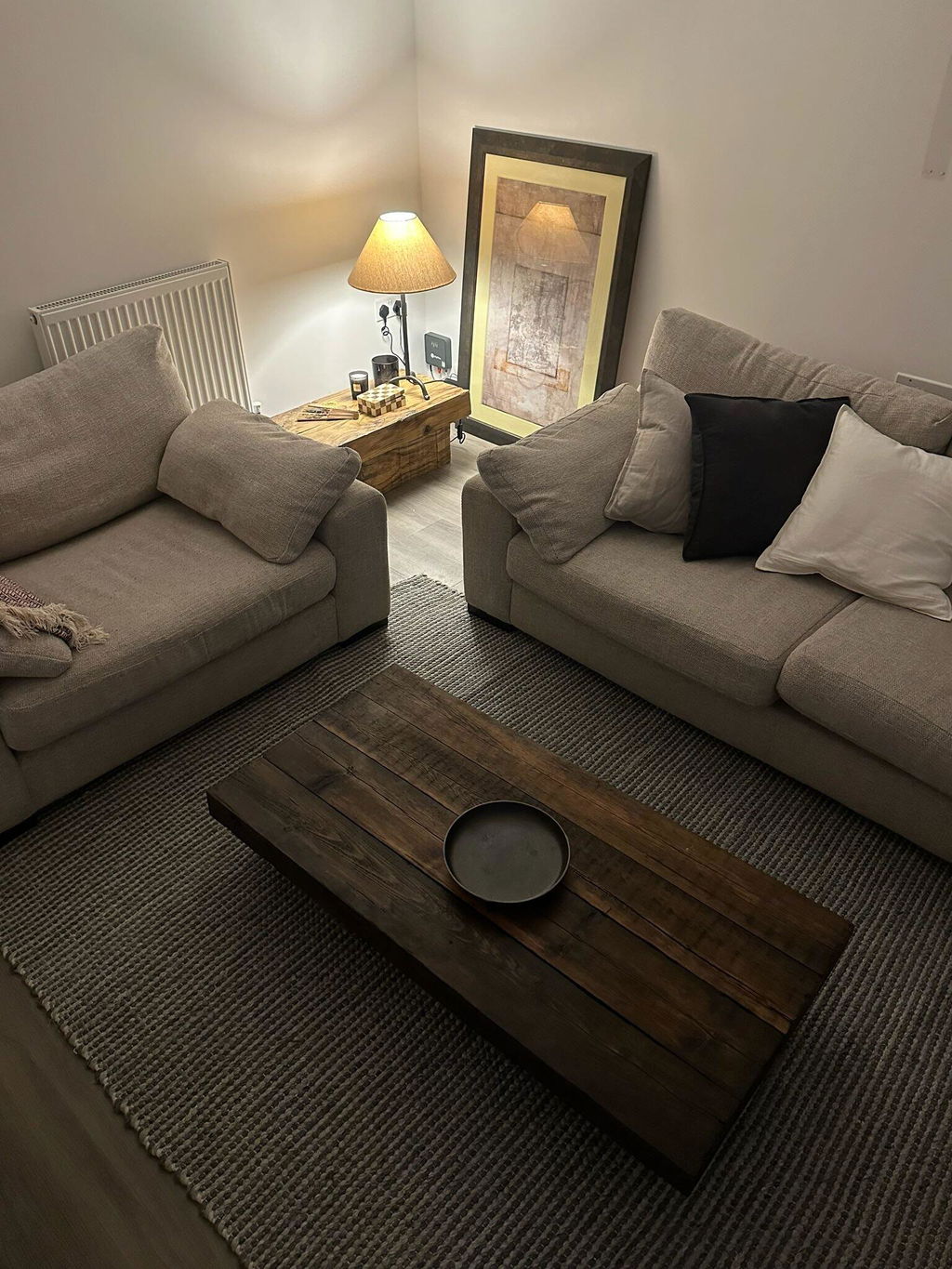
The sofa is the room's anchor, and in a Japandi living room it should be low-profile, simply shaped, and upholstered in a natural textile. Linen is the quintessential Japandi fabric: it drapes softly, it has visible texture, and it improves with use. The Wabi Linen Sofa in milk white is designed around exactly these principles. At 82cm high, it sits lower than a standard sofa, which gives the room a grounded, relaxed feel without sacrificing comfort. Available as a single or two-seater in stone, it is the kind of sofa that looks better after six months than it does on day one.
Accent Seating
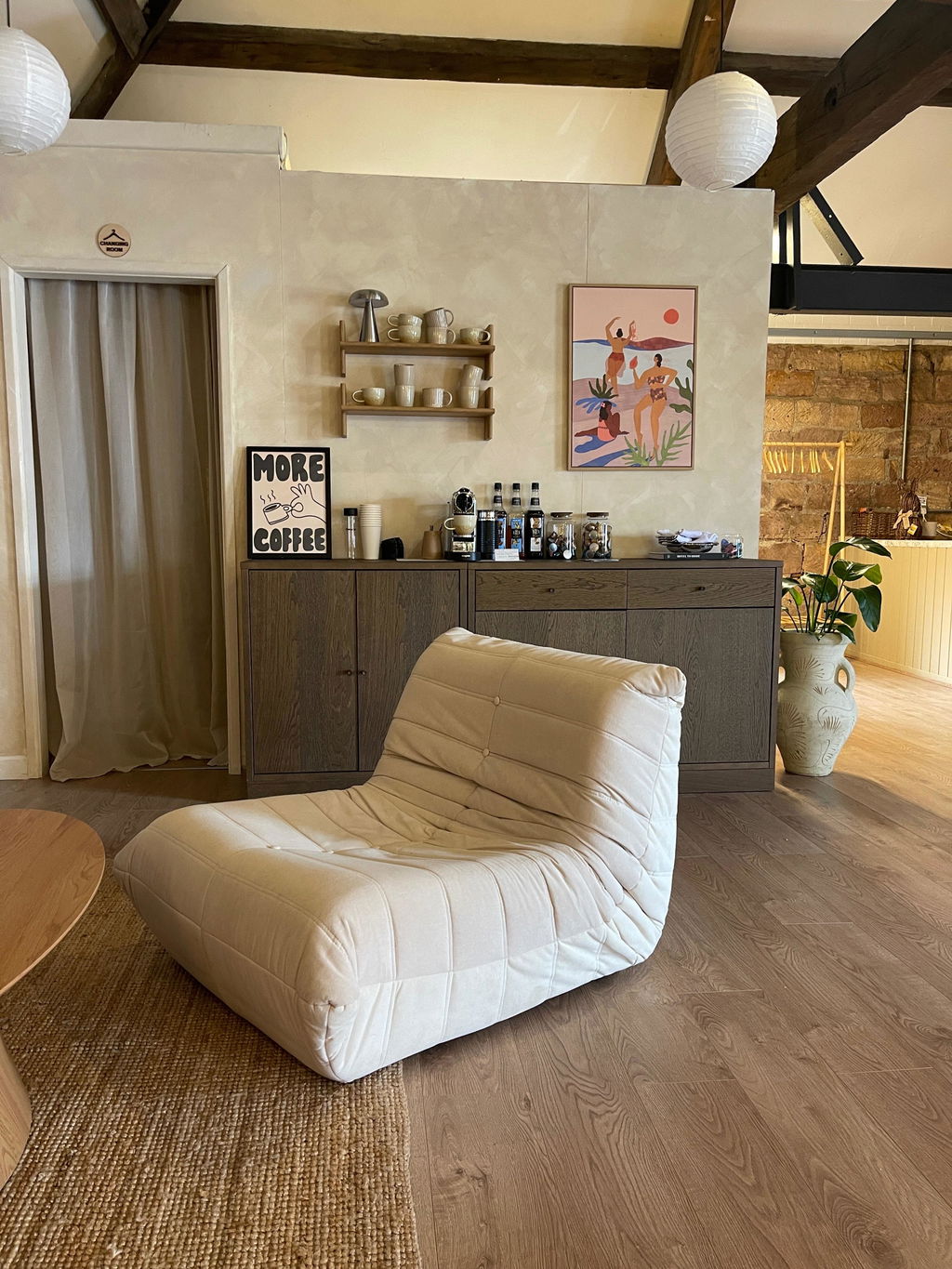
A Japandi living room benefits from a second seat that contrasts with the sofa in form while connecting to it in spirit. The Sofuto Accent Chair does this well. The ribbed, caterpillar silhouette has personality without being loud, and the low profile (70cm) keeps it in proportion with the Wabi Sofa. Position it at an angle to the sofa rather than directly opposite for a layout that feels inviting and conversational.

Coffee Table
The coffee table should carry the mark of the material it is made from. Natural stone, solid wood with visible grain, rattan, or raw concrete all work within a Japandi palette. The Rattan Coffee Table has woven texture built into its surface, which means it already has visual interest before you place anything on it. That makes styling the surface simpler: fewer objects are needed because the table itself is doing some of the work.

Side Tables
Side tables in a Japandi room serve double duty: they hold a lamp or a cup of tea, and they introduce a contrasting material. If your sofa is linen and your coffee table is rattan, a stainless steel side table introduces the cool metallic element that prevents the room from feeling too uniformly warm. The material contrast between the natural textiles and the polished steel is a hallmark of considered Japandi design.
Lighting: The Layer That Defines the Mood
Lighting is where a Japandi living room either succeeds or falls flat. Get it right and the room feels warm and alive at any hour. Get it wrong and even beautiful furniture looks lifeless. The principle is layered, diffused light from multiple sources at different heights, rather than a single overhead fitting flooding the room with uniform brightness.
Pendant Lighting
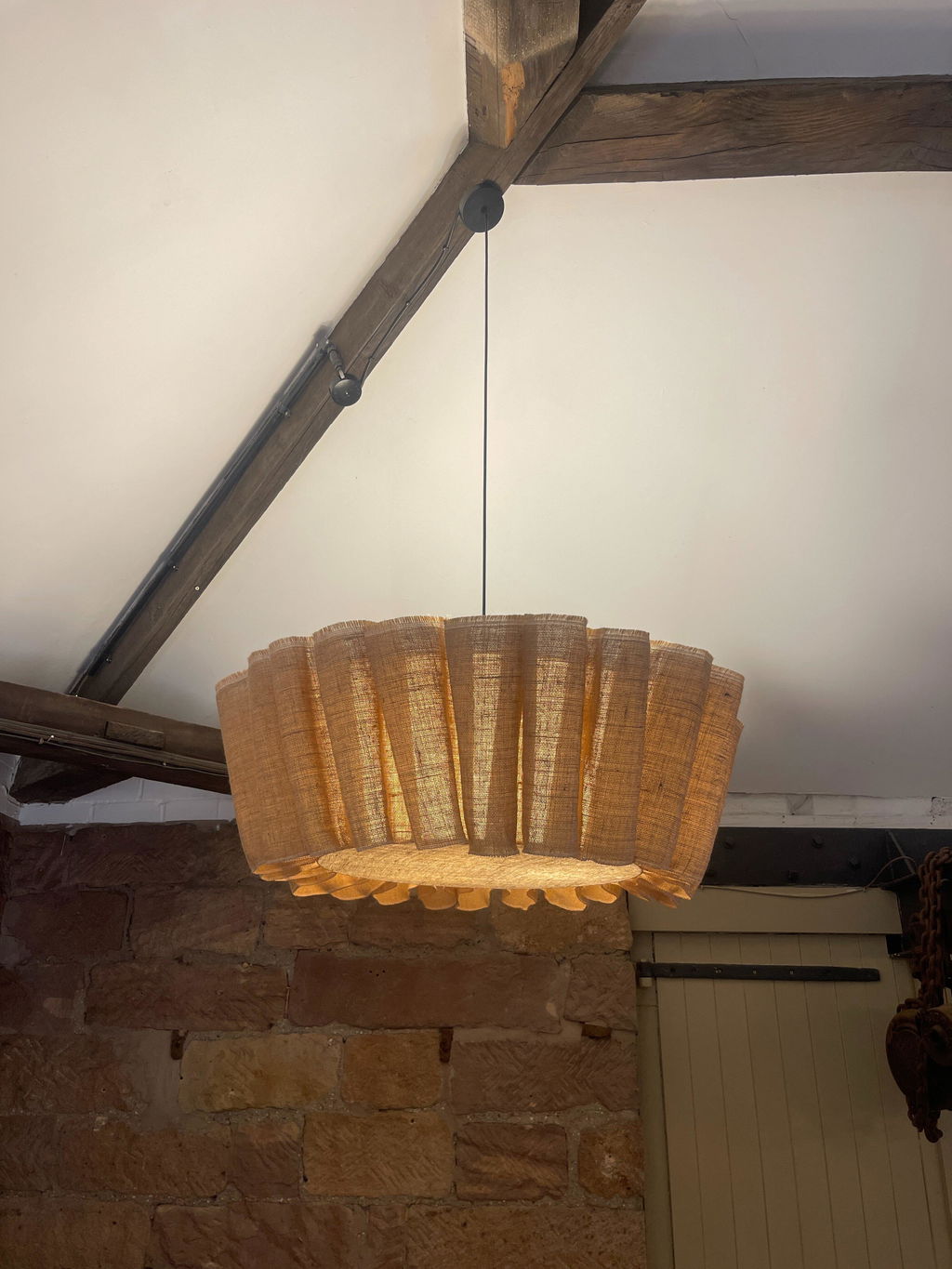
A pendant works particularly well in Japandi living rooms because a well-chosen shade becomes a sculptural element in itself. The Linen Wave Pendant at 80cm wide is designed to create a soft pool of warmth directly below it without overwhelming the space. The hand-pleated linen diffuses the light through the fabric, producing the gentle, ambient glow that Japandi rooms depend on.

Floor Lamps
Floor lamps anchor a Japandi room. A fabric shade on a wooden or slender stem creates exactly the kind of diffused, ambient glow the style needs. The Kose Fabric Floor Lamp softens light significantly through its textured shade, producing a warm, even glow rather than a hard beam. For a more sculptural presence, the Rinkaku Wooden Floor Lamp combines a hand-turned walnut base with a pleated fabric shade, creating a lamp that earns its place in the room when switched off as well as on.

Table Lamps
A table lamp on a side table or console adds a layer of intimacy to the room. The Marble Column Table Lamp adds weight and sculptural character without competing with the rest of the room. The natural veining in the marble base connects to the organic material philosophy of Japandi, while the polished finish provides the subtle material contrast the style thrives on.
The bulb matters too. Always warm white, around 2700K. Cool white destroys the Japandi atmosphere immediately.
Decor: Editing Down, Not Adding Up
Japandi decor is about restraint. A few well-chosen pieces that carry genuine craft will always outperform a shelf full of things that individually looked nice in a shop but collectively create noise.
Ceramics
Ceramics are central to the style. A handmade vase, a considered bowl on a coffee table, a simple candlestick. The irregularities in handmade ceramics, the slight variations in glaze, the uneven rim, embody wabi-sabi perfectly. The Bare Collection of handmade ceramic vases works well here, particularly grouped in odd numbers at different heights. The Snout Vase at 14cm beside the Dented Vase at 7cm creates the kind of natural height variation that makes a small arrangement feel curated.

For a glazed counterpoint, the Cognac Step Vase introduces a richer colour and a reflective surface that plays against the matte Bare pieces. One glazed vase among two or three matte ones creates finish contrast within the same material family.
Candles and Holders
The act of lighting a candle in the evening is very much in the spirit of both hygge and wabi-sabi: a small, deliberate moment of calm. Silver candle holders at varying heights work well on a coffee table or console. Pair them with a ceramic candlestick for a mix of polished metal and raw ceramic on the same surface.

Plants
Plants bring the organic element that stops a Japandi room feeling sterile. Keep them simple: a single sculptural plant in a considered pot rather than an abundance of greenery. The Burnt Plant Pot in terracotta tones adds warmth through both the plant and the vessel, while a ceramic plant pot in a lighter tone works against darker surfaces.

The rule for decor in a Japandi living room: if it does not add warmth, texture, or purpose, it probably does not need to be there.
Materials and Texture
A Japandi living room is built from a specific material palette: natural wood (walnut, oak, ash), linen or cotton textiles, raw and glazed ceramics, rattan or woven fibre, and one cooler material for contrast, usually stainless steel or chrome.
The balance should lean warm. Roughly 70% natural, warm-toned materials and 30% cooler, polished accents. The warm materials create the calm, grounded atmosphere the style is known for. The cool materials prevent it from tipping into rustic. A chrome tray on a rattan coffee table is the precise moment where Scandinavian precision meets Japanese naturalism.
Texture matters as much as material. A room where every surface is smooth feels sterile. A room where every surface is rough feels unfinished. The interplay between the two, the napped faux suede of the Sofuto beside the polished chrome of a side table, the raw ceramic of a Bare vase beside the glossy glaze of the Cognac, is what gives a Japandi room its depth. Read more about how to mix materials effectively.
Layout: How to Arrange a Japandi Living Room
Japandi layouts prioritise openness and flow. Furniture should not block pathways or crowd the centre of the room. The floor itself is part of the composition, and visible floor space contributes to the sense of calm.
A typical arrangement: the sofa against or floating off the main wall, the coffee table centred in front of it (with enough space to walk around), an accent chair at an angle to one side, a floor lamp beside the chair, and a side table at the opposite end of the sofa. This creates a loose, open grouping that faces inward for conversation while leaving the room's perimeter clear.
Maximise natural light by keeping furniture away from windows. Sheer curtains or no curtains at all (if privacy allows) let daylight wash across the room and reveal the textures and grain in your natural materials. A Japandi room should look as good in morning light as it does under lamplight in the evening.
Common Japandi Mistakes
Going too minimal. Japandi is not an empty room. It is a considered one. Warmth comes from layered textures and carefully chosen objects, not from bare surfaces. A room with nothing in it is not Japandi. It is unfurnished.
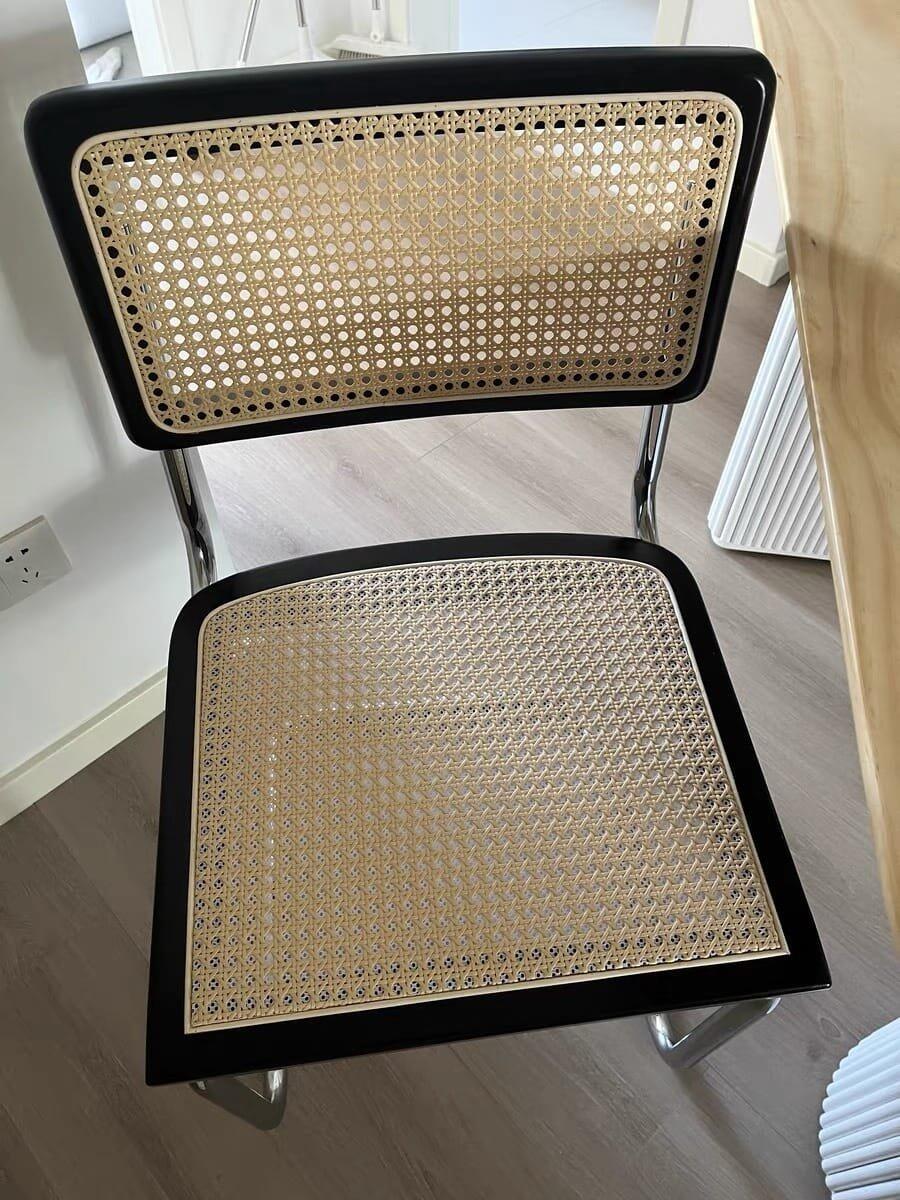
Mixing too many wood tones. Two or three complementary wood tones create depth: a light oak floor, a mid walnut side table, and a darker rattan chair. More than that and the room starts to feel visually busy. Let one wood tone dominate and treat the others as accents.
Ignoring textiles. Linen cushions, a wool throw, a natural fibre rug. These are what make a Japandi room feel lived in rather than staged. Without soft textiles, even the warmest wood and ceramic arrangement feels hard.
Buying everything at once. The best Japandi rooms are built slowly, with intention. A piece added over time because it genuinely resonates will always feel more considered than a room furnished in a single weekend. The patience is part of the philosophy.
Treating it as a trend. Japandi is not a trend in the way that Millennial pink was a trend. The principles behind it, natural materials, considered design, warmth through craft, are timeless. If you build a Japandi room around quality pieces in honest materials, it will look right in ten years, not just this season.
Where to Start
If you are approaching a Japandi living room from scratch, the order matters.
Start with the largest pieces: sofa, coffee table, rug. Get the foundation right before you add anything else. Then move to lighting, which will define the mood of the room more than any other category. Finally, layer in the smaller pieces: ceramics, candles, plants, one at a time, until the room feels complete. The moment you consider adding something and hesitate, stop. The room is done.
Frequently Asked Questions
What is Japandi style?
Japandi is a design style that combines Japanese wabi-sabi (beauty in imperfection, natural materials, simplicity) with Scandinavian hygge (warmth, comfort, functional design). The result is interiors that feel minimal but not cold, using natural materials, muted colour palettes, low-profile furniture, and considered decor. The guiding principle is intentionality: every object in the room should earn its place.
What colours are used in a Japandi living room?
The core palette is warm neutrals: sand, oatmeal, stone, warm white, and cream. Accent colours come from nature: muted terracotta, deep brown, charcoal, soft sage green, and cognac. Avoid bright whites (too clinical), high-gloss finishes (too synthetic), and saturated colours (too loud). The palette should feel grounded and earthy rather than stark.
Is Japandi the same as minimalism?
No. Minimalism prioritises reduction for its own sake. Japandi prioritises intention. A minimalist room might be empty. A Japandi room is edited. Every piece is there because it contributes warmth, texture, function, or craft. The distinction matters because it changes how you approach furnishing: you are not trying to own as little as possible, you are trying to own only things that earn their place.
What furniture suits a Japandi living room?
Low-profile pieces in natural materials: linen or cotton sofas, solid wood or rattan coffee tables, simple accent chairs, and minimal side tables. The furniture should have clean lines without ornamentation and feel grounded rather than elevated. Avoid anything with visible branding, excessive hardware, or synthetic materials that read as artificial.
How do you light a Japandi living room?
Layer three types of light: ambient (a pendant or tall floor lamp for general illumination), task (a table lamp beside seating for reading), and accent (candles and low-level lights for evening atmosphere). Use warm white bulbs at 2700K. Avoid cool white or daylight bulbs, which destroy the warmth the style depends on. Fabric and paper shades diffuse light more effectively than metal or glass for this style.
Shop Japandi Living Room
Explore furniture, lighting, and decor for Japandi living rooms at fjordandfuji.com.
Wabi Linen Sofa | Rattan Coffee Table | Kose Fabric Floor Lamp | Table Lamps | Shop All Decor