
Side Table with Magazine Rack: A Buying Guide
A side table with a magazine rack solves a problem most living rooms have and few people name: the slow accumulation of paper. The half-read book. The magazine you meant to finish. The Sunday supplement, the exhibition guide, the thing you put down three weeks ago. Left on the floor or the arm of the sofa, they make a considered room look unresolved.
The trouble is that a lot of these pieces are bought on looks and then turn out to be the wrong height, or too shallow to hold anything larger than a paperback. This guide covers what actually matters when you choose one: height against your sofa, how much a rack genuinely holds, which material suits which room, and how to style it so it does not simply relocate the clutter.
What a magazine rack side table is really for
There are two honest reasons to buy one. The first is that you read physical things and want them within reach of where you sit. The second is that you want a side table anyway, and the storage is a way of getting a second function from a piece that would otherwise just hold a glass.
Both are fine. But they lead to different purchases. If you genuinely read, you need capacity and easy access, which means an open shelf or a generous rack. If the storage is a bonus, you can prioritise the surface and the silhouette, and treat the rack as somewhere to keep two or three things looking deliberate.
The pieces that disappoint are the ones bought for the second reason and then asked to do the first. A shallow decorative slot will not hold a week of newspapers, and it will look worse for trying.
How tall should a side table with magazine rack be
This is where most of them go wrong, and it is worth being precise.
The rule repeated across the industry is that a side table should sit level with the arm of your sofa, or within about five centimetres of it. That rule is sound. The complication is that sofa arms vary enormously, typically sitting somewhere between 61 and 81 cm from the floor, and a magazine rack side table is almost always shorter than a plain one, because the rack has to live underneath the top.
So the piece that looks right in a photograph can sit ten centimetres too low next to your actual sofa, and you spend two years reaching down for your coffee.
Measure the arm of your sofa before you buy anything. Not the overall height of the sofa, which includes the back, just the arm, from the floor to the top of it. Then work from that number.
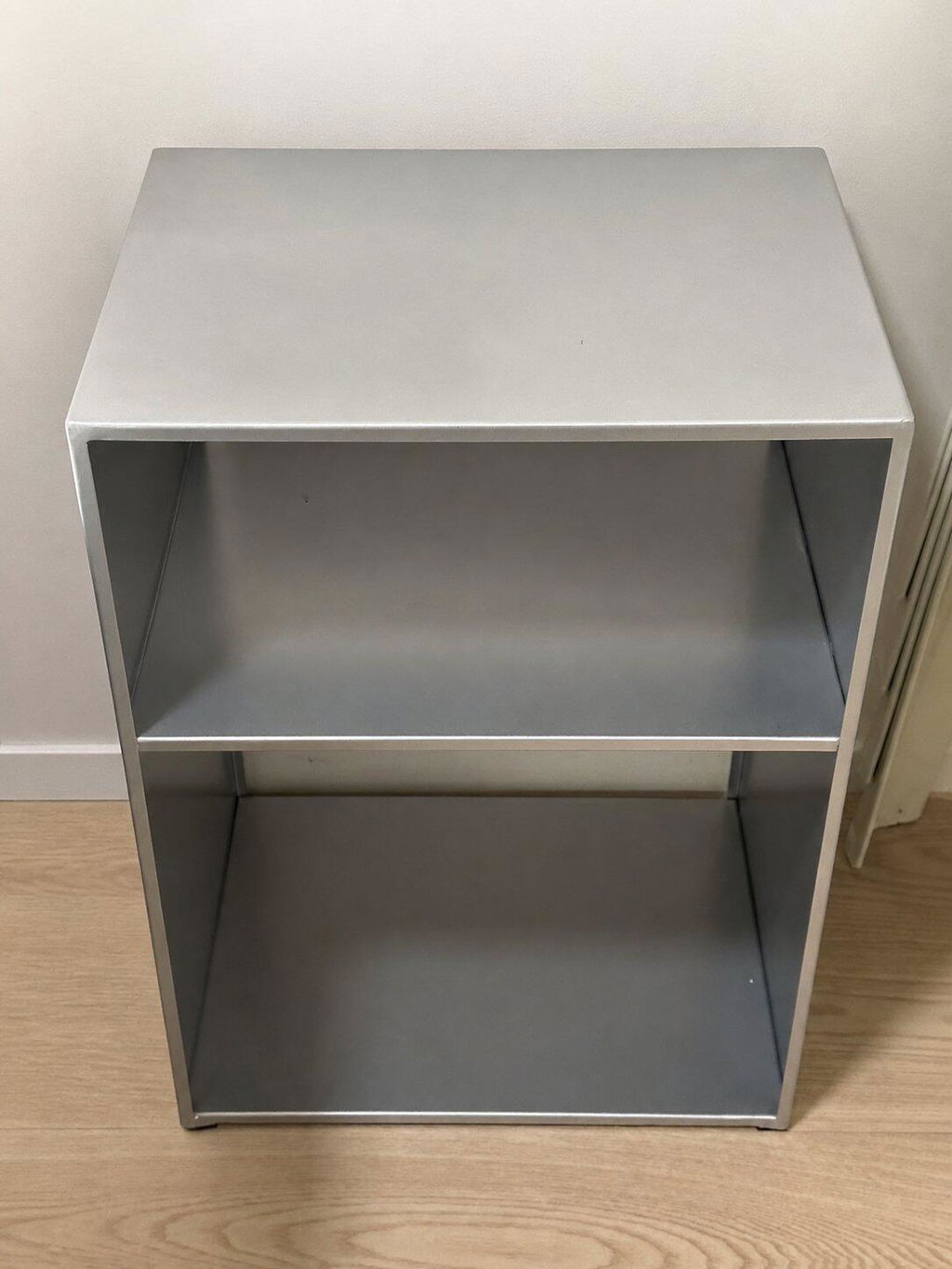
For a conventional high-armed sofa, look for something in the 50 to 60 cm range. The Hako Brushed Steel Side Table is built for exactly this: 40 cm wide, 30 cm deep and 55 cm tall, a flat working top with an open storage section beneath it.
For a low-profile sofa, the kind with a shallow skirted base and a low arm, a shorter piece is correct rather than compromised. The Maki Steel Magazine Rack and Side Table sits at 42 cm, and the Hashi Polished Steel Side Table at 45 cm. Beside one of the low linen pieces in our sofa and lounge chair collection, those heights read correctly. Beside a deep-armed traditional three-seater, they would not.
If you are buying for a chair rather than a sofa, arms tend to sit lower again, so the shorter pieces usually win.

What a magazine rack table actually holds
Capacity is the second thing people get wrong, usually because they never checked the dimensions against the thing they wanted to store.
Most UK magazines are printed at A4, which is 210 by 297 mm. Newspaper supplements are often a little larger. So a rack that cannot give you at least 22 cm of clear width and around 30 cm of clearance will hold paperbacks and nothing else. That may be fine, but you should know it before it arrives.
As a working figure, a well-proportioned rack holds four to six magazines upright, or two to three hardbacks laid flat. The Maki is 35 cm wide and 32 cm deep, so A4 sits in the curve of the frame without bending. The Hako's storage section sits under a 40 by 30 cm top, which takes magazines flat or a short row of books.
The Hashi works differently again. It is a bridge form: a flat top lifted above an open lower shelf, 45 cm wide by 35 cm deep. The shelf is genuinely usable, and because it is open on all sides rather than enclosed, larger formats sit on it without being forced.
Resist the temptation to size up. A rack you can fill completely is a rack you will fill completely, and then you have a full magazine rack in the middle of your living room rather than a tidy one.
Steel, wood or rattan
Material decides how much visual weight the piece carries, which matters more with a rack than with a plain table, because a rack is never quite empty.
Steel is the quietest option, which sounds counterintuitive until you see it. A slim steel frame occupies very little visual space, so the contents of the rack read as the busy element and the furniture recedes. Within steel there are two quite different characters. Brushed steel is matte and soft, sitting comfortably beside oak, walnut and linen without competing. Polished steel is reflective, and behaves almost like a small mirror in the room, picking up the colours around it and lightening a dark corner. If your room is already textured and warm, polished steel gives it a cool point of contrast. If the room is cool and pale, brushed is the safer choice.
Solid wood anchors a room. It reads warmer and more traditional, and in a space with a lot of hard surfaces it does useful work. The trade-off is bulk: a wooden frame with a rack built into it is a visually heavier object than the steel equivalent, and in a small room that shows.
Rattan and cane bring texture without weight, and suit rooms that already have linen, wool and natural fibres in play. They are the least practical of the three for paper storage, since woven surfaces catch and mark, but they are the most forgiving in a relaxed room.
There is a fourth option people forget, which is to separate the two functions entirely. A plain side table plus a standalone holder often works better than one piece attempting both, particularly in a small space where you want the table where you sit and the storage against a wall. The Wire Mesh Magazine Holder is a three-tier brushed steel rack that does the storage job on its own, for a fraction of the cost of a piece of furniture.

Where a magazine rack end table works beyond the living room
End table is the American term for the same piece, and it points at the most common placement: the end of a sofa. But these are among the more portable pieces of furniture you will buy, and they earn their keep elsewhere.
Beside a bed. A magazine rack side table makes a good bedside table, because the thing most people keep on a bedside table is a book. Look for a design where the storage is accessible from the side rather than the front, so it is not in the way when you get in and out of bed.
In a hallway. A narrow one against the wall takes post, keys and whatever comes through the door. Pair it with a small dish so the keys have somewhere definite to go, which is what the pieces in our chrome trays and catch-all dishes are for.
In a home office. Beside a desk, the rack takes the paper that would otherwise live in a pile on the desk itself.
In a reading corner. Next to a lounge chair with a lamp, this is the piece doing the most work in the room. If you are building a corner from scratch, our Japandi living room guide covers how to arrange it without crowding the space, including in a small room.

How to style it without recreating the clutter
The point of the piece is restraint, so the styling has to hold the line.
Keep the surface deliberately spare. One object reads as considered, three read as a surface that has started to fill up. A small lamp, a single ceramic vessel, or a tray with two things on it. That is the whole brief. Anything you put on a side table is at seated eye level, so it gets looked at far more than something on a shelf, and it needs to be worth looking at.
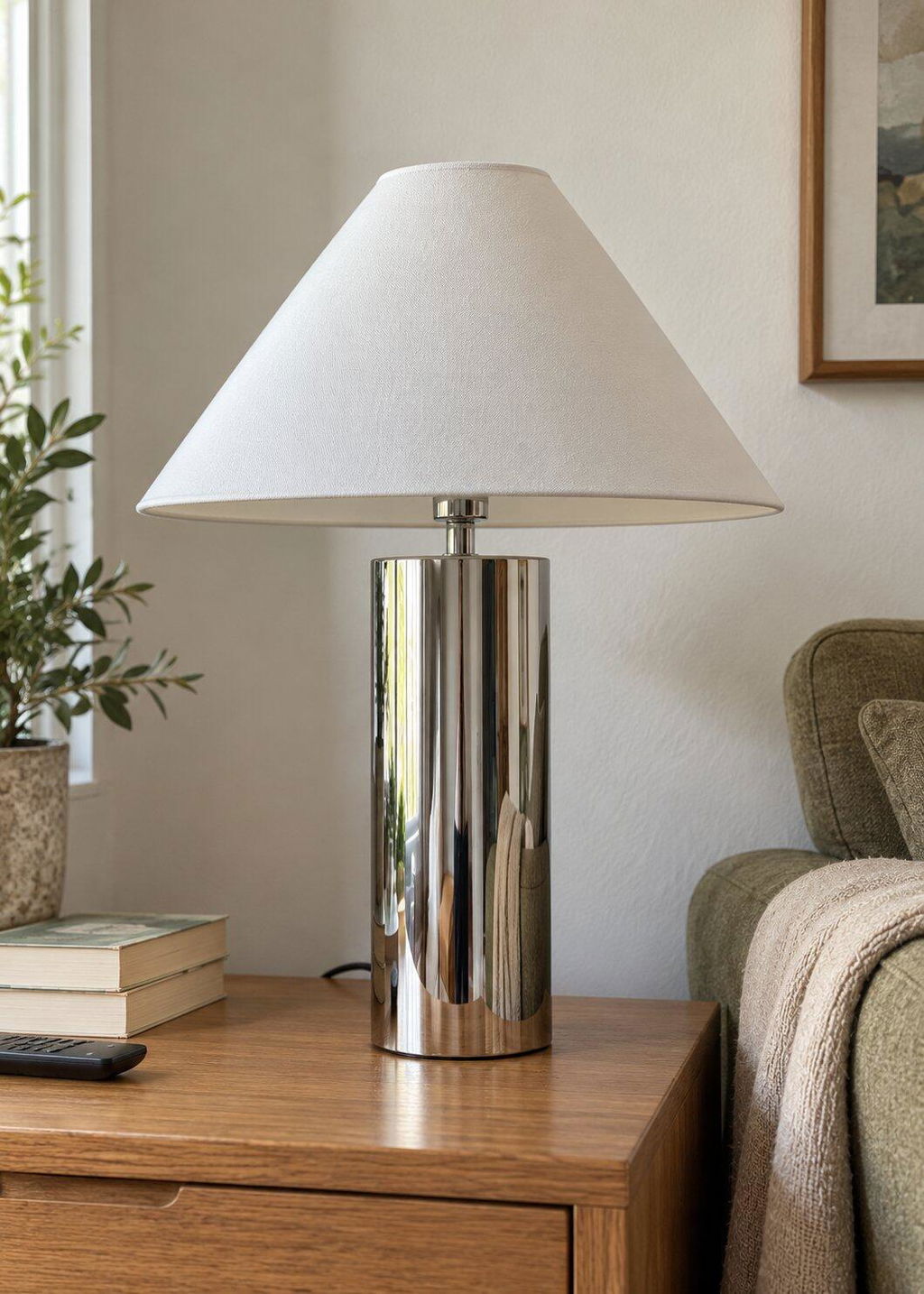
If the surface is small, a lamp is usually the best single choice, because it does something. Keep the base narrower than about a third of the tabletop so the piece does not read as top-heavy. Our table lamp collection has several with a small enough footprint to work on a compact top.
For the rack itself, three or four items and no more. Leave visible space between them. Overfilling defeats the purpose entirely: you have not tidied the magazines away, you have simply moved them somewhere more prominent and lit them better.
Contrast is worth using here. A steel frame against a textured linen sofa does more for a room than a wooden table beside a wooden floor. If you want the longer version of that argument, our guide to styling a linen sofa works through how hard and soft materials play off each other.
One more idea, if you want the paper to be part of the composition rather than tidied out of sight: a book stand. The Hon Crossed Wooden Book Stand holds a single book open at the page, which turns something you are actually reading into the object on the surface. It folds flat when you are not using it. The same logic applies to a coffee table, which we cover in our Japandi living room guide.
Finish and upkeep
None of these need much, but the finishes behave differently and it is worth knowing which you are choosing.
Brushed steel is the low-maintenance option. Matte, rust-resistant, and it hides fingerprints. A wipe with a soft cloth is the whole routine.
Polished steel looks better than brushed and asks slightly more of you. Wipe with a damp cloth and dry immediately, because water marks show on a mirror finish where they vanish on a matte one. Avoid abrasive cleaners entirely.
Powder-coated steel gives an even matte colour and takes everyday handling well. Keep it clear of standing moisture and sharp knocks, since a chip in a coating is more visible than a scratch on bare metal.
Wood and rattan want a dry, stable spot. Dust with a dry cloth, use a wood oil or wax once or twice a year, and keep them out of direct sun and away from radiators, both of which dry the material out over time.

Shop
Our side tables and magazine racks are built to do two jobs without looking like they are trying to.
Steel side tables and magazine racks, the full collection.
Maki, Steel Magazine Rack and Side Table, £280. Sculptural S-frame in powder-coated steel, W35 x D32 x H42 cm.
Hako, Brushed Steel Side Table, £460. Flat top with open storage below, W40 x D30 x H55 cm.
Wire Mesh Magazine Holder, Brushed Steel, £30. Three-tier holder for magazines, files and post.
Frequently asked questions
What height should a side table with a magazine rack be?
Match the arm of your sofa, or come within about five centimetres of it. Sofa arms usually sit between 61 and 81 cm from the floor, so measure yours before buying. Magazine rack side tables tend to run shorter than plain ones, typically 42 to 55 cm, because the rack sits beneath the top. That suits a low-profile sofa well and a high-armed one poorly.
How many magazines does a side table rack hold?
Four to six standard magazines upright, or two to three hardbacks laid flat, is a realistic figure for a well-proportioned rack. UK magazines are usually A4, 210 by 297 mm, so check the rack gives you at least 22 cm of clear width. The aim is a small selection within reach, not an archive.
Can a magazine rack side table hold a lamp?
Yes, on most designs. Tops generally run 30 to 45 cm across, which suits a slim table lamp. Keep the lamp base to roughly a third of the tabletop width or less, or the piece starts to look top-heavy. A large-based lamp is better on a wider surface.
Is steel or wood better for a magazine rack table?
Steel takes up less visual space, which matters when the rack is rarely empty, and it needs almost no upkeep. Wood is warmer and anchors a room, but a wooden frame with a rack built in is a visually heavier object, which shows in a small space. The better question is what the rest of the room is already doing.
Can I use a magazine rack side table as a bedside table?
Yes, and it is one of the better uses for one, since books are what most people keep beside a bed. Choose a design where the storage is reached from the side rather than the front, so it does not obstruct you getting in and out of bed. Check the height against your mattress rather than your sofa.
Do I need a side table with a rack, or a separate magazine holder?
If you read regularly and want everything in one place, the integrated piece is worth it. If you mostly want a side table and the storage is a bonus, a plain table plus a standalone holder is often better and cheaper, and it lets you put the storage against a wall rather than in the middle of the room.