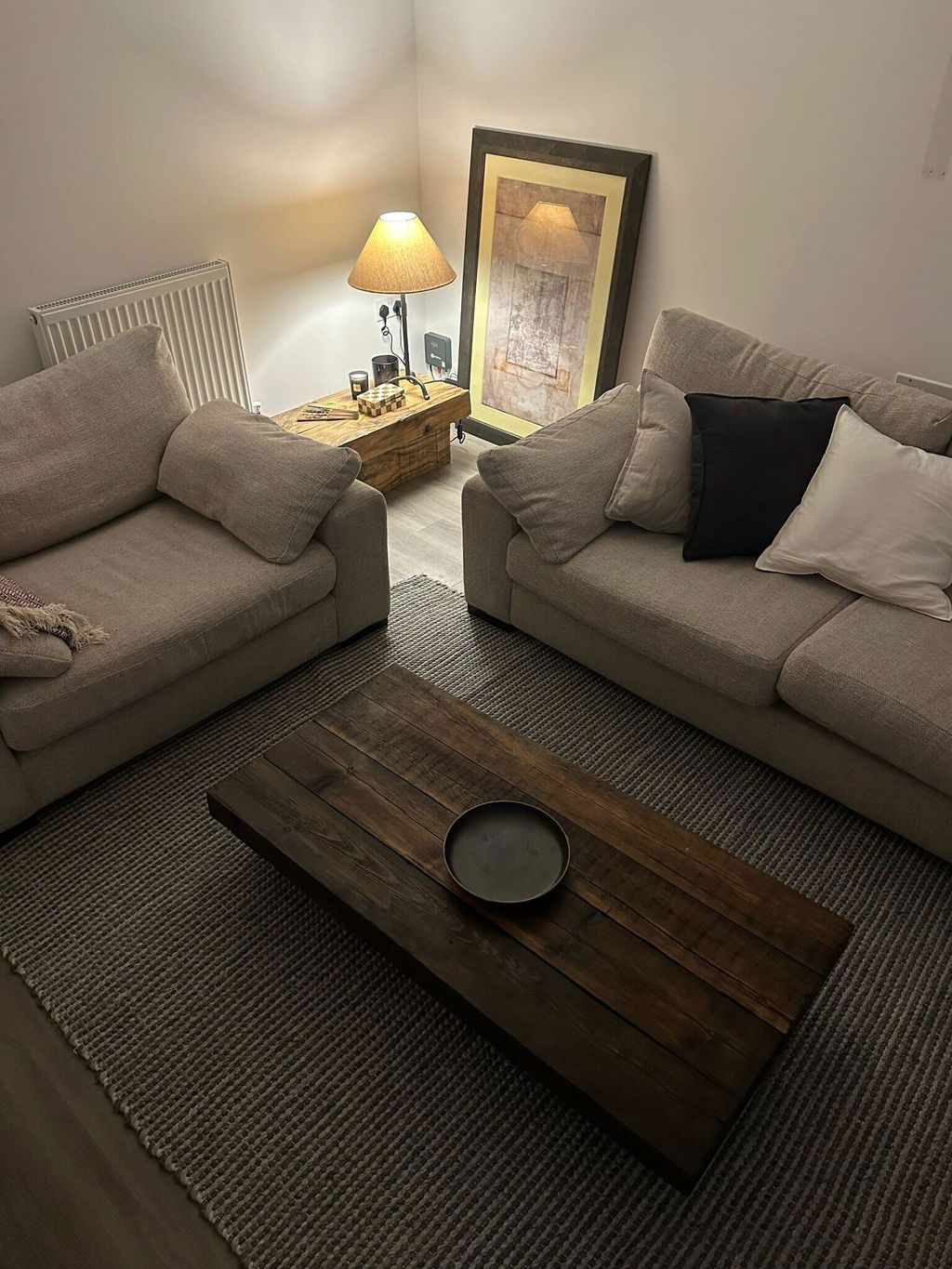


In love with this lamp, I have a lot of wood in my home and wanted something that would bring a new element into the room (quite literally). It's made from stainless steel and is exactly what I was looking for!
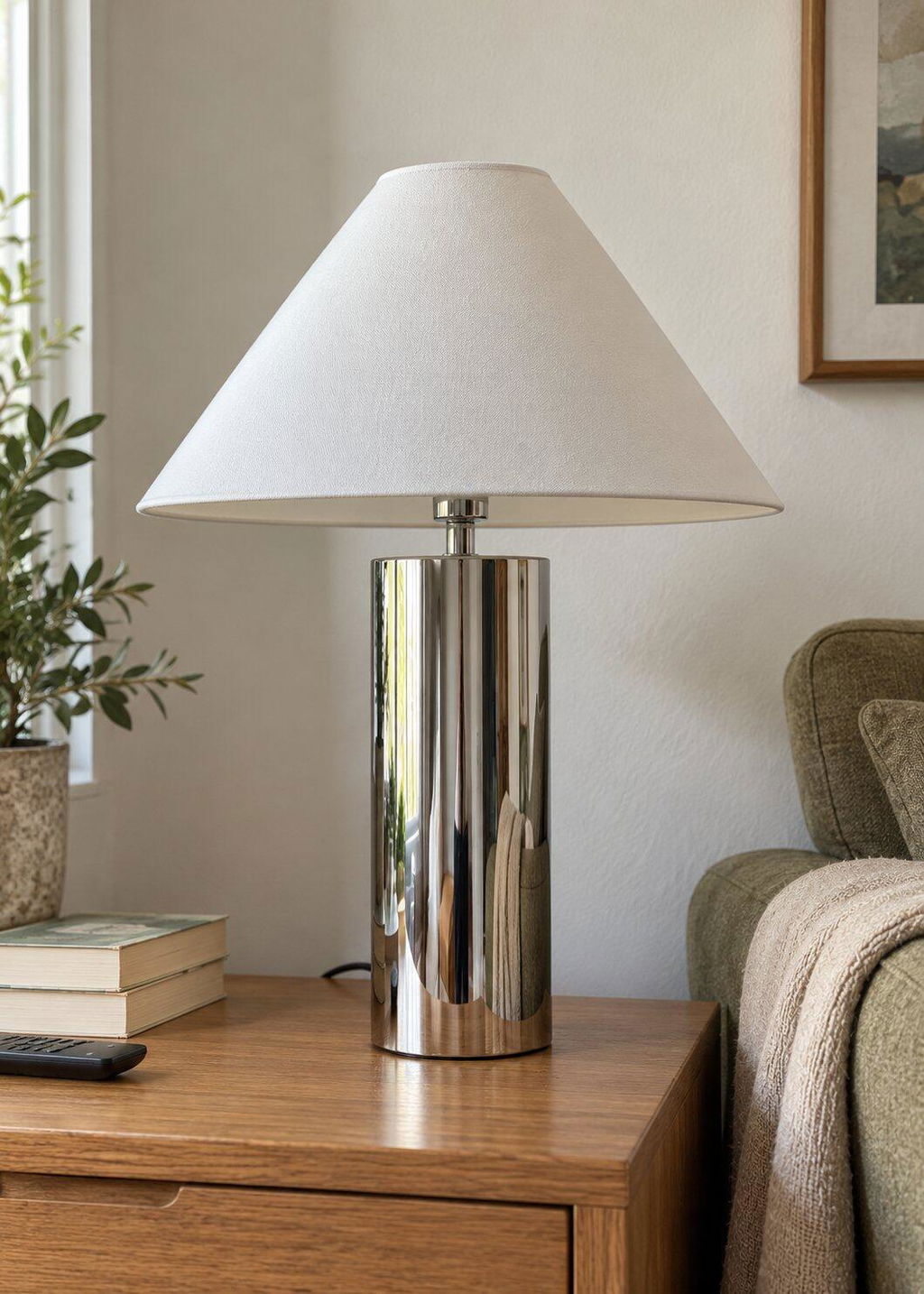
It has completely changed the space. It is big, properly a statement at 80cm, so go in knowing it fills the ceiling rather than sitting quietly in the corner.
The thing worth saying honestly: the fabric is matte, not glossy. It has the faintest sheen and a warm creamy colour, and where the pleats gather it deepens to a richer, warmer tone. If you are expecting a slick shiny silk pendant, this is not that. It is softer and more textural, and to me that is the whole appeal. It reads more like a piece of textile art than a light fitting, and it brings a real sense of calm and layering to the room.
Lovely warm glow through the fabric once lit, and the three bulbs are included, which was a nice surprise. It took about three weeks to arrive.
Would recommend, just buy it for what it is: warm, handmade and characterful.


The linen has that slightly uneven, lived-in texture from day one, which is exactly what I wanted rather than something too polished. The skirted base makes it feel settled in the room, and the two-seater is generous without looking oversized.
The cushions are properly soft. You sit down and they give, rather than bouncing you back. It looks calm against the rest of the space and doesn’t fight with other furniture. Really pleased with how the look turned out.
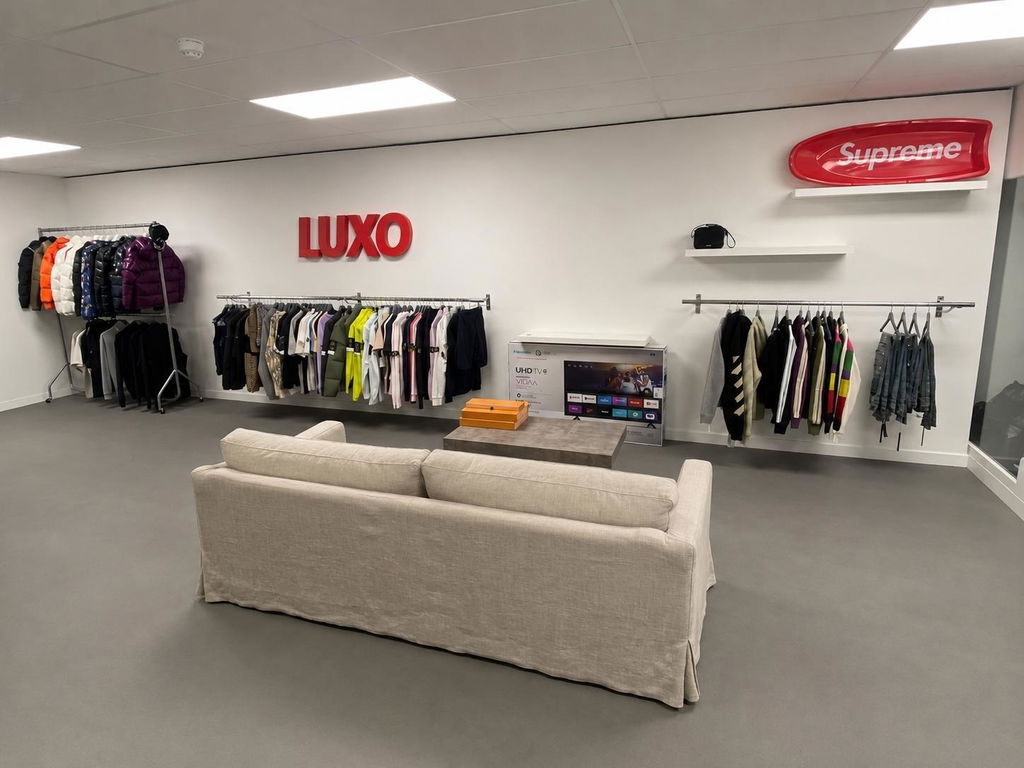
I’m very happy with the brushed steel finish, it's softer and more understated than I expected, which is exactly what I wanted. It sits nicely next to our oak furniture without looking out of place.
The size is perfect for beside the sofa. The open shelf underneath is useful for books and the odd remote. It feels solid and well made, and so far it just needs a quick wipe now and then. Really pleased we went for this one.
Really pleased with this purchase. Delivery went smoothly and the table arrived in perfect condition.
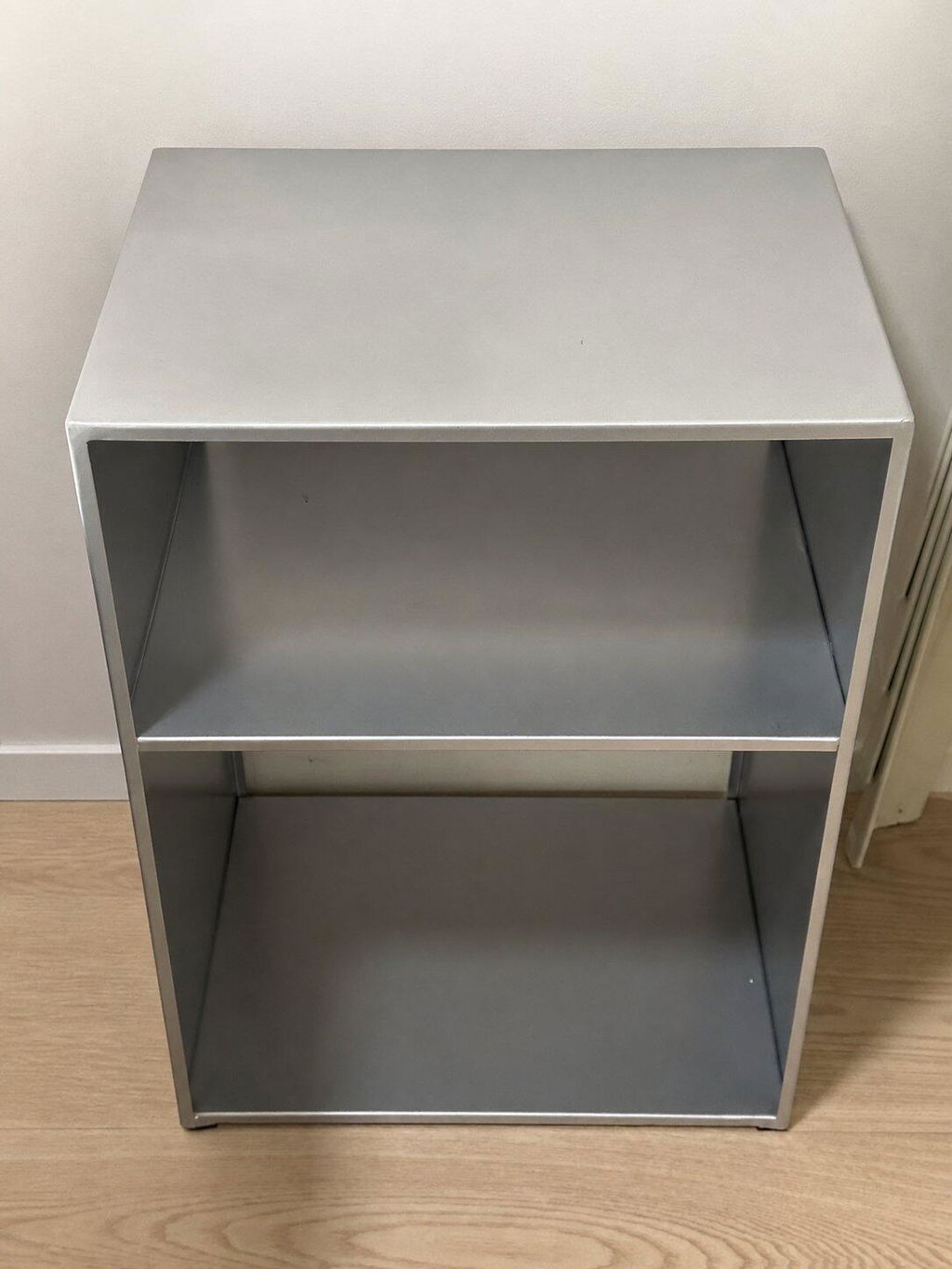
I love how solid and heavy the Hira coffee table feels. The dark oak boards have a rich grain and the low, chunky design gives it a strong presence without looking bulky. It sits beautifully in front of the sofa and the reclaimed timber finish is even nicer in person than in the photos.
Very happy with both the quality and the look. Highly recommend.