
Dining Room Lighting Ideas | Start With the Statement Pendant
Most dining room lighting ideas start in the wrong place. They begin with wall lights, or a lamp on the sideboard, or a run of downlights in the ceiling, and only later, almost as an afterthought, arrive at the fixture that actually sets the tone of the room. It should be the other way round. The single most useful decision you can make in a dining room is the piece that hangs over the table, and everything else is layered down from there.
This guide takes that order seriously. It starts at the ceiling with the statement pendant, then works outward to the softer, lower light that makes a dining room feel calm rather than lit. It is written for a real room you already have, not a rebuild, so the ideas hold whether you are furnishing from scratch or improving what is there.
Start at the ceiling: why the pendant comes first
The design and lighting press has spent 2026 calling it the year of the statement pendant. The reporting is consistent: sculptural, often oversized ceiling fixtures treated as the focal point of a room rather than a functional afterthought, with residential sizes climbing from the old 400 to 500mm norm toward larger, more architectural forms, and light warming to a soft 2700 to 3000K. Over a dining table, that thinking lands more naturally than anywhere else in the house. The table is where people sit still, at eye level with the fixture above them, for longer than in any other room.
We can add something the trend pieces cannot, because we watch it every week. Lighting is comfortably the first thing customers come to us for, ahead of any other category we sell. And within lighting, it is not the small accessories that the most considered buyers linger over. It is the larger fixtures, the pendants and the floor lamps, where they are willing to make a real decision. The ceiling, in other words, is where people commit. So if you only get one thing right in a dining room, make it the piece overhead.
That is an observation about our own shop, not a claim about the market, and it is offered as one. But it lines up neatly with what the wider trend is saying, and it is the reason this guide leads with the pendant rather than burying it in a list.
How big and how low: the two questions we are actually asked
Before any styling, two practical questions come up almost every time someone considers a large pendant, and they are worth answering plainly because getting them wrong is what makes a good fixture look awkward.
The first is height. Over a dining table, a pendant wants to hang lower than people expect: roughly 75 to 90cm above the tabletop, so the bottom of the shade sits a little above eye level when you are seated. Hung too high, a statement piece loses its presence and stops doing its job of gathering the table together. This is why an adjustable drop matters more than the headline size. The Kumo pendant, for example, hangs on three chains adjustable up to 120cm, so it can be set low over a table or lifted in a hallway, and the Linen Wave uses an adjustable cord for the same reason.
The second is scale, and the honest answer is that most people go too small. A dining pendant should feel generous. As a rough guide, the shade wants to be around a half to two thirds the width of the table, so a single 80cm piece suits a table for four to six comfortably and reads as intentional rather than timid. A fixture that looks a fraction too big in the box is usually right once it is up.
Two dining pendants, two moods
Our own dining lighting sits at 80cm across, firmly in the statement territory the trend describes, but in soft natural materials rather than glass or polished metal. The point of a fabric pendant over a table is that it diffuses light instead of glaring it: you see the texture of the shade and a warm, even glow, not a bare bulb.

The Kumo, Gathered Fabric Pendant Light (£540) is the quieter drama of the two. Fine gathered fabric is draped in vertical pleats across a brushed iron frame in a wide cloud form, billowing out before cinching in at the base, so it reads closer to textile art than a light fitting. It hangs from three dark metal chains meeting at a central mount, which gives it a grounded, architectural quality rather than the single-cord look of most fabric pendants. Over a dining table it holds presence without weight, and it suits a bedroom or hallway just as well. Our hallway lighting ideas cover the head height a hallway pendant needs.
The Linen Wave, Light Shade and Pendant, 80cm (£320) is the more sculptural, rippling option: hand-pleated natural linen with a rich woven texture, casting a soft ambient downlight and a golden warmth over the table. Its pleated form gives it interest from every angle, which matters over a table you walk around, and the minimal black ceiling mount keeps the attention on the shade. It is the piece to reach for when you want a soft, grounded statement rather than a cloud.
Both are hand-finished, so slight variations in colour and texture come with them.
Layer down from the pendant
A pendant alone is a spotlight on the table and darkness around it. The calm you are after comes from layering: two or three sources at different heights, all warm, none of them harsh. Once the pendant is set, work down.
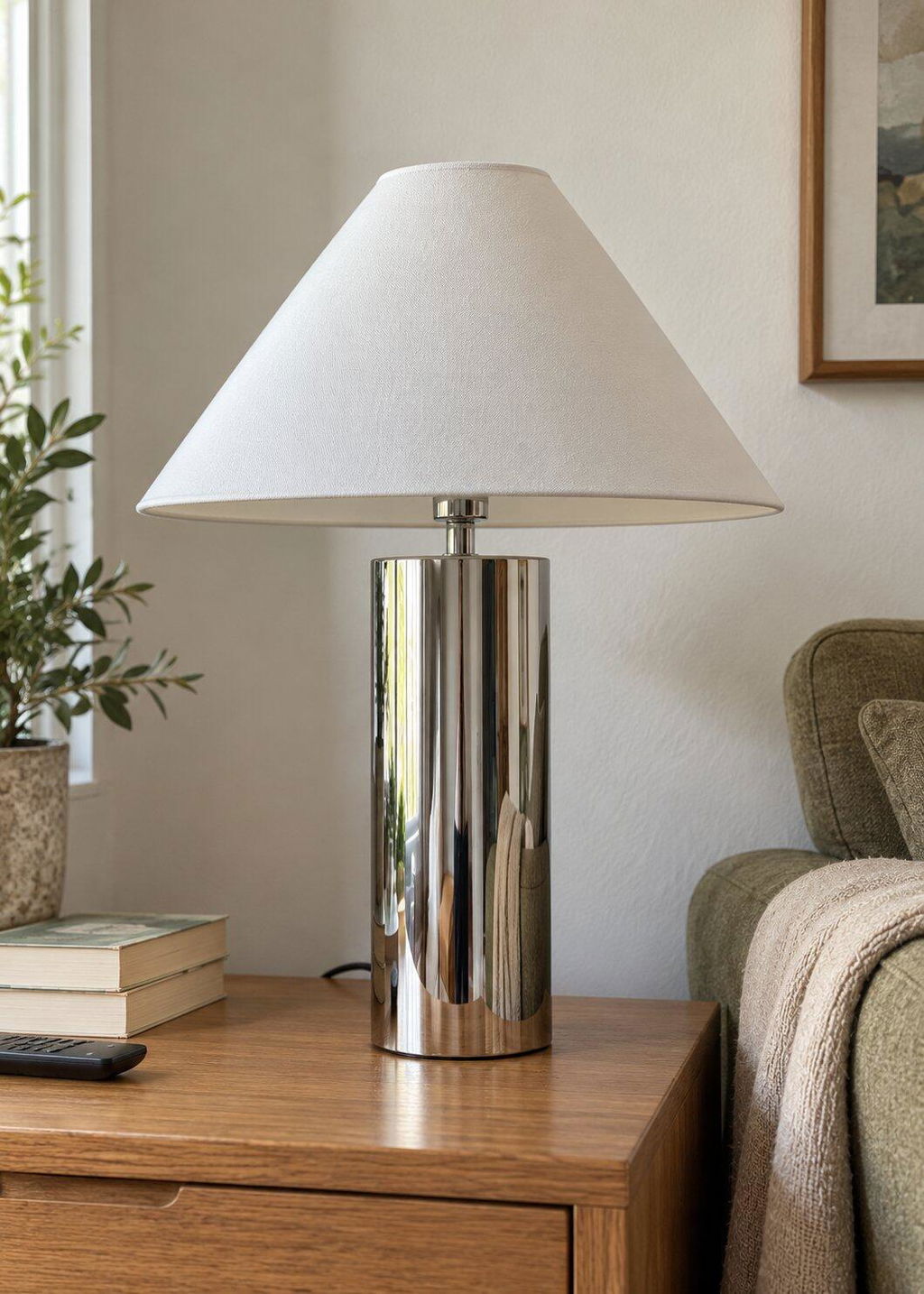
The next layer is usually a lamp on a sideboard or console against the wall. It lifts the edges of the room and gives you a softer setting for when the table is cleared. A glass or stone table lamp works well here because it carries the same restraint as the pendant without competing with it: the Hikari, Glass Table Lamp (£280) throws a soft, diffused glow, and the Marble Column Table Lamp (£590) brings a heavier, sculptural note for a larger sideboard. The buying notes on our table lamps collection run through sizing and placement.
The lowest layer is candlelight on the table itself, and it does more than any fixture to make a dinner feel considered. A pair of holders at different heights, lit low, reads instantly as an occasion. The Tsuya, Polished Silver Candle Holder (£40) suits a taper or a tealight and catches the pendant light beautifully. For the method of stacking sources at different heights, the lighting section of our Japandi living room guide applies just as well to a dining room, and our handmade ceramics guide takes it through to the table setting itself.

Get the warmth and the dimming right
The material of the shade sets the mood, but the bulb inside it decides whether the room is warm or clinical. Follow the trend on this one, because it is right: aim for a warm colour temperature around 2700 to 3000K, not the cooler, bluer light that suits a kitchen or a study. Warm light flatters food, skin and natural materials, which is the whole point of a dining room.
Put the pendant on a dimmer if you possibly can. A dining room does two jobs, bright enough to lay the table and see the food, low enough to linger over afterwards, and a single fixed brightness cannot do both. A dimmable pendant plus low candlelight is the whole trick to a room that shifts from supper to evening without you touching anything but a dial. The pendants here take a standard E27 bulb, so a warm dimmable bulb is all it takes.
Small dining rooms and low ceilings
A statement pendant is not only for double-height spaces. In a small dining room or an open-plan corner, a single generous fixture over the table can actually make the room feel more resolved, because it gives the eye one clear centre instead of several scattered lights. The trick is drop height: in a room with a standard ceiling, hang the shade so its base sits a little above seated eye level and no lower, keeping the sight lines across the table clear. If the table sits at one end of an open-plan kitchen, our japandi kitchen ideas guide covers the palette and materials that let the two zones read as one calm room.
Fabric pendants help here too. Because they diffuse rather than glare, they can hang closer to head height than a bare bulb or an open metal shade without becoming uncomfortable to sit under. If the room is genuinely tight, a rippling form like the Linen Wave reads as lighter than a solid drum of the same width. For more on making a compact space work, our japandi living room ideas guide covers the same calm, uncluttered principles, and dark japandi shows how a moodier palette can make a small dining room feel intimate rather than cramped.
Shop the look
The pieces that carry these dining room lighting ideas, each verified in stock and made to live in daily use. Start with the pendant, then layer down.


Browse both shades in our fabric and linen pendant lights collection, or see the full range in our floor, table and pendant lighting collection.
Frequently asked questions
How big should a dining room pendant light be?
As a rough guide, the shade wants to be around a half to two thirds the width of the table. A single 80cm pendant suits a table for four to six and reads as intentional rather than timid. Most people choose too small, so a fixture that looks a fraction too big in the box is usually right once it is hung.
How low should a pendant hang over a dining table?
Roughly 75 to 90cm above the tabletop, so the bottom of the shade sits a little above eye level when you are seated. Hung too high, a statement pendant loses its presence. An adjustable drop matters more than the headline size, which is why our pendants use adjustable chains or cord.
What colour temperature is best for dining room lighting?
Aim for warm light, around 2700 to 3000K, not the cooler bluer light that suits a kitchen or study. Warm light flatters food, skin and natural materials. Putting the pendant on a dimmer lets the room shift from bright enough to lay the table to low enough to linger.
Can you use a large statement pendant in a small dining room?
Yes. A single generous fixture over the table often makes a small room feel more resolved, because it gives the eye one clear centre instead of several scattered lights. Mind the drop height so the sight lines across the table stay clear, and choose a diffusing fabric shade, which can hang closer to head height than a bare bulb without becoming uncomfortable.
How do you layer dining room lighting?
Work down from the pendant. Set the ceiling fixture first, add a lamp on a sideboard or console to lift the edges of the room, then finish with candlelight on the table itself. Two or three warm sources at different heights, all soft, none harsh, is what makes a dining room feel calm rather than simply lit.