
Japandi Kitchen Ideas | A Calm, Natural Look
A japandi kitchen is the calmest room in the house done properly: the clean lines and function-first thinking of Scandinavian design, married to the warmth, restraint and natural materials of Japanese interiors. It is not a colour you paint on or a splashback you buy. It is a way of deciding what earns its place on the counter and what does not. Done well, a japandi kitchen reads as quiet rather than empty, and warm rather than clinical.
Most kitchens fail the japandi test for the same reason: too much on show, and too little of it made with any care. This guide works through the parts you actually control without ripping the room out, the palette, the materials, the surfaces you keep clear, and the small number of well-made pieces that carry the whole look. Everything here is achievable in a rental or a finished kitchen, not just a new build.
What makes a kitchen japandi rather than just minimalist
A minimalist kitchen can be cold. It strips things back and stops there, leaving hard edges and empty white. Japandi keeps the discipline but adds warmth back in through material and texture, so the room feels lived in rather than staged. The Scandinavian half brings light wood, pale walls and a practical layout. The Japanese half brings imperfection, natural grain, and the wabi-sabi idea that a handmade object with slight irregularity is worth more than a flawless machine-made one.
In practice the difference shows up on the open shelf and the worktop. A minimalist kitchen leaves them bare. A japandi kitchen leaves them mostly bare, then places a few honest objects that happen to be useful: a stack of hand-thrown plates, a stoneware mug, a wooden tray. The room is still calm, but it has a pulse.
The japandi kitchen palette: warm neutrals, soft contrast
Colour is where a japandi kitchen is won or lost, and the palette is narrow on purpose. Work from a base of warm neutrals: off-white, oatmeal, greige, soft clay and pale timber. These are the Scandinavian foundations, and they keep the room feeling bright and open. Then introduce soft contrast rather than hard contrast. Instead of black against white, reach for charcoal, deep walnut, muted olive or a smoky grey-brown. The contrast should feel like a shadow, not a shout.
Avoid pure brilliant white and avoid glossy surfaces. Japandi favours matte and satin finishes that absorb light and read as calm. If your cabinetry is already a cool white, you can pull it warmer with wood accents, a linen roman blind, and natural-toned accessories rather than repainting. The palette is forgiving because it is built from tones that already agree with each other. This same restraint runs through the whole style, and our essay on dark japandi shows how far the moody end of the palette can be pushed without losing the calm.
Natural materials do the heavy lifting
If the palette sets the mood, the materials give a japandi kitchen its warmth. This is the single most important move, and it is where an ordinary minimalist kitchen becomes something softer. Lean on wood, stone, ceramic, linen and matte metal, and let each one keep its natural character rather than hiding it.
Wood is the anchor. Light oak, ash and walnut all belong, whether in the cabinetry, a chopping board left out, a stool, or a serving tray. Stone appears in a worktop or a mortar. Ceramic is the material that does the most in the least space, which is why handmade tableware sits at the centre of the look. And metal, when it appears, is brushed or embossed rather than mirror-bright, so it reads as quiet.

The trick with materials is variety within a narrow range. A japandi kitchen might hold five different materials but only three or four colours, so the eye reads texture rather than clutter. A matte cream plate next to a raw wooden board next to a brushed steel tray is interesting to look at precisely because the palette holds them together.
Handmade ceramics: the heart of a japandi kitchen
Nothing signals japandi faster than hand-thrown stoneware. Machine-made tableware is uniform and a little lifeless. Handmade pieces carry the small evidence of being made by a person: speckling that develops in the firing, glaze that pools near a rim, a wheel-thrown form that is never quite perfectly round. That gentle irregularity is the wabi-sabi principle in physical form, and on an open shelf it is the difference between a kitchen that looks bought and one that looks considered.
Our Iwa and Suna ranges are built for exactly this: matte, tactile stoneware in earthy neutral tones, sold as sets so a shelf reads as a collection rather than odds and ends. The Iwa, Small Side Plate, Set of 2 (£50) and the Suna, Deep Bowl, Set of 2 (£40) are quiet workhorses that look as good stacked as they do in use. If you would rather buy one thing and be done, the Yume, Stoneware Dinner Set, 12 Piece (£120) sets a whole table in a single warm, matte glaze. The plates sit together in our stoneware plates collection.
Mugs matter more than people expect, because they are the piece that lives out on the counter. The Asa Speckled Stoneware Mug, Set of 2 (£50) is hand-finished stoneware in a soft cream glaze, with natural speckling and a substantial, warm feel in the hand. It is the sort of object that makes a bare worktop look intentional. For the full logic of building a tableware collection that hangs together, our guide to choosing handmade ceramics goes deeper, including how to set the table around them.
Keep surfaces clear, then style with restraint
Clutter is the enemy of this look, so the discipline is simple: most of the worktop stays empty, and what remains is deliberate. Japanese kitchens hide the machinery, the toaster, the kettle, the small appliances, and leave out only the things that are both useful and good to look at. Scandinavian storage thinking backs this up with a place for everything behind a door.
When you do style a surface or an open shelf, work in small odd-numbered groups and vary the height. A stack of plates, a single mug, a low bowl, a wooden tray to gather them onto. Negative space is part of the composition, not a gap to fill. A serving tray earns its keep here, both as a functional object and as a way to corral a few pieces into one calm arrangement. The Sui, Embossed Steel Serving Tray (£30) does this in brushed metal, and the Sharing Tray, Snacks, Kitchen (£40) does it in warm wood for the softer end of the palette.

A useful rule: if an object is out on the counter, it should be either genuinely used every day or genuinely worth looking at. Ideally both. Everything else goes away. That single test does more for a japandi kitchen than any purchase.
Soft metal accents, used sparingly
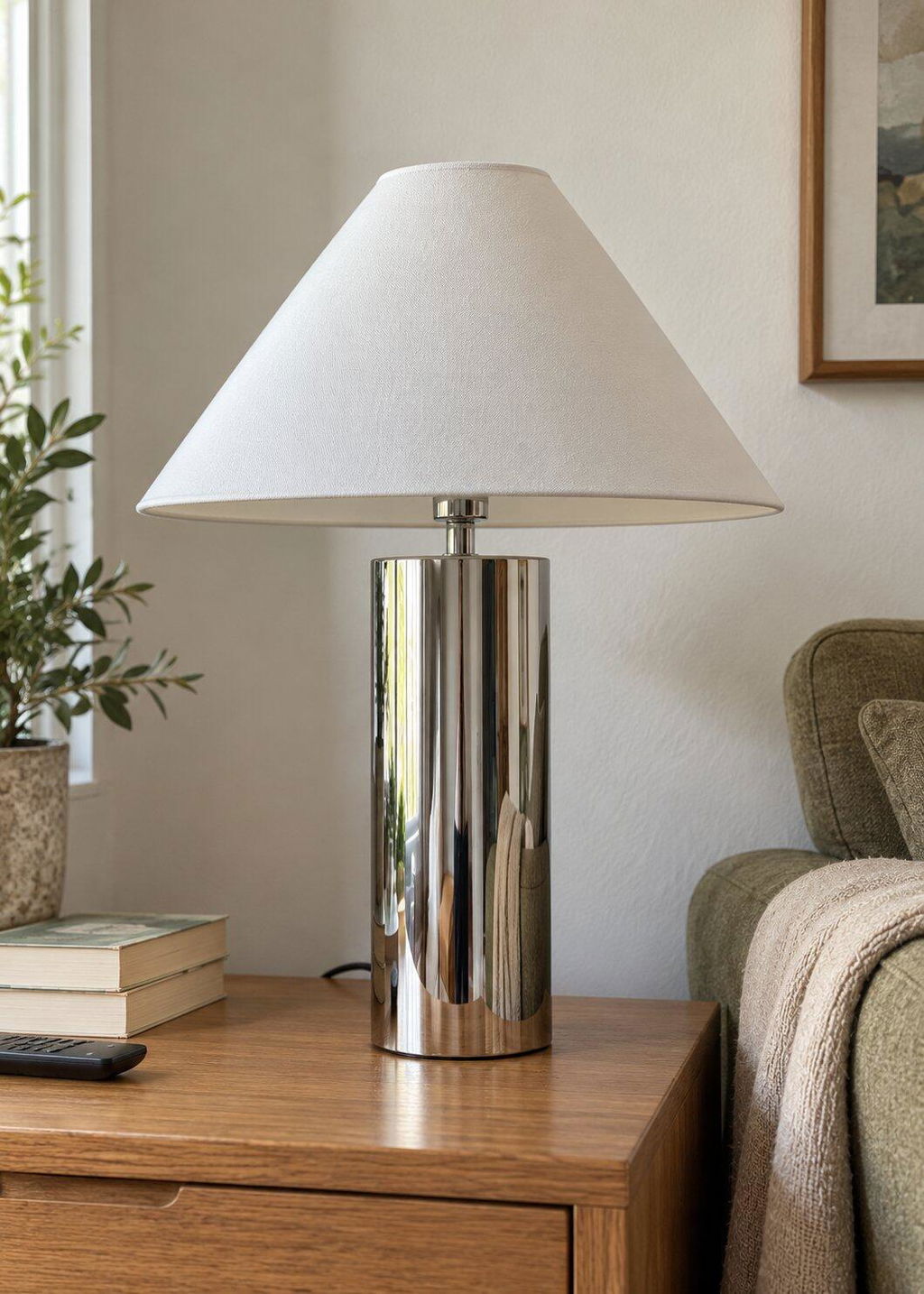
Metal has a place in a japandi kitchen, but it is a supporting note rather than the theme. The polished-steel trend that runs through 2026 interiors can be brought in gently: a brushed tray, a steel bowl, a single sculptural piece that catches the light without dominating. The key is finish. Mirror chrome can feel cold and loud, so favour brushed, embossed or satin metal that reads as soft.
Used well, one metal object adds a quiet modern edge that stops the natural materials from tipping into rustic. The Metal Shell Plate in stainless steel (£50) is a good example: a decorative catch-all that brings a cool tone into an otherwise warm scheme, sitting comfortably against wood and ceramic. If you want to understand where this fits in the wider style conversation, our piece on japandi versus quiet luxury unpicks how restraint and material quality separate the two.
Seating and the eat-in kitchen
If your kitchen has room for a table or a breakfast bar, the seating is a chance to bring in the natural, handcrafted character that defines the style. Japandi leans toward chairs with visible craft and honest materials: light or dark wood frames, woven cane, rush or rattan seats, and simple, low-profile forms that do not crowd the room.

The Rattan Dining Chair, Black (£180) is a good japandi kitchen chair for this reason: the woven cane back brings texture and handcraft, while the dark frame gives the soft contrast the palette wants. Cane and rattan also read beautifully in natural light, which is exactly where a kitchen chair spends its day. For the full run of options and how to pick between cane, rattan and steel, see our rattan dining chairs buying guide.
Light, greenery and the finishing touches
Two things stop a japandi kitchen from feeling austere: natural light and a little life. Keep window treatments minimal and soft, a linen blind or nothing at all, so daylight can do its work on the matte surfaces and natural grain. Where you need artificial light, warm it up and keep the fittings simple and sculptural rather than ornate. Over a kitchen table, one soft pendant does most of the work, and our dining room lighting ideas guide covers the size and drop height.
Then add one restrained note of green. A single stem in a stoneware vase, a small potted herb, or a low bowl of fruit brings the organic, seasonal quality that Japanese interiors prize, without tipping into clutter. One considered piece of greenery is worth more than a row of pots. The same principle carries across the home, and if you want to apply this calm elsewhere, our japandi living room ideas guide runs the full method through the next room along.
Shop the look
A handful of well-made, natural pieces do more for a japandi kitchen than any renovation. These are the tableware, serveware and seating that carry the look, each verified in stock and made to live in daily use.


Browse the full range in our handmade ceramic tableware collection, or explore our kitchen accessories for the trays, boards and steel pieces that finish the look.
Frequently asked questions
What is a Japandi kitchen?
A Japandi kitchen blends Scandinavian and Japanese design: the clean lines, pale wood and function-first layout of Scandi style, combined with the warmth, restraint and natural materials of Japanese interiors. The result is a calm, uncluttered space built from warm neutrals, natural materials and a small number of well-made, often handmade objects.
What colours work in a Japandi kitchen?
Warm neutrals form the base: off-white, oatmeal, greige, soft clay and pale timber. Contrast is kept soft, using charcoal, deep walnut, muted olive or smoky grey-brown rather than hard black and white. Matte and satin finishes suit the look far better than glossy or brilliant-white surfaces.
What materials are used in a Japandi kitchen?
Natural materials do the heavy lifting: light and dark wood, stone, handmade ceramic, linen and matte or brushed metal. Each material keeps its natural character rather than hiding it, and the warmth comes from texture. Handmade stoneware tableware is central, because its gentle irregularity carries the wabi-sabi quality at the heart of the style.
How do I make my kitchen look Japandi on a budget?
You do not need to renovate. Clear the worktops, hide the small appliances, and warm a cool kitchen with wood accents and natural-toned accessories rather than repainting. Then add a few handmade pieces on show, a set of stoneware plates, a speckled mug, a wooden or steel serving tray, so the surfaces you keep clear are punctuated by objects worth looking at.
Is Japandi still in style in 2026?
Yes. Japandi has settled from a passing trend into a lasting approach, because it is built on timeless principles rather than seasonal colours: minimalism, natural materials and craftsmanship. The 2026 evolution leans slightly warmer and moodier, with darker woods and soft contrast, but the calm, natural core of the look is unchanged.