
The bedroom is the one room in the house that exists entirely for you. No guests to impress, no traffic to accommodate, no compromise with the household over what goes where. That freedom is precisely what makes learning how to style a bedroom so rewarding, and so easy to overthink. The principles are simpler than most design guides suggest: start with how you want to feel in the space, then work backwards through colour, light, texture and furniture until the room delivers that feeling every time you walk in.
Start With a Colour Foundation
Colour sets the emotional register of a bedroom before anything else. Warm neutrals, soft whites, muted greens and dusty pinks all read as restful. Deep navy, charcoal and forest green work too, provided the room gets enough natural light to prevent the space from feeling enclosed.
The simplest approach is a two-tone palette: one dominant colour for walls and large textiles, one accent colour for smaller pieces. A stone-coloured wall with cream bedding and walnut furniture, for instance, creates a grounded warmth without needing to coordinate dozens of shades. If you want to introduce a third colour, confine it to accessories like cushions, ceramics or a ceramic plant pot on the windowsill.
Avoid the temptation to paint a feature wall in a drastically different colour. In bedrooms, consistency is more calming than contrast. Save the bold moves for living rooms and hallways.

Furniture Placement and Proportion
The bed dictates everything. Centre it on the longest wall where possible, leaving equal space on both sides for symmetry and access. In smaller rooms where centring is not an option, push one side against the wall but compensate with a floor lamp or wall-mounted shelf on the open side to avoid a lopsided feel.
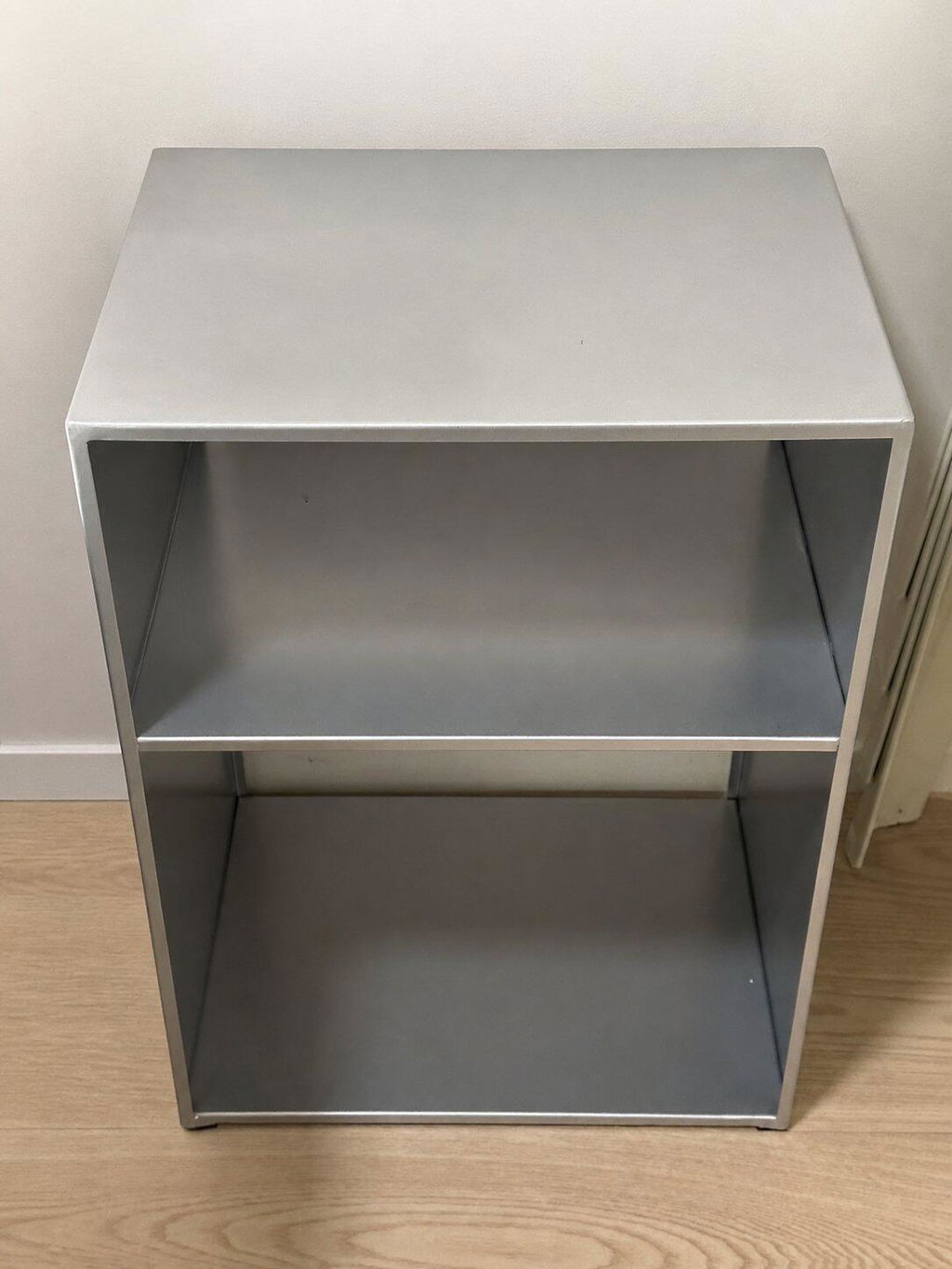
Bedside tables should sit level with the top of the mattress, give or take a few centimetres. A table that sits too high or too low creates an awkward visual line and makes reaching for a glass of water unnecessarily difficult. The Polished Stainless Steel Side Table works well here because the enclosed storage keeps the surface clear, which matters in a room where clutter directly affects how restful the space feels. For something lighter, the Metal Side Table has a more open profile that suits pared-back rooms.
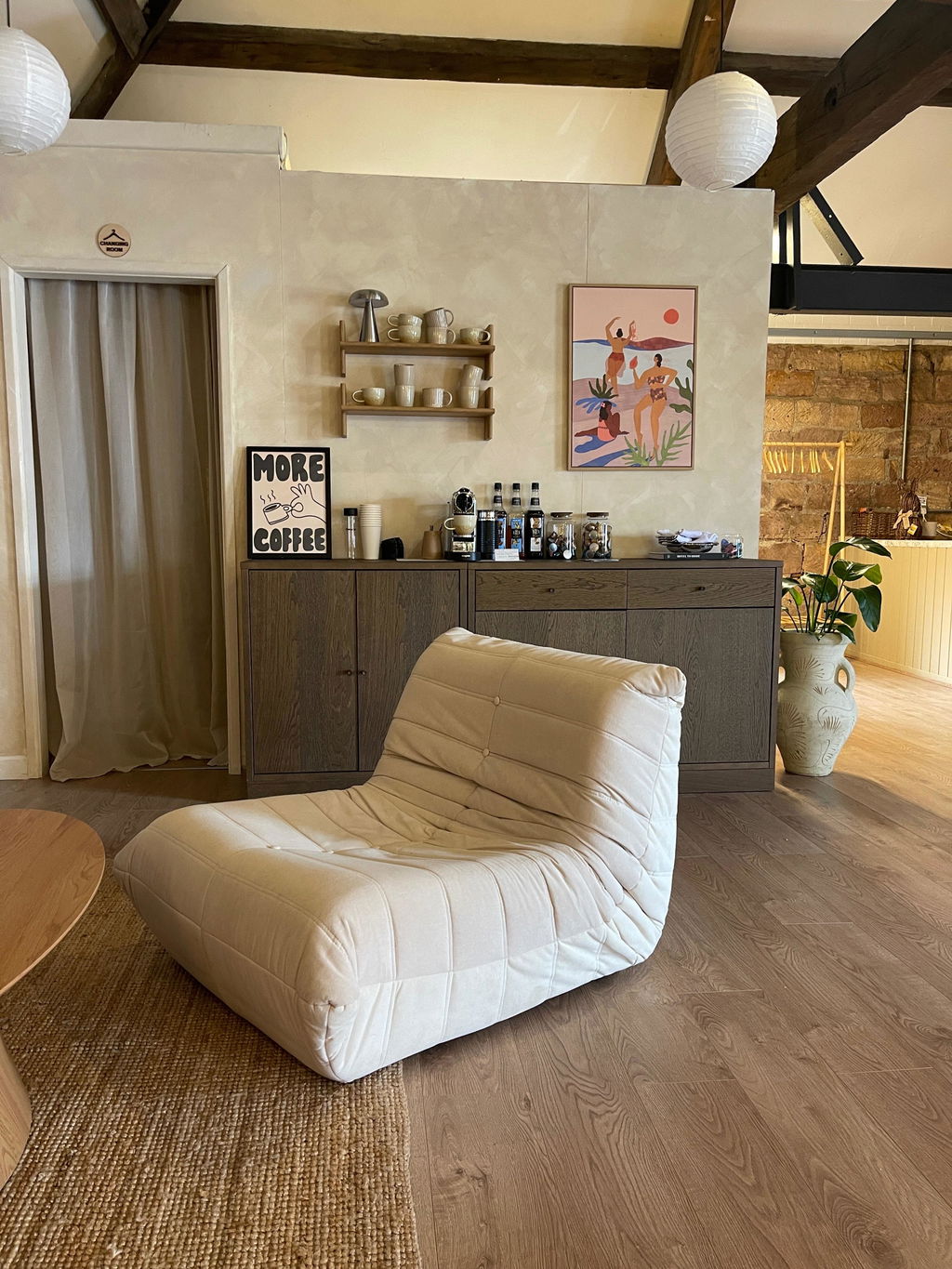
Beyond the bed and bedside tables, resist the urge to fill remaining floor space. A bedroom benefits from breathing room more than any other area of the house. One additional piece, whether that is a reading chair, a bench at the foot of the bed or a slim chest of drawers, is usually enough. The Sofuto Accent Chair in beige is a good candidate for a bedroom corner: its low profile and soft lines complement a sleep-focused space without dominating it.

Bedroom Lighting in Layers
Overhead lighting alone creates a flat, clinical atmosphere that works against everything a bedroom should be. The solution is layering: ambient light for general visibility, task lighting for reading, and accent lighting for warmth. Our guide to layering lighting covers the principle in detail, but bedrooms have their own specific requirements.
The most important layer is bedside lighting. A well-chosen table lamp on each side of the bed provides focused light for reading without flooding the room. Height matters here: the bottom of the lampshade should sit roughly at eye level when you are propped up against pillows, so the bulb is shielded from direct view.
For bedrooms with a warm, textural feel, the Marble Column Table Lamp brings weight and presence to a bedside setup, while the Hikari Glass Table Lamp suits rooms where you want the light source to feel lighter and more transparent. The Rinkaku Wooden Table Lamp is a strong choice if you are building a room around natural materials; the walnut frame connects it visually to wooden furniture without matching too literally.
If your bedside tables are small or you prefer a cleaner surface, consider a floor lamp beside the bed instead. The Rinkaku Wooden Floor Lamp paired with its table lamp counterpart creates a cohesive lighting story across the room, and our floor lamp guide covers sizing and positioning in more detail.
For overhead lighting, a Linen Wave Pendant diffuses light softly across the room and adds texture to the ceiling plane, something most bedrooms neglect entirely. Use it on a dimmer so you can bring it down to a warm glow in the evening.
Colour temperature makes a significant difference in bedrooms. Stay below 3000K (warm white) for all light sources. Anything cooler suppresses melatonin production and works against the room's primary purpose.

Textiles and Layering
Bedding is the largest textile surface in the room and the single biggest contributor to how the space feels. Start with high-quality sheets in a neutral tone, then layer upward: a duvet or quilt, a folded throw across the lower third, and two to three cushions arranged simply. The common mistake is over-layering. A bed buried under eight cushions and three throws looks styled for a photograph, not for sleeping in.
Curtains or blinds should be considered as part of the textile palette, not as an afterthought. Full-length curtains that pool slightly on the floor add softness and make ceilings feel taller. If you can, double up: a sheer layer for daytime privacy that still lets natural light through, and a heavier curtain or blackout lining for sleep.
A rug beneath the bed extends the sense of warmth beyond the mattress. Position it so that your feet land on it when you get out of bed. In terms of proportion, the rug should extend at least 60 cm beyond each side of the bed frame to avoid looking like an afterthought.
The Finishing Touches
This is where personality enters. A bedroom styled entirely from a catalogue feels like a showroom; one with considered personal touches feels like it belongs to someone.
A mirror is almost essential. Placed opposite or adjacent to a window, it doubles the available light and creates a sense of depth. An organic or irregular shape reads as more interesting than a standard rectangle, especially when leaned against a wall rather than hung.
Plants bring life to a bedroom without adding complexity. One or two in ceramic pots on a windowsill or styled on a shelf are enough. Snake plants and pothos tolerate low light and irregular watering, making them practical choices for a room that tends to get less attention than the kitchen or living room.
Candles add a warmth that electric lighting cannot replicate. A pair of candlestick holders on a dresser or a silver candle holder on the bedside table creates a ritual around winding down that a smart bulb cannot match.
Wall hooks serve both function and form. A walnut hook rail mounted beside the door or near the wardrobe keeps dressing gowns, bags and tomorrow's outfit off the floor without needing a bulky coat stand.

Common Mistakes to Avoid
Matching everything too closely is the most frequent error. A bedroom where the bedside tables, the lamp bases, the mirror frame and the hook rail are all the same material and finish looks considered at first glance and monotonous at second. Mix two or three materials instead. Walnut and brushed steel. Ceramic and glass. Linen and marble. Our guide to mixing materials covers the principles in detail.
Ignoring the ceiling is another common oversight. It is the largest uninterrupted surface in any bedroom and most people leave it flat white with a bare bulb pendant. A textured pendant light, a painted ceiling in a slightly warmer shade than the walls, or even a simple flush mount in a considered material all improve the sense of enclosure that makes a bedroom feel cocooning rather than boxy.
Neglecting storage leads to visual noise. Every surface that collects clutter, whether that is a bedside table, a dresser top or a windowsill, undermines the calm you have built through colour and lighting. Choose furniture with built-in storage where possible, and be ruthless about what earns a place on open surfaces.
Over-lighting is just as problematic as under-lighting. If every light source in the room is on at the same time, the layered effect collapses into a flat wash. Wire bedside lamps independently, put overhead lights on dimmers, and resist the urge to add LED strip lighting underneath anything.
Shop the Collection
Every piece mentioned in this guide is available to view in our lighting collection and decor collection. For bedroom-specific lamp recommendations, start with our table lamp buying guide.
Frequently Asked Questions
What is the best colour for a bedroom?
Warm neutrals, soft whites, muted greens and dusty pinks are the most restful choices for bedrooms. These tones promote relaxation without feeling clinical. Deep colours like navy or charcoal can work in rooms with generous natural light, but lighter tones are safer for smaller or north-facing bedrooms.
How many lamps do you need in a bedroom?
A minimum of two: one on each side of the bed for task lighting. Adding a floor lamp in a reading corner or a pendant overhead gives you three layers of light, which allows you to adjust the mood from bright and functional to soft and ambient. Each source should be on an independent switch or dimmer.
Should bedside tables match?
They do not have to. Mismatched bedside tables can add visual interest, provided they share a similar height and scale. Keeping them within 5 cm of each other in height maintains the visual line across the bed. Mixing materials, such as a wooden table on one side and a metal table on the other, works well when the lamp or other accessories create a thread of consistency.
How do you make a small bedroom look bigger?
Use a mirror to reflect light and create depth, keep furniture low-profile and minimal, choose a light and consistent colour palette for walls and bedding, and avoid blocking the window. Bedside lighting that casts light upward also helps, as it draws the eye toward the ceiling and increases the perceived height of the room.
What should you not put in a bedroom?
Avoid exercise equipment, work desks and screens wherever possible. These blur the boundary between activity and rest, making it harder to associate the room with sleep. If a desk is unavoidable due to space constraints, position it so it is not visible from the bed and consider a screen or curtain to separate the zones visually.