
A floor lamp is one of the few pieces of furniture that changes a room without touching the walls, the floor, or the layout. It introduces light at a height and angle that ceiling fixtures cannot reach, it anchors a corner or a seating area, and when chosen well, it functions as a piece of sculpture during the day and a source of atmosphere in the evening.
Choosing the right floor lamp for your living room is not complicated, but it involves more than picking one that looks nice in a photograph. Height, shade material, base weight, bulb type, and placement all affect whether the lamp works in your specific room. A lamp that looks perfect in a large, high-ceilinged space can overwhelm a compact flat. A lamp chosen purely for its appearance can produce light that is too harsh, too dim, or too directional for the way you actually use the room.
This guide covers how to choose a floor lamp that fits your room, your furniture, and the way you live.

Height: The First Decision
The height of a floor lamp determines where the light falls, which determines everything else about how the lamp works in a room.
For ambient lighting (general room glow), the shade should sit at or above head height when you are standing: 150cm to 170cm. At this height, the light radiates outward and upward, bouncing off the ceiling and walls to fill the room with soft, even illumination. The Chrome Column Floor Lamp at 152cm sits squarely in this range, casting light that washes across the upper portion of the room without glaring into the eyes of anyone seated below.
For task lighting (reading, working), the bottom of the shade should sit at approximately seated eye level: 100cm to 120cm from the floor. This places the light source directly beside and slightly above the reader, illuminating the page or screen without casting your own shadow across it. Taller lamps can serve this function if they have adjustable shades or if the shade is wide enough to cast light downward as well as outward.
For atmospheric or accent lighting, height matters less than position and shade quality. A shorter lamp (under 140cm) placed on a sideboard shelf or in a corner creates a pool of warm light that draws the eye without illuminating the whole room. This is the role of a portable lamp or a table lamp used at floor level.
The most common mistake with height is choosing a lamp that is too short for the room. A floor lamp under 140cm in a room with standard 240cm ceilings looks like a table lamp that lost its table. It produces light at an awkward mid-height that is too low for ambient coverage and too high for focused reading.

Shade Material: What It Does to the Light
The shade is more important than the base when it comes to how a lamp actually performs. Two lamps with identical bulbs and identical positions will produce entirely different light depending on what the shade is made from.
Fabric shades diffuse light in all directions, producing a warm, even glow with no hard edges. The light passes through the fabric rather than bouncing off it, which softens everything. For living rooms, bedrooms, and any space where atmosphere matters more than brightness, fabric is the right choice. The Kose Fabric Floor Lamp demonstrates this well: the textured fabric shade produces a wide, warm arc of light that fills a corner without creating the harsh contrast between lit and unlit areas that harder shades produce.
Pleated fabric shades add a layer of complexity. Each pleat catches light at a slightly different angle, creating subtle variations in brightness across the shade's surface. The effect is more animated than a smooth fabric shade but still soft. The Rinkaku and Rinto floor lamps both use pleated shades, and the scalloped light pattern they produce is one of their defining characteristics.
Paper and linen shades fall between fabric and metal. They diffuse light effectively but with a slightly cooler, crisper quality than thick fabric. The Linen Wave Pendant is a good reference point for this quality of light, though it is a pendant rather than a floor lamp.
Metal and glass shades direct light rather than diffuse it. A metal shade focuses light downward in a cone, which is useful for task lighting but creates strong contrast between the lit area and the surrounding room. Glass shades vary: frosted glass diffuses gently, clear glass provides no diffusion at all. For most living room applications, avoid fully opaque metal shades unless you specifically want directional task light.

Base Material: The Lamp as Furniture
When a floor lamp is switched off (which is most of the day), it is a piece of furniture. The base is what you see, and it needs to work with the room's material palette the same way a side table or a chair does.
Wood is the warmest option and the most versatile in rooms with natural materials. A turned walnut base like the Rinkaku or the carved forms of the Rinto and Tsuki bring craft and organic texture to the room even before the lamp is switched on. Wood connects naturally with rattan, linen, and ceramic, which makes it the default choice for Japandi and Scandinavian interiors.
Metal (chrome, stainless steel, brass) is cooler and more precise. A chrome column lamp introduces reflective surface and clean geometry, which works well as a contrasting material in a room dominated by warm textures. Metal bases tend to be slimmer and lighter visually, which makes them better suited to rooms where space is tight or where you want the lamp to recede rather than stand out.
Ceramic, stone, and marble add weight and sculptural presence. These bases are heavier both physically and visually, which gives them a grounding quality. They work best in rooms with enough space to accommodate their presence, and they pair well with lighter, simpler shades that do not compete with the base for attention.

Matching the Lamp to Your Room
Small Living Room (under 15 square metres)
Choose a lamp with a slim profile. A wide base or a large drum shade will eat into the room visually. The Chrome Column Floor Lamp works well in smaller spaces because the column base takes up minimal floor area while the shade provides full ambient coverage. Position it in the corner behind or beside the sofa, where it occupies dead space rather than usable floor area.
In very compact rooms, consider replacing a floor lamp entirely with a table lamp on a side table. You get light at a similar height without dedicating any floor space to a standalone lamp.
Medium Living Room (15 to 25 square metres)
Most floor lamps are designed for rooms in this range. You have enough space for a substantial base and a full-sized shade. This is where wooden floor lamps like the Rinkaku are at their best: the sculpted base has room to be appreciated as an object, and the shade has space to cast its light without the walls closing in.
Two light sources work better than one in a medium room. A floor lamp in one corner and a table lamp at the other end of the sofa creates layered lighting that gives the room depth and flexibility.
Large or Open-Plan Living Room (25+ square metres)
Large rooms need lamps with enough visual weight to hold their own across the space. A lamp that works perfectly in a compact room can disappear in a large one. The Tsuki Wooden Floor Lamp and the Rinto Wooden Floor Lamp both have sculptural bases substantial enough to anchor a corner in a large living space.
In open-plan rooms, floor lamps also serve as spatial dividers. A lamp positioned between the living area and the dining area creates a visual boundary without a physical barrier. It says "this zone is for sitting" without needing a wall to do so.

Matching the Lamp to Your Furniture
A floor lamp does not exist in isolation. It sits beside a sofa, behind a chair, next to a side table. The relationship between the lamp and its neighbouring furniture determines whether the arrangement looks planned or accidental.
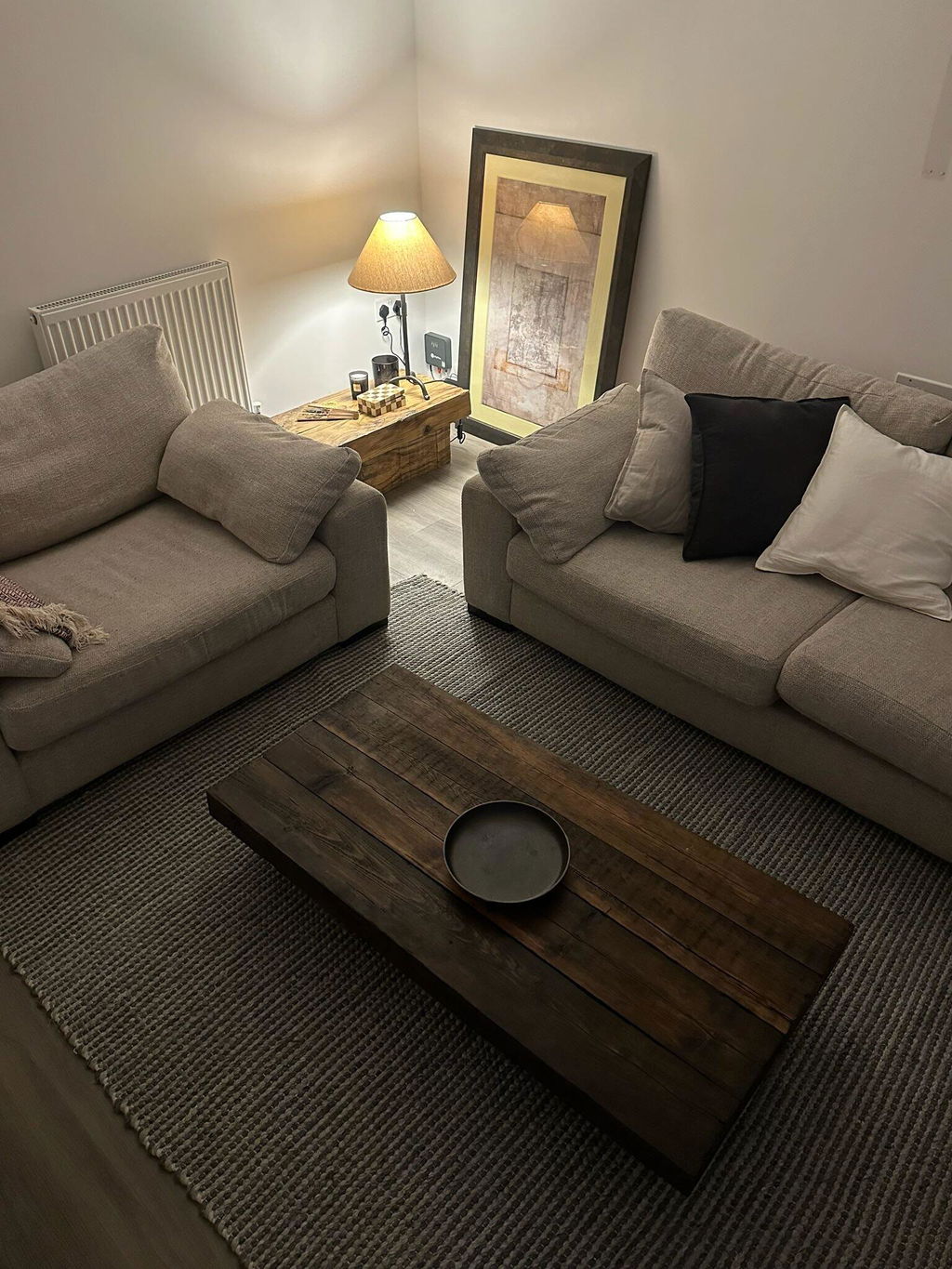
Beside a linen sofa, a wooden floor lamp creates a warm, textural pairing. The linen and wood are both natural materials in a similar tonal range, which produces a cohesive, calm corner. Beside a leather sofa, a chrome lamp provides the cooler contrast that prevents an all-warm palette from feeling heavy.
Next to a Sofuto Accent Chair, the Rinkaku creates a complete reading corner: the low, deep seat for comfort, the warm overhead light for visibility, and the walnut base adding craft at floor level. The combination works because both pieces share a philosophy (low, natural, considered) while differing in material (faux suede versus walnut).

Bulb Choice
The bulb affects the quality of light as much as the shade does, but it is the element most people ignore.
Colour temperature: For living rooms, use warm white LEDs at 2700K. This produces the golden, relaxed light that evening spaces need. Anything above 3000K starts to feel clinical. Below 2200K feels like candlelight, which is beautiful but too dim for reading.
CRI (Colour Rendering Index): Aim for 90 or above. CRI measures how accurately the light reproduces colours. A high-CRI bulb makes your furniture, textiles, and decor look the way they should. A low-CRI bulb washes everything out, which is particularly noticeable with natural materials like wood and linen where subtle colour variation is part of the appeal.
Dimmability: If the lamp and the bulb are both dimmable, you get two lamps for the price of one. Full brightness for reading and tasks, dimmed to 20% for evening atmosphere. Not all LED bulbs are dimmable, so check before buying.
Fitting: Most floor lamps use an E27 screw fitting, which is the standard large screw cap in the UK. Some use E14 (small screw) or bayonet fittings. Check the lamp specification before buying bulbs.
Common Mistakes
Buying for appearance, not for light. A lamp that looks beautiful in a product photo but produces harsh, directional, or cold light will disappoint every evening. Always consider the shade material and bulb type alongside the design.
Placing the lamp too far from seating. A floor lamp in the middle of a wall, equidistant from everything, lights nothing well. Position it within arm's reach of the seat it serves: beside the sofa, behind the reading chair, next to the accent chair. The light should fall where people sit.
Ignoring the cable. A trailing cable across a room is a safety hazard and an aesthetic problem. Choose a lamp position near a socket, or invest in a rechargeable portable lamp for positions where a cable is impractical.
Matching the lamp to everything. A wooden lamp beside a wooden table on a wooden floor with wooden shelves is too much of one material. The lamp should complement the room, not blend into it. Introduce at least one contrasting material nearby so the lamp stands out enough to be noticed.

Frequently Asked Questions
How tall should a floor lamp be for a living room?
150cm to 170cm for ambient lighting, which places the shade at or above standing head height. For reading or task lighting, the bottom of the shade should sit at approximately 100cm to 120cm, which is seated eye level. Lamps shorter than 140cm tend to look undersized in rooms with standard 240cm ceilings.
What type of shade is best for a living room floor lamp?
Fabric or pleated fabric shades produce the warmest, most diffused light, which suits living rooms where atmosphere is the priority. They soften the bulb's output and cast light in all directions. Metal shades direct light downward and are better suited to task lighting. For most living rooms, a fabric shade is the right starting point.
Where should a floor lamp go in a living room?
Beside or slightly behind seating: next to the sofa arm, behind an accent chair, or in the corner nearest to where people sit. Pull the lamp 30cm to 50cm away from the wall so the light reaches into the room rather than washing the corner. A floor lamp in dead centre of a wall, away from any furniture, lights the room but serves no one.
Should a floor lamp match the rest of the furniture?
It should connect to the room's material palette without matching it exactly. A wooden lamp in a room full of wood looks monotonous. A wooden lamp in a room with a linen sofa and a metal side table creates a material conversation. The lamp works hardest when it introduces one element the room does not already have.
How much should a good floor lamp cost?
A well-made floor lamp with quality materials (solid wood, handmade shade, durable fittings) typically ranges from £400 to £800 in the UK. Below that, materials and construction tend to compromise. Above that, you are often paying for a designer name rather than better light. The most important factor is not price but whether the lamp produces the right quality of light for the room it will live in.
Shop Floor Lamps
Browse the full range of wooden and chrome floor lamps, plus table lamps and pendants, in the Fjord & Fuji lighting collection.
Chrome Column Floor Lamp | Rinkaku Floor Lamp | Kose Fabric Floor Lamp | Tsuki Floor Lamp | Shop All Lighting