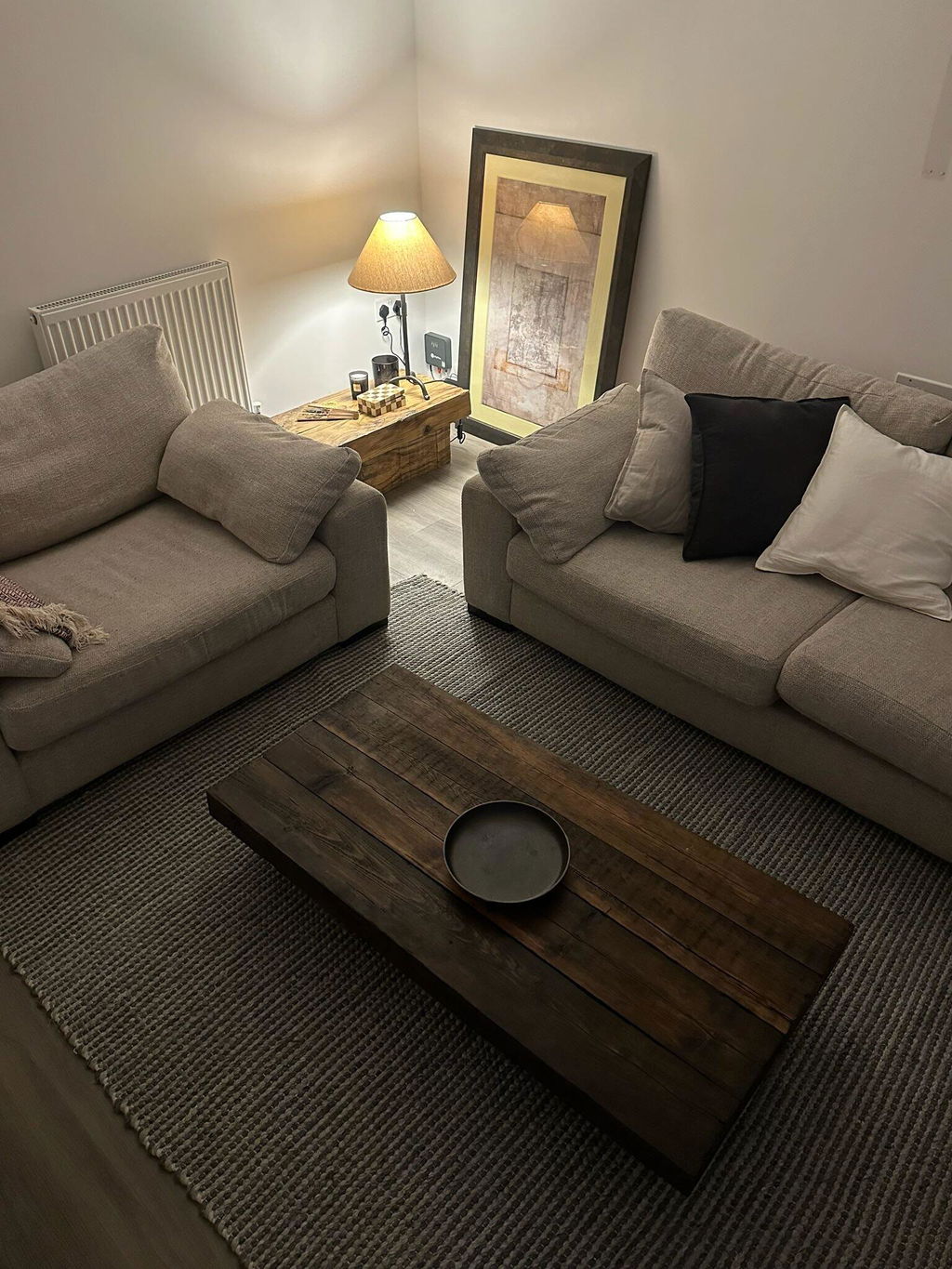

Lighting in a living room is not a single decision. It is a series of decisions that, when they work together, make the room feel right at every hour of the day. A single overhead light does one job: it illuminates the room. But illumination and atmosphere are not the same thing. A well-lit room can still feel flat, harsh, or lifeless if the light comes from one source at one height in one colour temperature.
Layering lighting means using multiple light sources at different heights and positions to create depth, warmth, and flexibility. It is the difference between a room you can see in and a room you want to spend time in. This guide covers how to layer lighting in a living room using three types of light, where to place each one, and how to get the balance right without overcomplicating things.

The Three Layers
Every well-lit living room uses three types of light, whether the person who arranged it was thinking in those terms or not. Understanding what each layer does makes it easier to identify what your room is missing.
Ambient light is the base layer. It provides general illumination so you can move around the room safely and see what you are doing. In most homes, this is the ceiling light. The problem is that ambient light alone creates no contrast. Everything is lit evenly, which sounds useful but reads as flat. A room with only ambient light feels like a waiting room, regardless of how nice the furniture is.
Task light is focused light for specific activities: reading, working, cooking, or anything that needs more illumination than the room's general glow provides. A floor lamp beside a reading chair or a table lamp on a side table next to the sofa are classic task lighting. The key is that task light serves a purpose beyond atmosphere. It is light you use, not just light you see.
Accent light is the layer most people skip, and the one that makes the biggest difference to how a room feels. Accent light creates focal points, highlights objects or architectural features, and introduces warmth at a lower level. Candles, portable lamps, a lamp placed on a shelf or windowsill, or a low table lamp on a side table all count. Accent light does not illuminate the room. It illuminates moments within it.

How Many Light Sources Do You Need?
The often-quoted rule is five light sources per room. That is a reasonable starting point for a medium-sized living room, but the number matters less than the distribution. Three well-placed lights in a small room will outperform seven badly placed ones in a large one.
A more useful framework: you need at least one light source in each third of the room (left, centre, right when viewed from the main entrance), and at least two different heights. If every lamp in the room sits at the same level, the lighting will feel monotonous regardless of how many sources you have.
For most UK living rooms (roughly 15 to 25 square metres), aim for one overhead or central ambient source, two task or accent lamps, and one or two candles or low-level lights for the evening. That gives you four to five sources across three heights, which is enough to create genuine depth.
Height: The Detail That Changes Everything
The vertical distribution of light in a room is more important than the horizontal distribution. Light at a single height, even from multiple sources, creates a flat plane. Light at three heights creates dimension.
High light (ceiling to 150cm): Your overhead fitting and any tall floor lamps. A Chrome Column Floor Lamp at 152cm puts light at a height that most table lamps cannot reach, filling the upper portion of the room with a warm glow that bounces off the ceiling and walls. This is your room's ambient backbone.
Mid light (80cm to 120cm): Table lamps, shorter floor lamps, and any lighting that sits at seated eye level. This is where task lighting lives. A table lamp on a side table puts light exactly where you need it for reading or conversation. Mid-level light is also what makes a room feel inhabited rather than merely illuminated.
Low light (below 80cm): Candles, portable lamps, and any source placed on a coffee table or the floor. Low light creates warmth and intimacy, especially in the evening. It draws the eye downward and makes the room feel contained and safe. A silver candle holder on a coffee table with a lit taper provides almost no functional light, but the warmth it adds to the room's atmosphere is disproportionate to its brightness.

Where to Place Floor Lamps
Floor lamps are the most versatile lighting tool in a living room because they provide significant light without requiring a surface to sit on. But placement determines whether they contribute to the room or just take up space.
Beside seating, not behind it. A floor lamp placed directly behind a sofa casts the reader's own shadow across whatever they are trying to read. Position it to one side instead, angled slightly inward. The Rinto Wooden Floor Lamp works well in this position: its wooden frame and fabric shade cast a diffused, warm light that covers the seating area without creating harsh pools.
In the corner, but not in the dead corner. A floor lamp pushed into the very back corner of a room lights the corner and nothing else. Pull it forward 30 to 50cm and angle it slightly towards the room. This allows the light to wash across the adjacent wall and reach further into the space. A Kose Fabric Floor Lamp with its textured shade is particularly effective here: the fabric diffuses the light in a wide, soft arc that avoids the spotlight effect of an exposed bulb.
Flanking, not centring. If you have a long wall with a sofa against it, resist the urge to place a single floor lamp at the centre. Two lamps flanking the sofa (one at each end) creates symmetry and even distribution. If two is not practical, one lamp at the far end of the sofa from the room's main window balances the natural light from the other side during the day.

Where to Place Table Lamps
Table lamps need a surface, which means their placement is dictated by your furniture layout. But within those constraints, a few principles help.
On a side table beside the sofa: The most common and effective position. The lampshade should sit at roughly seated eye level (around 100cm from the floor when the table height is included). Too low and the bulb glares into your eyes. Too high and the light misses the reading zone. A Chrome Column Table Lamp on a stainless steel side table puts the light at exactly the right height while the chrome finish picks up reflections from the lamp, creating a subtle material connection between the two pieces.
On a console or sideboard: A table lamp here serves as accent lighting rather than task lighting. It draws the eye to that part of the room and adds warmth to a surface that might otherwise be purely decorative. The Hikari Glass Table Lamp is well suited to this: the glass base catches and refracts light, which adds visual interest to a sideboard arrangement alongside ceramics or a handmade vase.
On a windowsill: Often overlooked, but a small lamp on a deep windowsill creates a beautiful effect in the evening, both from inside and from the street. A portable lamp is ideal for this: no trailing cable, easy to move, and enough light to create a warm glow without competing with the room's other sources.
Balancing Natural and Artificial Light
Layered lighting does not operate independently of daylight. A room that feels perfectly lit at 8pm can feel overlighted at 2pm if the lamps are still on. The best approach is to think of your artificial lighting as a response to what the natural light is doing, filling in gaps as the daylight fades.
During the day, your room should rely primarily on natural light. Keep curtains open, avoid placing furniture where it blocks light paths, and let the room breathe. As the afternoon shifts into evening, introduce your lighting in stages. A table lamp first, then a floor lamp, then candles. This gradual layering mimics the natural transition from daylight to twilight and creates a much more pleasant atmosphere than switching on every lamp at once.
In winter, when daylight fades by 4pm, your artificial lighting does more work and for longer. This is when the quality and warmth of your light sources matters most. Warm white bulbs (2700K) replicate the golden quality of late afternoon light and prevent the room from feeling clinical in the evening. Most fabric and wood-shaded lamps naturally warm the light that passes through them, which is one reason natural materials tend to produce better-feeling light than metal or glass fixtures alone.

Colour Temperature and Bulb Choice
The colour temperature of your bulbs affects the atmosphere of a room as much as the placement of your lamps. It is measured in Kelvin (K), and the number tells you whether the light leans warm or cool.
For living rooms, stay between 2200K and 2700K. This range produces a warm, golden light similar to candlelight at the lower end and late-afternoon sunlight at the upper end. Anything above 3000K starts to feel cool and office-like, which works for kitchens and bathrooms but not for a space where you want to relax.
Dimmer switches, where practical, give you control over intensity without changing bulbs. A floor lamp at full brightness for reading, then dimmed to 30% for watching a film, serves two functions without needing two separate lights. Not all lamps are compatible with dimmers, so check before fitting one.
LED bulbs are the sensible choice for longevity and efficiency, but look for LEDs with a high CRI (Colour Rendering Index) of 90 or above. A high CRI means the light reproduces colours accurately, so your furniture, textiles, and decor look the way they should rather than slightly washed out or yellowish.
Lighting a Japandi Living Room
In Japandi interiors, lighting should feel inevitable rather than decorative. The lamps themselves are design objects, but the light they produce should feel natural and unforced.
Japandi lighting favours natural materials (wood, linen, paper, ceramic) over metal and glass. The reason is practical: these materials diffuse light softly rather than directing it sharply, which creates the calm, even atmosphere that defines the style. A Nami Wooden Floor Lamp with its turned wood base and fabric shade produces exactly this quality of light: warm, diffused, and present without being assertive.
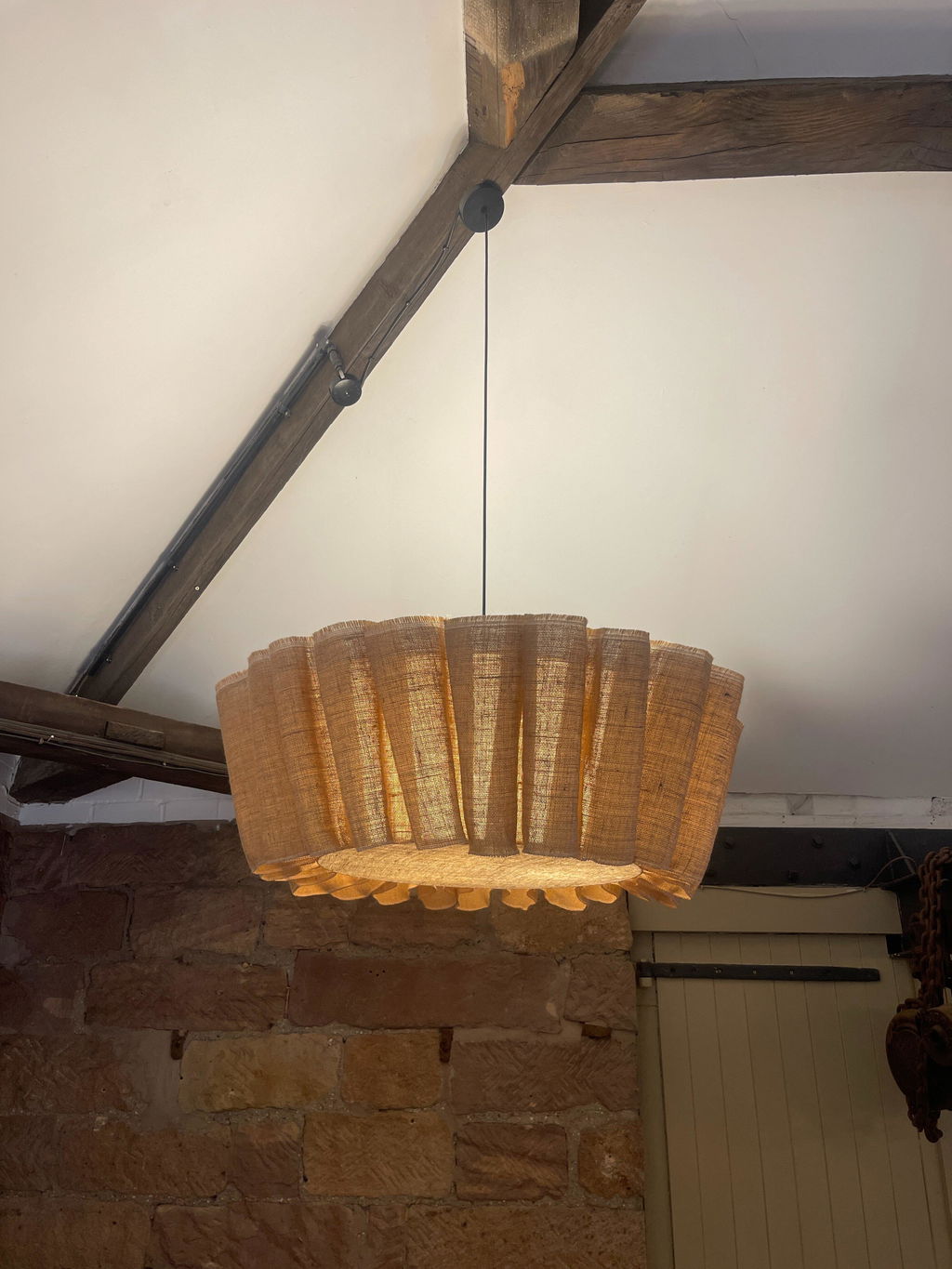
Overhead lighting in Japandi rooms tends to be soft and indirect. A linen wave pendant at 80cm diameter provides ambient light that feels closer to filtered daylight than to a ceiling fixture. Below it, a low table lamp and candlelight complete the three-height distribution without adding visual clutter.
The principle is restraint. Fewer lamps, better placed, in materials that earn their presence in the room during the day as well as the evening.

Common Mistakes
Relying on the ceiling light alone. The overhead fitting is the most unflattering light source in any room. It casts shadows downward, flattens faces, and creates no depth or warmth. Use it as one layer, not the only layer. Or consider replacing it with a pendant that diffuses light more gently.
Matching all your lamps. A pair of identical table lamps flanking a sofa is fine. But every lamp in the room in the same material and style looks like a showroom, not a home. Mix a chrome table lamp with a wooden floor lamp, or a glass base with a fabric shade elsewhere. The variety creates visual interest and allows each lamp to serve its specific role.
Forgetting the evening transition. A room that only works with the overhead light on is a room that only has one mood. Adding even one table lamp and one candle gives you three modes: daylight only, lamps and candles (evening), and full overhead (when you need to find something). The transition from overhead to lamps is what turns a living room into a living room.
Placing lamps where there are no plug sockets. Trailing cables across a room or hidden behind furniture are a safety issue and look messy. Plan lamp placement around existing sockets, or invest in a rechargeable portable lamp for positions where a cable is impractical.
Frequently Asked Questions
How many lamps should a living room have?
Most living rooms benefit from three to five light sources: one ambient (overhead or tall floor lamp), one or two task lights (table lamps or reading lamps), and one or two accent sources (candles, portable lamps, or low-level lighting). The exact number depends on room size, but distribution across different heights matters more than quantity.
Where should a floor lamp go in a living room?
Beside or slightly behind seating is the most effective position. Place it to one side of a sofa or armchair rather than directly behind, and pull it 30 to 50cm away from the wall so the light reaches into the room. A floor lamp in the corner works well if it is angled slightly inward rather than pushed flat against the wall.
What colour temperature is best for a living room?
Warm white between 2200K and 2700K. This range produces a golden, relaxing light similar to candlelight or late-afternoon sun. Avoid anything above 3000K for living spaces, as it starts to feel cool and clinical. LED bulbs with a CRI of 90 or higher give the most natural colour rendering.
Should all lamps in a room match?
No. Mixing materials and styles creates more visual interest and allows each lamp to serve its specific role. A chrome table lamp beside the sofa, a wooden floor lamp in the corner, and a glass lamp on a sideboard can all coexist if they share a similar colour temperature and scale appropriate to their position. Consistency in light quality matters more than consistency in appearance.
How do you light a living room without overhead lighting?
Use a tall floor lamp (140cm or above) as your primary ambient source, supplemented by two or three table lamps at mid height and candles or portable lamps at low level. This three-height approach can replace an overhead fitting entirely and often produces a more atmospheric result. The key is ensuring at least one source is tall enough to cast light across the upper portion of the room.
Shop Living Room Lighting
Browse floor lamps, table lamps, and portable lighting in the Fjord & Fuji lighting collection.
Shop Wooden Floor Lamps | Chrome Column Floor Lamp | Nami Wooden Floor Lamp | Shop All Table Lamps | Shop All Lighting