
A table lamp occupies a curious position in a room. It is smaller than a floor lamp but more visible than a ceiling fixture. It sits on a surface you are already looking at, usually at eye level when you are seated, which means it gets noticed in a way that overhead lighting does not. The lamp's form, material, and the quality of light it produces all contribute to the room's character, whether you intend them to or not.
Choosing the right table lamp is partly about light (where it falls, how warm it is, whether it is enough for reading) and partly about presence (how the lamp looks when it is off, which is most of the day). The best table lamps do both. They produce the right light for the right task and they sit on their surface as objects worth having, even before you reach for the switch.
This guide covers how to choose a table lamp for living rooms, bedrooms, and desks, including height, shade type, base material, and how the lamp relates to the surface it sits on.

Height: Getting the Proportions Right
The height of a table lamp is not an isolated decision. It is a relationship between the lamp, the table it sits on, and the seat it serves.
The functional rule: when you are seated, the bottom of the lampshade should sit at approximately eye level. This means the light source is beside you rather than above you or below you. Light at eye level illuminates whatever you are doing (reading, working, eating) without glaring into your eyes or casting your own shadow across the task.
The maths: take your seated eye height (approximately 100cm to 110cm from the floor), subtract the height of the table the lamp will sit on (typically 50cm to 65cm for a side table), and the remaining number is the lamp height you need. For most arrangements, a lamp of 35cm to 55cm works on a standard side table.
The Nami Wooden Table Lamp on a stainless steel side table puts the light at exactly the right height for reading beside a sofa. On a taller console or sideboard (80cm+), the same lamp would sit too high for task lighting but would work well as accent lighting, where precise positioning matters less than the quality of the glow.
The aesthetic rule: the lamp should not be taller than one and a half times the height of the table it sits on. A lamp that towers over its table looks top-heavy. A lamp that barely rises above the table surface looks insignificant. The proportional relationship between the two is what makes the pairing look deliberate.

Shade Type: Directing the Light
The shade does more work than the bulb. It determines how much light escapes, in which directions, and at what quality.
Fabric drum shades are the most versatile. They cast light both upward (through the open top) and outward (through the fabric), producing an even, diffused glow that works in virtually any room. The Nami Table Lamp uses this approach: the fabric softens the bulb's output, and the upward light bounces off the ceiling to add ambient coverage beyond the lamp's immediate area.
Pleated shades add texture to the light. Each pleat catches the glow at a slightly different angle, creating subtle variation across the shade's surface. The Rinkaku Table Lamp uses a hand-stitched pleated shade that gives the lamp an animated, warm quality when lit, distinct from the smooth, uniform glow of a flat fabric shade.
Glass shades are a different proposition. Frosted glass diffuses light similarly to fabric but with a cooler, crisper quality. Clear glass provides no diffusion at all, which means the bulb is visible and the light is more directional. The Hikari Glass Table Lamp uses a glass base that refracts and catches light, adding a decorative element that extends beyond the shade itself.
Opaque metal or ceramic shades direct light downward only, creating a focused pool beneath the lamp with no ambient spill. This is pure task lighting: excellent for a desk, wrong for a bedside table where you want soft, room-filling glow. If you need focused desk light, an adjustable metal shade is the right tool. For everything else, fabric or glass is more versatile.

Base Material: The Lamp as Object
A table lamp is switched off for roughly 16 hours a day. During those hours, it is a decorative object on a surface you look at regularly. The base material determines whether it contributes to the room during those hours or simply waits for the evening.
Wood. A turned wooden base brings craft and organic warmth. It connects to wooden furniture, woven textiles, and ceramic decor in the room, making it the natural choice for Japandi interiors. The Rinkaku and Nami table lamps both use solid wood bases that function as small sculptures during the day.
Chrome and stainless steel. Metal bases introduce cool, reflective precision. On a wooden or woven surface, a metal lamp creates the kind of material contrast that makes both the lamp and the table more interesting. The Chrome Column Table Lamp is the strongest expression of this: the polished chrome catches and reflects whatever surrounds it, making it responsive to its environment in a way that matte materials cannot replicate.
Marble and stone. A stone base adds weight and sculptural gravitas. The Marble Column Table Lamp at £590 has the visual and physical heft of a serious design piece. The natural veining in the marble means no two are identical, which gives it the same handmade quality as ceramic, but in a harder, more permanent material. Marble pairs well with clean, modern surfaces and holds its own beside larger furniture pieces.
Glass. A glass base does something no other material can: it lets you see through the lamp. This transparency gives the lamp a lighter visual footprint, which is useful on surfaces where you do not want the lamp to dominate. The Hikari uses this quality to decorative effect, with the glass catching and refracting both natural and artificial light.

Table Lamps by Room
Living Room
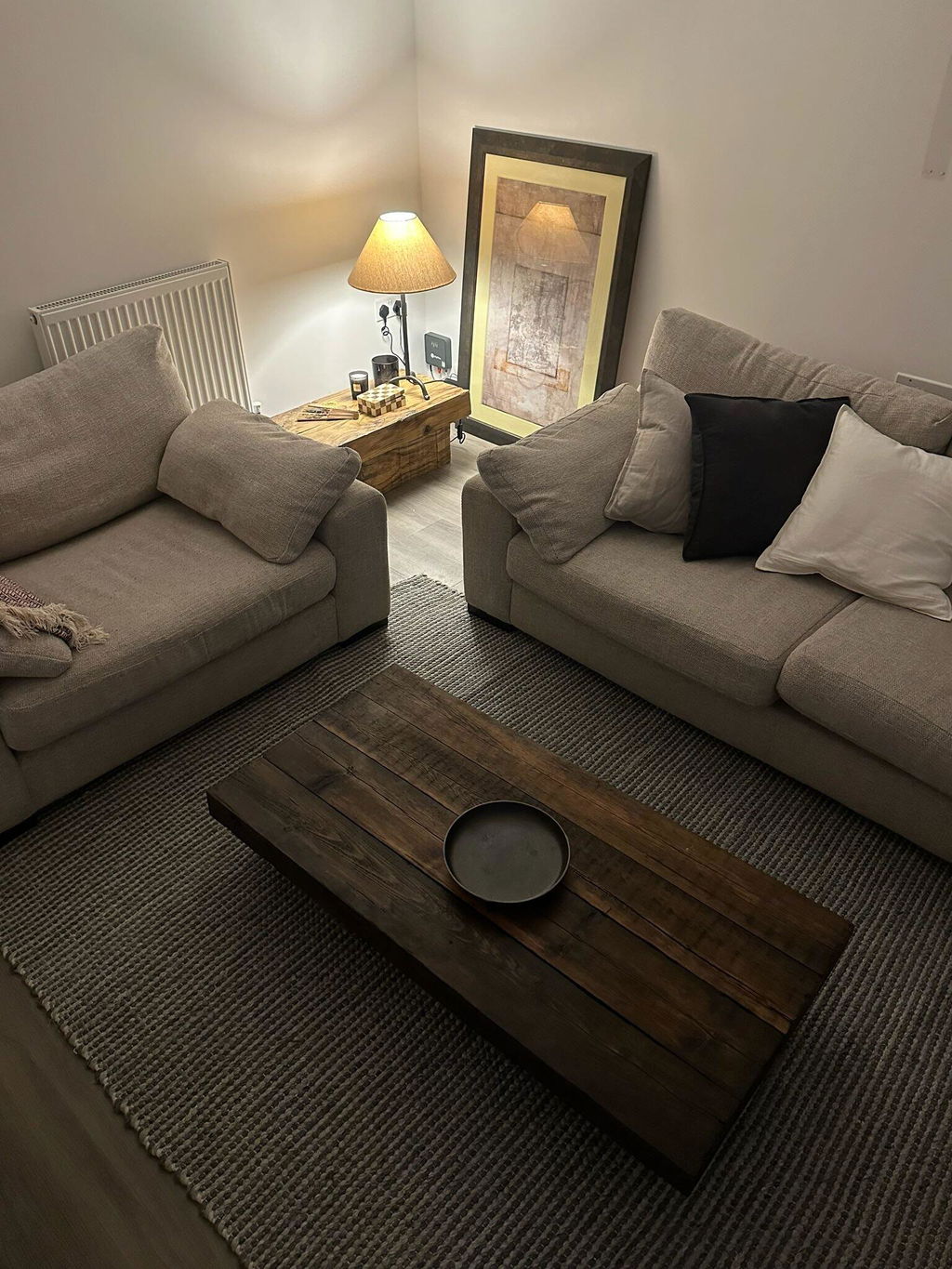
In a living room, a table lamp serves two roles: task light for reading and accent light for atmosphere. Position it on a side table beside the sofa, where it provides reading light within arm's reach and adds a warm glow to the seating area in the evening.
The lamp should complement, not match, the floor lamp in the room. If your floor lamp has a wooden base, consider a chrome or glass table lamp for contrast. If the floor lamp is metal, a wooden or marble table lamp provides the warm counterpoint. This material variation across your lighting layers prevents the room from feeling like everything was bought as a set.
Bedroom
A bedside table lamp needs to provide enough light for reading in bed without illuminating the entire room (particularly important if one person is sleeping while the other reads). A fabric shade that casts light primarily downward and to the sides, rather than upward across the ceiling, is the better choice here.
Height matters more on a bedside table than anywhere else. When you are lying in bed propped on a pillow, your eye level is roughly 80cm from the floor. The bedside table is typically 55cm to 65cm. A lamp of 30cm to 40cm puts the shade at the right height for reading without the bulb glaring into your eyes when you turn over.
The Stainless Steel Portable Lamp is worth considering for bedside use. It is rechargeable (no cable trailing to a socket behind the bed), dimmable (bright for reading, low for ambient), and compact enough for a small bedside surface. The lack of a cable is a genuine practical advantage in a bedroom, where sockets are rarely where you want them.

Desk and Home Office
A desk lamp prioritises function over atmosphere. The light should be bright enough to work under, positioned to avoid screen glare, and focused enough that it illuminates the work surface without washing out the rest of the room.
Position the lamp on the opposite side from your writing hand (left side for right-handed people) to avoid casting a shadow across whatever you are writing or reading. If you work primarily on a screen, place the lamp to one side rather than directly behind the screen, where it will create a bright spot in your peripheral vision that causes eye fatigue.
For home offices where the room doubles as a living space, a lamp that works as both task light and decorative object is more practical than a purely functional desk lamp. The Hikari Glass Table Lamp straddles this line: decorative enough for a living room console, bright enough for focused desk work.
On a Console, Shelf, or Sideboard
A table lamp on a console or sideboard is primarily decorative. It adds a warm focal point to a surface that might otherwise feel flat, and in the evening it provides low-level ambient light that contributes to the room's atmosphere without being relied upon for any specific task.
In this position, the lamp's appearance matters more than its output. Choose based on the base material and form. A marble lamp on a wooden sideboard creates a strong material statement. A wooden lamp beside ceramic vases and a metal tray creates a material grouping that connects the lamp to the decor around it.

The Lamp and the Table
The relationship between a table lamp and its table is a small composition in itself, and getting it right makes both pieces look better.
The lamp should occupy no more than a third of the table's surface. A lamp that takes up half the table or more leaves no room for anything else and makes the table look like a lamp stand rather than a piece of furniture. On a side table of 35cm x 35cm, a lamp with a base diameter of 12cm to 15cm leaves space for a cup, a book, or a small decorative object alongside it.
Material contrast between the lamp and the table is more interesting than matching. A chrome lamp on a chrome table looks like a display stand. A chrome lamp on a woven wooden table creates a conversation between polished and organic that makes both pieces more visible.
Bulbs and Colour Temperature
The same rules apply as for floor lamps: warm white LEDs at 2700K for living rooms and bedrooms, with a CRI of 90 or above for accurate colour rendering. On a desk, you can push to 3000K for a slightly brighter, more alert quality of light, but anything above that starts to feel like an office.
Dimmable bulbs are particularly useful in table lamps because the same lamp often serves multiple roles: bright for reading, dimmed for evening atmosphere, dimmed further for bedside ambience. Check that both the lamp and the bulb support dimming before buying a dimmer switch or smart bulb.
Most table lamps use an E14 (small screw) or E27 (large screw) fitting. Check the lamp's specification before buying bulbs. The wrong fitting is a surprisingly common and entirely avoidable mistake.

Common Mistakes
A lamp too big for its table. If the shade overhangs the edge of the table, the lamp is too large. It looks precarious and dominates the surface. Scale the lamp to the table, not the other way around.
A lamp too small for the room. A tiny table lamp in a large living room provides a pinprick of light that illuminates nothing useful. If the room is large, the lamp needs to be substantial enough to hold its own visually and to produce enough light to serve its purpose.
Matching all your table lamps. Two identical table lamps flanking a bed is fine: the symmetry is the point. But every table lamp in every room in the same style looks like a bulk purchase. Vary the material and form from room to room. A wooden lamp in the living room, a glass lamp in the bedroom, a metal lamp on the console. Each room gets its own character.
Placing the lamp where there is no socket. A trailing extension lead across the room to reach a table lamp is unsightly and unsafe. Plan lamp placement around existing sockets, or use a rechargeable portable lamp where sockets are impractical.
Frequently Asked Questions
How tall should a table lamp be?
The bottom of the lampshade should sit at approximately seated eye level (100cm to 110cm from the floor). Subtract the height of the table from this number to find the ideal lamp height. For most side tables (50cm to 65cm tall), a lamp of 35cm to 55cm works well. On a bedside table, aim for 30cm to 40cm so the shade sits at eye level when you are lying in bed propped on a pillow.
What table lamp gives the best light for reading?
A lamp with a fabric shade that casts light both downward and to the sides, positioned on a side table within arm's reach of your seat. Warm white LED bulbs at 2700K with a CRI of 90 or above provide comfortable, accurate light. Avoid opaque metal shades for reading lamps, as they direct light in too narrow a cone and leave the surrounding area dark.
Can I use a table lamp as the main light in a room?
Not on its own. A single table lamp does not produce enough light to illuminate an entire room. However, two or three table lamps at different positions around a room can replace an overhead fitting entirely when combined with candles or a portable lamp. This multi-source approach often produces a more atmospheric result than a single ceiling light.
What is the difference between a table lamp and a desk lamp?
A table lamp balances decoration and illumination. A desk lamp prioritises focused, adjustable task lighting. Table lamps have fixed shades and are chosen partly for their appearance. Desk lamps typically have adjustable arms or necks and are chosen for their function. For a home office that doubles as a living space, a decorative table lamp that provides adequate working light is the better compromise.
Do table lamps need to match?
Not unless they flank a symmetrical arrangement (paired bedside tables, for example). In a living room, different table lamps in different materials and forms add variety and visual interest. The consistency should be in light quality (same colour temperature) rather than appearance. A chrome lamp beside the sofa and a wooden lamp on the console can coexist comfortably if both produce the same warmth of light.
Shop Table Lamps
Browse the full range of table lamps, portable lamps, and desk lighting in the Fjord & Fuji lighting collection.
Chrome Column Table Lamp | Marble Column Table Lamp | Rinkaku Table Lamp | Hikari Glass Table Lamp | Shop All Table Lamps