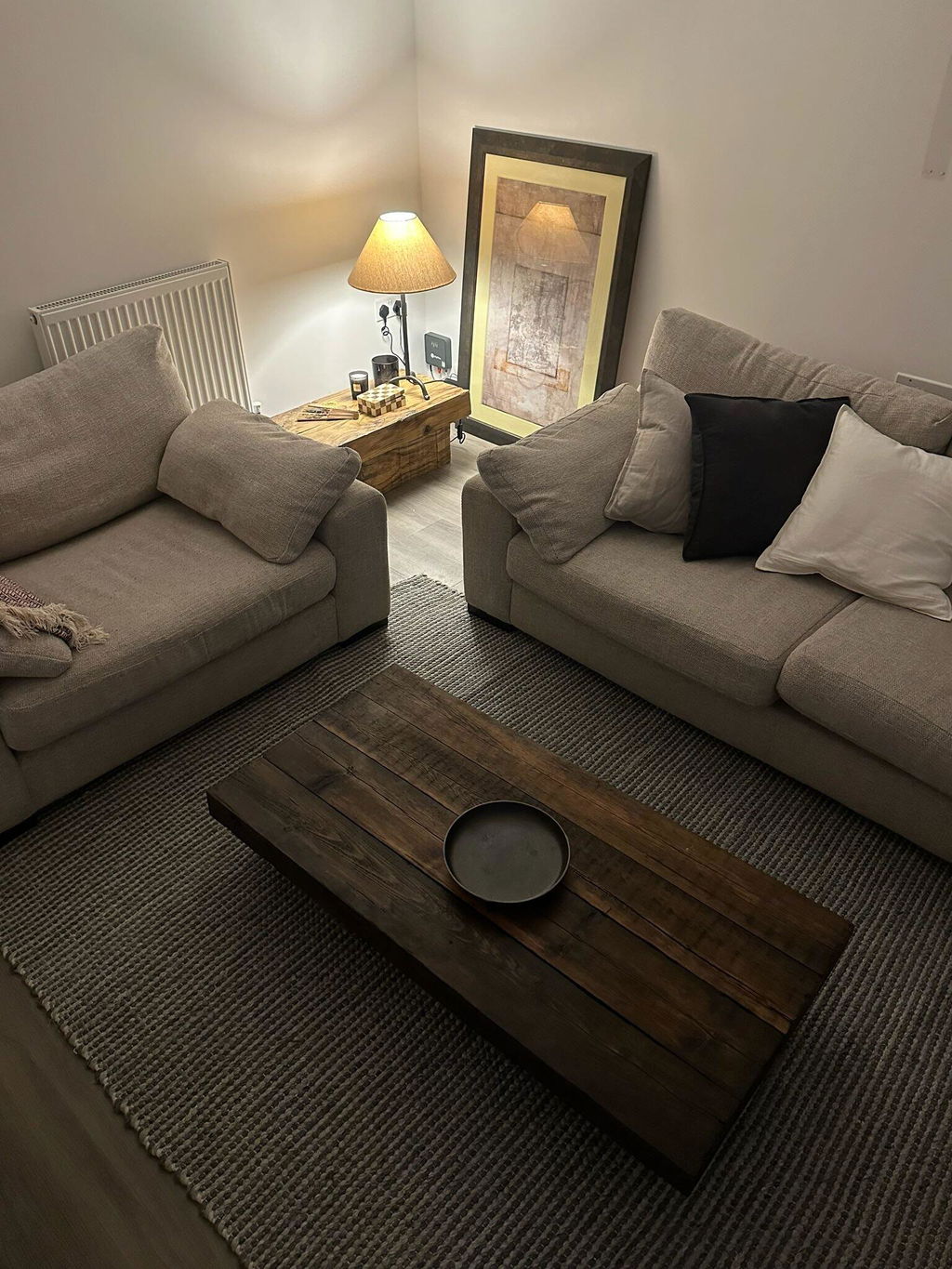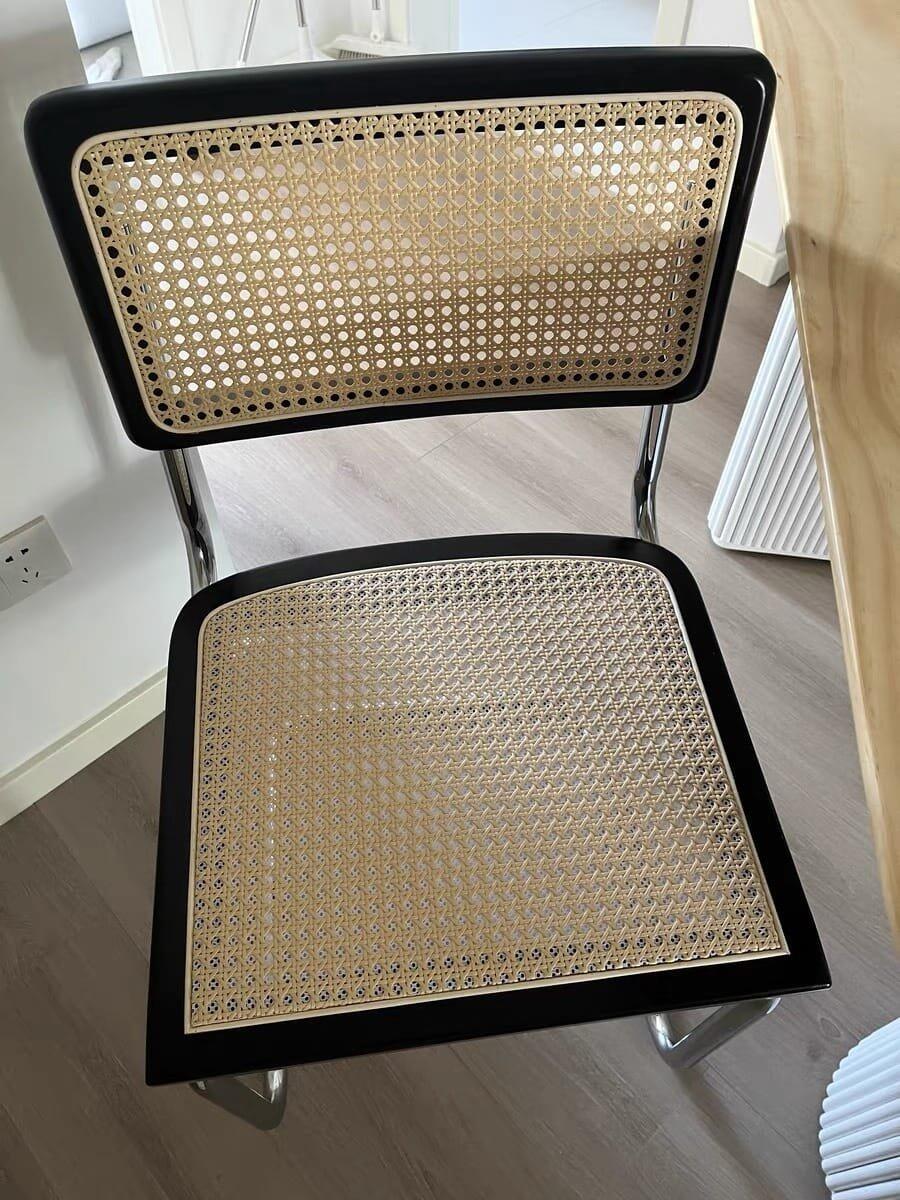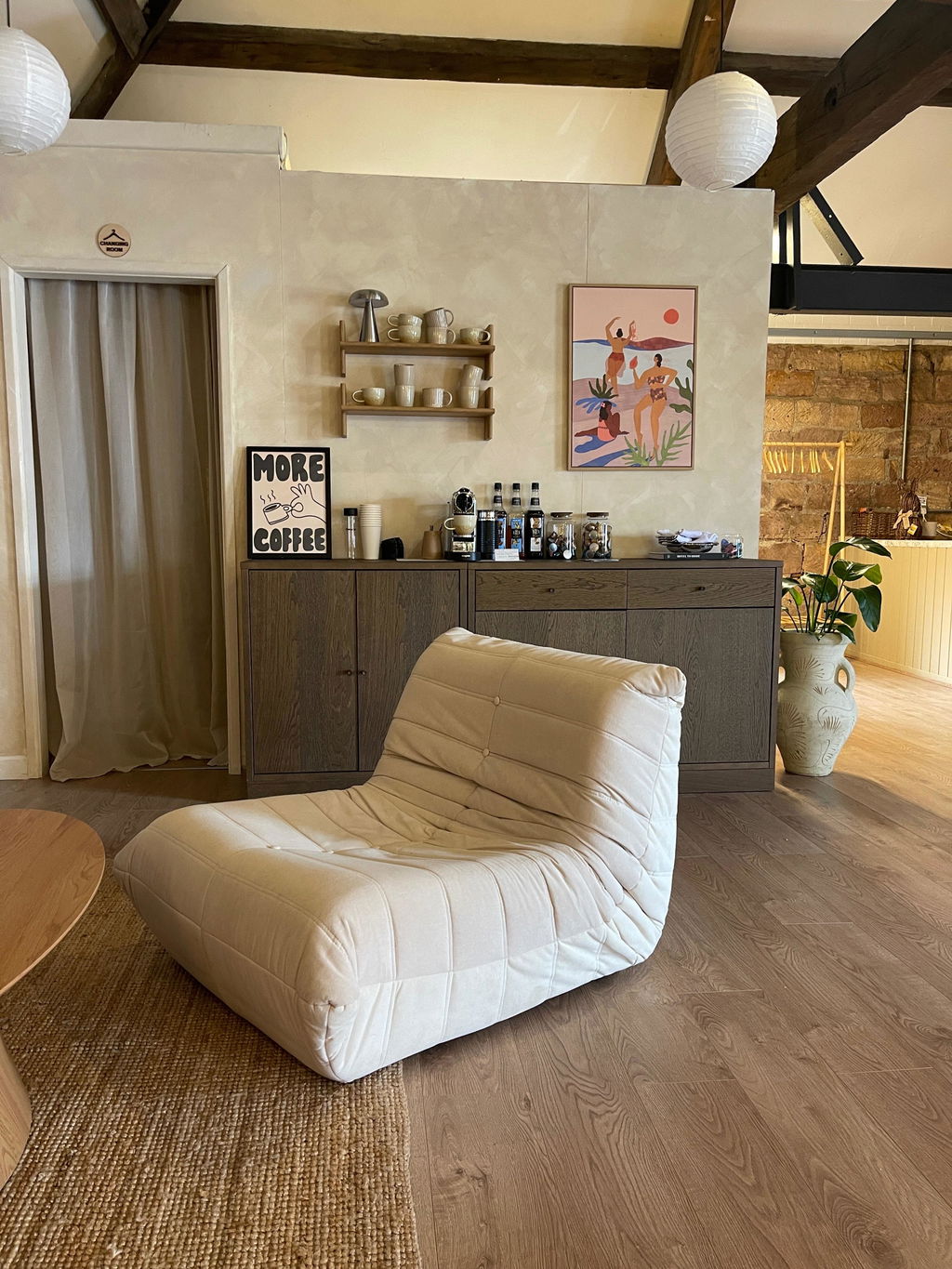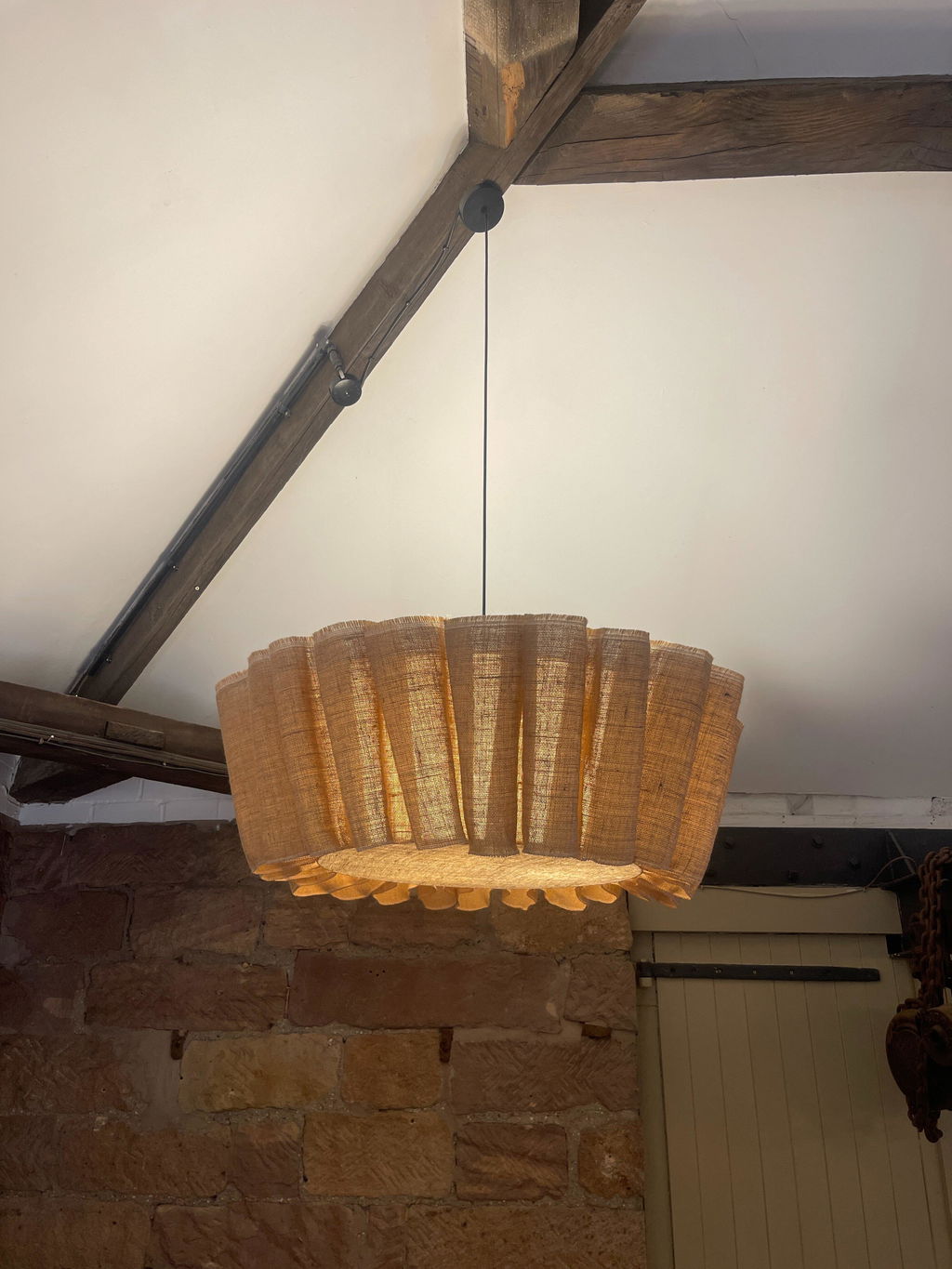

Most advice about living rooms assumes you have space to spare. Position the sofa here, add an accent chair there, place a floor lamp in the corner, style the coffee table with three objects. It works beautifully when your living room is 20 square metres or more. When it is 12, everything changes.
A small living room is not a problem to solve. It is a constraint to design within, and constraints produce some of the best-looking rooms when you stop trying to replicate a large room at reduced scale and start making decisions specific to the space you actually have. The best small living room ideas are not about tricks to make a room look bigger. They are about choosing furniture, lighting, and layout that suit the dimensions and make the most of every square centimetre.
Furniture Scale: The Most Important Decision
The single biggest mistake in small living rooms is furniture that is too large for the space. A three-seater sofa designed for a 25-square-metre room will dominate a 12-square-metre one, leaving no room for anything else and making the space feel cramped regardless of what you do with the rest of the layout.
In a small living room, every piece of furniture needs to earn its footprint. Measure the room. Measure the furniture. Then leave at least 70cm of clearance for walkways and 40cm between the sofa and the coffee table. If the furniture you are considering does not leave these clearances, it is too big, no matter how much you like it.
A single-seater sofa rather than a two-seater is often the right call in rooms under 14 square metres. It sounds like a compromise, but a well-chosen single sofa with an accent chair creates a more comfortable and better-proportioned arrangement than a large sofa that leaves no room for anything else. The Wabi Linen Sofa Single at W110cm gives you generous, deep seating without the width of a two-seater dominating the wall.

Low Furniture Opens Up the Room
Height matters as much as width in a small room. Tall furniture breaks the sightline from one side of the room to the other, which makes the space feel smaller than it is. Low furniture keeps sightlines open, letting the eye travel across the room uninterrupted.
This is one reason Japandi interiors work so well in compact spaces. The style favours low-profile furniture by default. A sofa at 82cm, a coffee table at 35 to 40cm, an accent chair at 70cm. Nothing rises above seated head height, which preserves the room's vertical openness.
The Sofuto Accent Chair at 70cm high is particularly effective in small rooms. It provides a second seat without the visual bulk of a standard armchair, and its low, floor-hugging profile keeps the upper portion of the room clear. Position it at an angle to the sofa rather than directly opposite. This opens up the floor plan and prevents the furniture from forming a rigid box within the room.

The Right Coffee Table
In a small living room, the coffee table is the piece most likely to be too big. Standard coffee tables (120cm x 60cm) are designed for rooms where the sofa sits two metres or more from the opposite wall. In a compact room, that footprint is excessive.
Consider a smaller, lighter coffee table. The Rattan Coffee Table at a lower profile has the visual lightness that small rooms need. The woven texture adds interest without the visual weight of a solid, heavy-topped table. In very tight spaces, skip the coffee table entirely and use a side table pulled within reach of the sofa instead. You lose surface area but gain floor space, and the room immediately feels more open.
Round or oval coffee tables work better than rectangular ones in small rooms because they have no corners to catch your shins or block walkways. A round table also encourages more flexible furniture arrangements since it does not impose a directional axis the way a rectangle does.

Side Tables That Work Harder
In a small living room, every piece of furniture should serve more than one purpose if possible. A side table that offers storage as well as a surface doubles its value per square centimetre of floor space.
The Magazine Rack Side Table combines a flat surface for a lamp or a cup of tea with an integrated magazine rack below. That is two functions in one footprint: surface and storage. In a room where every centimetre counts, that kind of efficiency matters.
A woven wooden side table is another option that adds textural warmth while keeping the visual weight low. The open weave lets you see through and around the table, which helps maintain the sense of openness that small rooms depend on.
Place side tables at the end of the sofa nearest the wall, where they use space that would otherwise be dead. Avoid placing them in the middle of the room or in walkways, where they become obstacles rather than assets.

Lighting a Small Living Room
Small rooms need layered lighting just as much as large rooms do, but the approach differs. In a large room, you can scatter multiple light sources across the space. In a small room, every lamp takes up space, so each one needs to justify its presence.
The most efficient approach: one floor lamp or overhead pendant for ambient light, one table lamp for task light, and candles for accent. Three sources, three purposes, minimum footprint.
For the ambient source, a Chrome Column Floor Lamp works well in compact rooms because the slim column base takes up minimal floor area. Position it in the corner behind the sofa arm, where it occupies dead space. If floor space is truly at a premium, replace the floor lamp with a pendant and reclaim the corner entirely.
For task light, a Nami Table Lamp or Hikari Glass Table Lamp on the side table provides focused reading light without a second floor-standing piece. The Stainless Steel Portable Lamp is particularly useful in small rooms: no cable, no fixed position, and it can move from the side table to the windowsill to a shelf depending on what the evening calls for.
Natural light matters even more in a small room. Keep windows unobstructed, use sheer curtains rather than heavy drapes, and avoid placing tall furniture where it blocks light paths from the window into the room.

Layout: Working with the Walls
In a large room, furniture can float in the middle of the space. In a small room, the walls are your allies. Pushing the sofa against a wall frees up floor area in the centre, which is where the sense of spaciousness comes from.
The standard small living room layout: sofa against the longest wall, coffee table or side table in front, accent chair at one end (angled inward), floor lamp in the corner at the other end. This creates an L-shaped seating arrangement that uses two walls and leaves the centre of the room open.
If the room has a fireplace or a focal point on one wall, arrange the furniture to face it rather than wrapping around the room's perimeter. A sofa facing the fireplace with a side table beside it creates a focused, intimate arrangement that makes a small room feel deliberate rather than cramped.
Avoid blocking doorways or creating narrow squeeze points between furniture. If you cannot walk comfortably between the sofa and the coffee table, the coffee table is either too big or too close. In a pinch, push the coffee table closer to the sofa (30cm gap rather than 40cm) and accept that you will need to move it slightly when people want to sit down. A room you can move through freely always feels bigger than one you have to navigate carefully.
Making the Room Feel Bigger
You cannot change the square metreage, but you can change how the room feels.
Mirrors. An organic mirror on the wall opposite the window reflects natural light back into the room, effectively doubling the light from a single source. It also creates visual depth: the eye reads the reflection as additional space. Position the mirror where it reflects something worth seeing (the window, a styled shelf, a lamp) rather than a blank wall.
Vertical space. When floor space is limited, use the walls. Floating shelves hold decor and books without a bookcase footprint. Wall-mounted lighting frees up table surfaces. Hooks and rails keep everyday items off horizontal surfaces.
Light colours. Light walls, light furniture, and light textiles reflect more light and recede visually, making the room feel more open. This does not mean everything needs to be white. Warm off-whites, pale stone, and soft linen tones all work. Dark accent pieces (a cognac vase, a dark-toned cushion) provide contrast without closing the room in.
Less on surfaces. A coffee table with one object on it looks spacious. A coffee table with six objects on it looks cluttered, and in a small room, clutter shrinks the space faster than anything else. In compact rooms, reduce the coffee table styling to one or two pieces. A ceramic candlestick and a small tray is enough. The empty surface around them is doing the work.

What Not to Do
Do not shrink everything. A room full of undersized furniture looks like a doll's house. Choose fewer pieces at the right scale rather than cramming in lots of small pieces. One properly proportioned sofa and one accent chair will always look better than a tiny sofa, two tiny chairs, and a tiny coffee table all fighting for space.
Do not block the light. Tall bookshelves beside the window, heavy curtains, furniture placed directly in front of the window. All of these kill natural light, and in a small room, natural light is your most valuable asset.
Do not fill every corner. An empty corner in a small room is not wasted space. It is breathing room. If every corner and every surface is occupied, the room feels smaller than it is. Leave at least one corner empty, even if your instinct says to put something there.
Do not ignore the floor. Visible floor space makes a room feel bigger. A rug that covers every centimetre of floor, or furniture legs hidden by skirts, reduces the perceived floor area. Choose furniture with visible legs (even short ones) and leave floor space between pieces rather than pushing everything together.
Frequently Asked Questions
What size sofa fits a small living room?
A single-seater or compact two-seater (under 150cm wide) is usually the right scale for rooms under 15 square metres. Measure the wall the sofa will sit against and ensure at least 30cm of clearance on each side. A sofa that fills the entire wall makes the room feel boxed in. If floor space is very tight, a single sofa plus an accent chair creates a more flexible, open arrangement than one large sofa.
How do you arrange furniture in a small living room?
Push the sofa against the longest wall and arrange other pieces in an L-shape around it. Keep the centre of the room clear. Place the coffee table (or skip it in favour of a side table) within reach of the sofa, and angle the accent chair at one end rather than placing it directly opposite. Leave at least 70cm for walkways and keep furniture away from doorways.
What lighting works best in a small living room?
One slim floor lamp or pendant for ambient light, one table lamp on a side table for task light, and candles for evening atmosphere. Three sources is enough. Avoid multiple floor lamps, which take up too much floor space. A rechargeable portable lamp is useful in small rooms because it moves where you need it without a trailing cable.
How do you make a small living room look bigger?
Maximise natural light (sheer curtains, no furniture blocking windows), use a mirror opposite the window, keep furniture low-profile, choose light colours for walls and large pieces, and leave 30% to 40% of surfaces empty. Visible floor space is the strongest single factor in making a room feel larger than it is.
Should you use a coffee table in a small living room?
Only if the room is large enough to accommodate it with comfortable clearances (at least 40cm between sofa and table, 70cm walkways around). In very small rooms, a side table beside the sofa provides a surface for drinks and books without consuming central floor space. If you do use a coffee table, choose a round or oval one with a light visual weight rather than a heavy rectangular one.
Shop Small Living Room Furniture
Find compact sofas, low-profile chairs, slim side tables, and space-efficient lighting in the Fjord & Fuji furniture and lighting collections.
Wabi Linen Sofa Single | Sofuto Accent Chair | Magazine Rack Side Table | Portable Lamp | Shop All Furniture