
Home Staging in Japandi Style: The Calm Sell
A house that feels calm sells better than a house that feels full. That single idea sits behind both the Japandi aesthetic and the practice of home staging, which is why the two work so naturally together. Japandi home staging is the art of preparing a property for sale using the pared-back, neutral, natural-material look that lets a buyer walk in and immediately picture their own life in the space. It photographs beautifully, it depersonalises without feeling cold, and it signals quality without shouting. For anyone selling a home, or styling one on a client's behalf, it is one of the most effective and least gimmicky ways to present a property.
This is a guide to doing it well: why the calm, neutral approach outperforms a heavily decorated one, what the numbers actually say about staging, and how to apply it room by room.
Why staging works, and why calm wins
The commercial case for staging is well established, even if the exact figures vary by source and market. Industry bodies and UK staging firms consistently report that professionally staged homes sell for roughly 8 to 10 percent more than unstaged equivalents, that around three quarters of sellers see a return of somewhere between 5 and 15 percent, and that staged homes tend to sell substantially faster, often in a fraction of the time an unstaged property sits on the market. Treat these as directional rather than guaranteed, they come largely from the staging industry itself, but the direction is consistent and the underlying logic is sound.
The logic is simple. Most buyers cannot mentally furnish an empty or cluttered room. Staging does that work for them, showing the scale of the space, how a room functions, and the lifestyle on offer. The reason a calm, Japandi approach outperforms a busy one is that it removes the two things that stop a buyer projecting themselves into a home: clutter and personality. A room crowded with a current owner's taste, photographs and collections asks the buyer to look past someone else's life. A calm, neutral room asks nothing. It simply reads as considered, spacious and ready.
The principles of a calm sell
Japandi staging rests on a few principles that translate directly into stronger listing photography and faster viewings.
Depersonalise, but do not strip. The mistake with conventional staging advice is to remove everything until a room feels like a budget hotel. Japandi does the opposite: it keeps warmth through natural materials and a few considered objects, while removing anything that ties the room to the current owner. A linen sofa, a timber lamp and a single ceramic vase depersonalise a room far more warmly than bare walls and a scented candle.
Work in a neutral, warm palette. Stone, oat, off-white, warm grey and pale timber form the base. These tones photograph well in almost any light, appeal to the widest pool of buyers, and make rooms feel larger and brighter. Save colour for one or two small accents. For a property being sold over autumn or winter, a deeper scheme can photograph just as distinctively; our guide to dark Japandi covers the moodier palette without losing the calm.
Let light do the work. Staging is really photography preparation, and light is what sells a photo. Layer warm lighting rather than relying on a single overhead fitting, and maximise natural light at every viewing.

Leave negative space. Empty space reads as generous space. Resist filling every surface. A styled shelf with three objects sells better than a full one, and a clear floor makes a room look larger in photographs.
Room by room
Staging effort should follow the rooms that sell the house: the living room, the main bedroom, the kitchen and dining area, and the entrance. These are the spaces buyers weight most heavily and that carry the listing photographs.
The living room
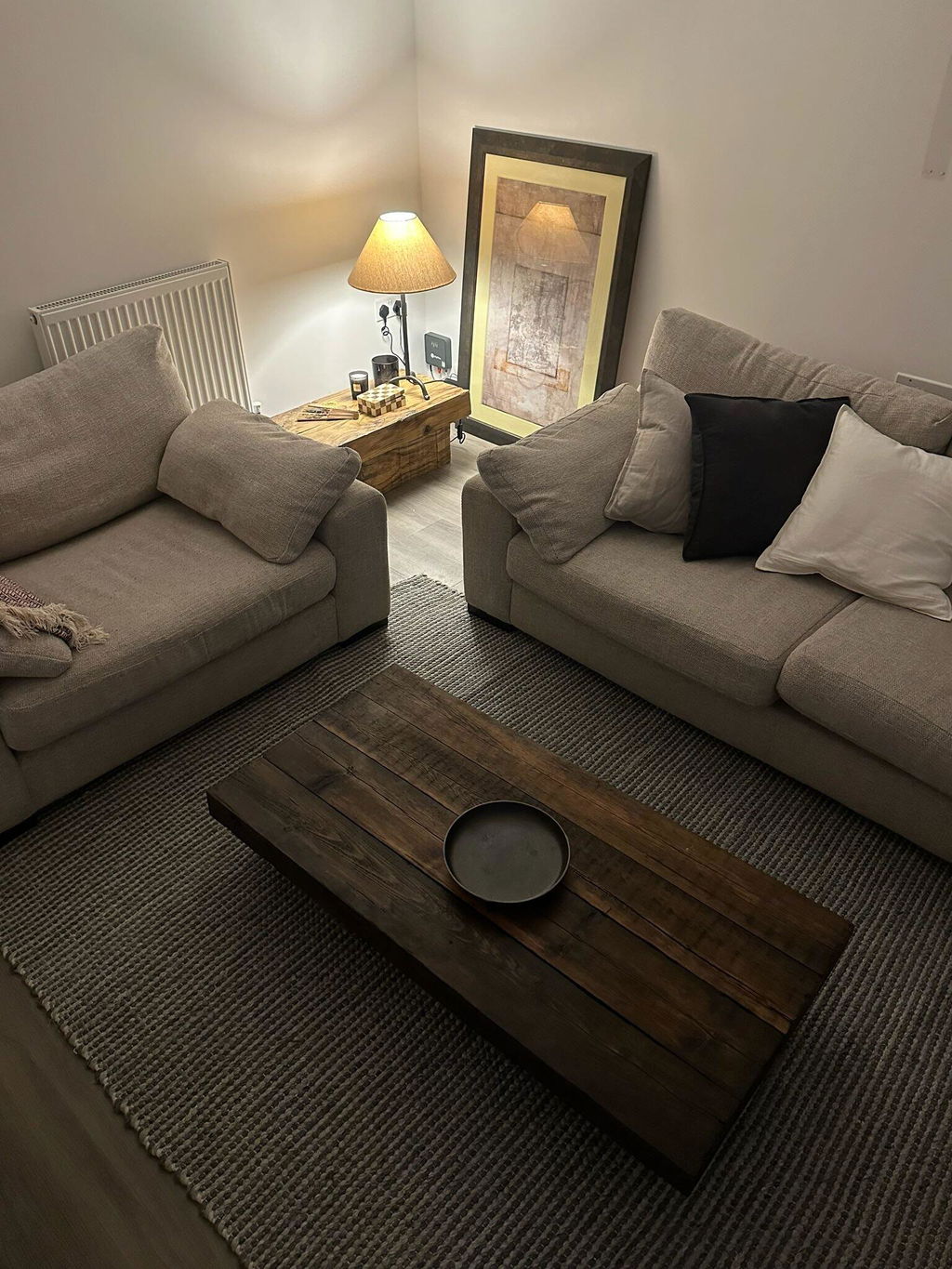
This is the hero shot of most listings, so it earns the most attention. A neutral upholstered sofa is the anchor. The Wabi Linen Sofa in Stone is close to ideal for staging: its low, calm profile and mid-grey linen read as considered and photograph cleanly, and the neutral colourway suits almost any wall. Layer two cushions, not six, and keep the coffee table styled with a single object or a small stack of books. Add one warm light source such as the Kose Fabric Floor Lamp to lift the corners in photographs. For the full approach to building a calm living-room scheme, our Japandi living room ideas guide goes deeper, and how to style a linen sofa covers the cushion and throw layering that keeps a sofa looking styled rather than staged.

The main bedroom
Buyers want the main bedroom to feel like a retreat, so calm is exactly the right register. Neutral bedding in linen or cotton, a single timber bedside lamp, and almost nothing else. Remove personal items entirely: no family photographs, no clutter on the surfaces. A full-length mirror such as the Mizu Floor-Standing Full Length Mirror bounces light and adds a sense of space to a room that is often the smallest in the listing photos. Our Japandi bedroom ideas guide has the full method.

The entrance and hallway
The entrance is the first thing a viewer sees in person and often the first photo they scroll to. It sets the tone for the whole viewing, yet it is the space sellers most often neglect. Clear it completely of coats, shoes and clutter, then add one warm, considered touch: a small console, a single lamp, a mirror to bounce light. Our Japandi hallway guide covers the layout in detail. The goal is a threshold that feels calm and cared for, not a dumping ground.

The kitchen and dining area
Kitchens sell houses, and here staging is mostly about clearing. Bare the worktops back to one or two considered objects, and if there is a dining table, set it simply: a runner, a low centrepiece, a pair of place settings to suggest the lifestyle without cluttering the surface. A single ceramic accent such as the Cognac Step Vase does more on a clear surface than a full display ever could. Restraint reads as space, and space is what buyers are paying for.

Occupied versus vacant staging
Most sellers are staging a home they still live in, which is the harder scenario because it means editing a real life down to a neutral presentation. The priority is subtraction: remove roughly half of what is in each room, clear all personal items, and pare surfaces back to a few considered pieces. Occupied styling of this kind is also the cheaper route, with UK stylists typically charging in the region of a hundred to a few hundred pounds per room, against several thousand to fully furnish an empty property.
Vacant properties are easier to stage well but more expensive, since everything has to be brought in. The advantage is a completely blank canvas and, according to industry figures, a strong return: staged vacant homes are reported to sell for a meaningful premium over comparable empty ones, because an empty room reads as small and featureless in photographs while a lightly furnished one reads as generous and liveable.
In both cases the Japandi principle holds: fewer, better pieces in a warm neutral palette will always present more effectively than more pieces or a bolder scheme.
For estate agents, developers and stylists
The same approach scales to professional staging. For agents and developers presenting show homes or new-build interiors, a Japandi scheme is a low-risk specification: it appeals to the widest buyer pool, it does not date across a long sales campaign, and its natural materials wear well through repeated viewings. For the distinction between this calm, natural look and the glossier quiet-luxury alternative, our guide to Japandi vs quiet luxury sets out where each is strongest. It is also the same material philosophy that performs in short-let and hospitality staging, where the interior is doing the selling in the listing photographs. Our how to style a holiday let guide applies the same principles to rental presentation, and the pieces that stage a home for sale are the same pieces that photograph well for a booking platform.
One practical note that the data supports: stage early. Industry analysis suggests that every week a property sits unstaged erodes the eventual sale price, as the listing loses the momentum of its first weeks on the market. If staging is worth doing, it is worth doing before the photographs are taken, not after a price reduction.
Shop the staging edit
Calm, neutral pieces that present a home well for sale, available now.


Browse the full home collection
Frequently Asked Questions
Does home staging actually add value?
Industry figures consistently point the same way: professionally staged homes tend to sell for roughly 8 to 10 percent more than unstaged equivalents, and around three quarters of sellers report a return of between 5 and 15 percent. These numbers come largely from the staging industry so are best treated as directional, but the underlying reason is sound. Staging helps buyers picture themselves in a space and makes a property photograph better, which drives more viewings and stronger offers.
Why is Japandi good for home staging?
Japandi is neutral, warm and pared back, which is exactly what staging needs. Its muted palette appeals to the widest pool of buyers, its natural materials photograph well in any light, and its restraint depersonalises a room without making it feel cold or empty. It lets a buyer imagine their own life in the home, which is the whole point of staging.
How much does home staging cost in the UK?
It varies widely with property size and service level. Styling a home you still live in is the cheaper route, with many UK stylists charging in the region of a hundred to a few hundred pounds per room. Fully furnishing an empty property costs more, often several thousand pounds, because everything is brought in and hired for the sales period. Consultation-only packages for a few rooms typically start a few hundred pounds.
What should I remove when staging my home?
Start by subtracting. Remove roughly half the contents of each room, clear all personal items such as family photographs and collections, and pare back surfaces to a few considered objects. The aim is a calm, neutral space with generous negative space, not a stripped or clinical one. Keep warmth through natural materials, a linen sofa, timber, a single ceramic, while removing anything that ties the room to you.
Should I stage before or after listing?
Before, always. Staging is really preparation for the listing photographs and the crucial first weeks on the market, when a property attracts the most attention. Industry analysis suggests the sale price erodes for every week a home sits unstaged, so the value is in staging early rather than after a price reduction.