
Scandinavian Christmas Decor: A Calm, Natural Guide
Scandinavian Christmas decor is less about what you hang and more about how the room is lit. In Denmark, Sweden and Norway, December is the darkest month of the year, and the decorating answer has always been light first: candles in the window, lamps on at dusk, a table lit low, with greenery, wood and paper doing the rest. Very little of it is bought new each year, and almost none of it is glitter.
When we researched what people in the UK actually search for this autumn, the pattern was clear. Phrases about Scandinavian Christmas decorating and decor (around 1,000 and 720 searches a month) far outnumber searches for Scandinavian tree decorations (around 140). People want the feeling of the room, not a shopping list of ornaments. That matches our own experience: this autumn we have built much of our photography and video around a single rule, leave the big light off and light the lamps at dusk, and it is the closest thing to a Scandinavian Christmas you can create without buying a single bauble.
This guide is how we would do it: light, natural materials, a calm table and a short list of what to leave out.
What makes Scandinavian Christmas decor different
Three things separate a Scandinavian Christmas from the high street version.
- Light is the main decoration. Candles, window lights and low lamps carry the season. Decorations are secondary.
- Materials come from the house and the forest. Wood, paper, straw, wool, linen, stoneware and evergreen branches, rather than plastic and tinsel.
- Restraint. A few pieces chosen well, repeated every year, often handmade by the family. The room still looks like itself in December, only warmer.
The colour palette follows: white and cream, pale and dark wood, the green of fir and spruce, and one accent, usually red, used sparingly. If you already live with natural materials and a quiet palette, as in our Japandi living room guide, you are most of the way there.
Start with light, not decorations
The Scandinavian relationship with candles is not a style trend; it is habit. According to the European Candle Association, Denmark burns more candles per person than any other country in Europe, around six kilos of wax per person each year. Danes even have a word for a spoilsport, lyseslukker, which literally means the one who puts out the candles.
Two Christmas traditions show how central light is:
- The Danish calendar candle (kalenderlys). A tall candle marked 1 to 24, burned down one number each evening of December until Christmas Eve.
- The Swedish electric Advent candelabra. The stepped candlestick you see in Swedish windows was designed in 1934 by Oskar Andersson, who worked for Philips in Gothenburg, and reached the shops in 1937. By the 1990s, a survey found 92 per cent of Swedish households put one up.
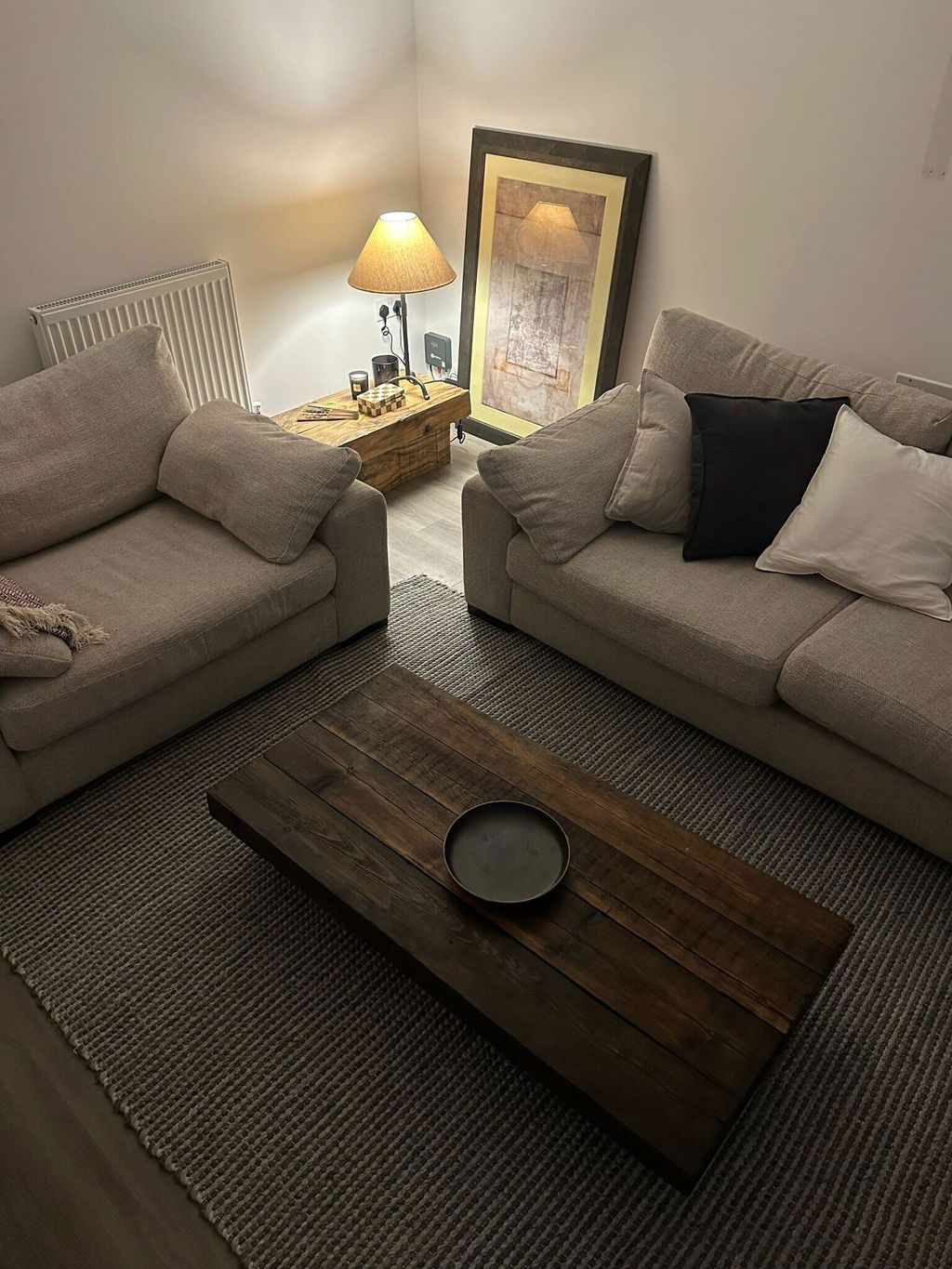
In the UK the sun sets just before 4pm around the winter solstice, so the same logic applies here. Our approach is simple: turn the lamps on while there is still a little blue in the window, and keep the ceiling light off for the evening. Light at low level, from several sources, makes a room feel lived in rather than lit. Our dark Japandi guide goes deeper on why low, warm light works.
For candles, the Tsuya polished candle holders come in three sculptural forms, Spoon, Disc and U. Grouped on a coffee table or windowsill, the polished metal reflects each flame, so three tealights read as six.

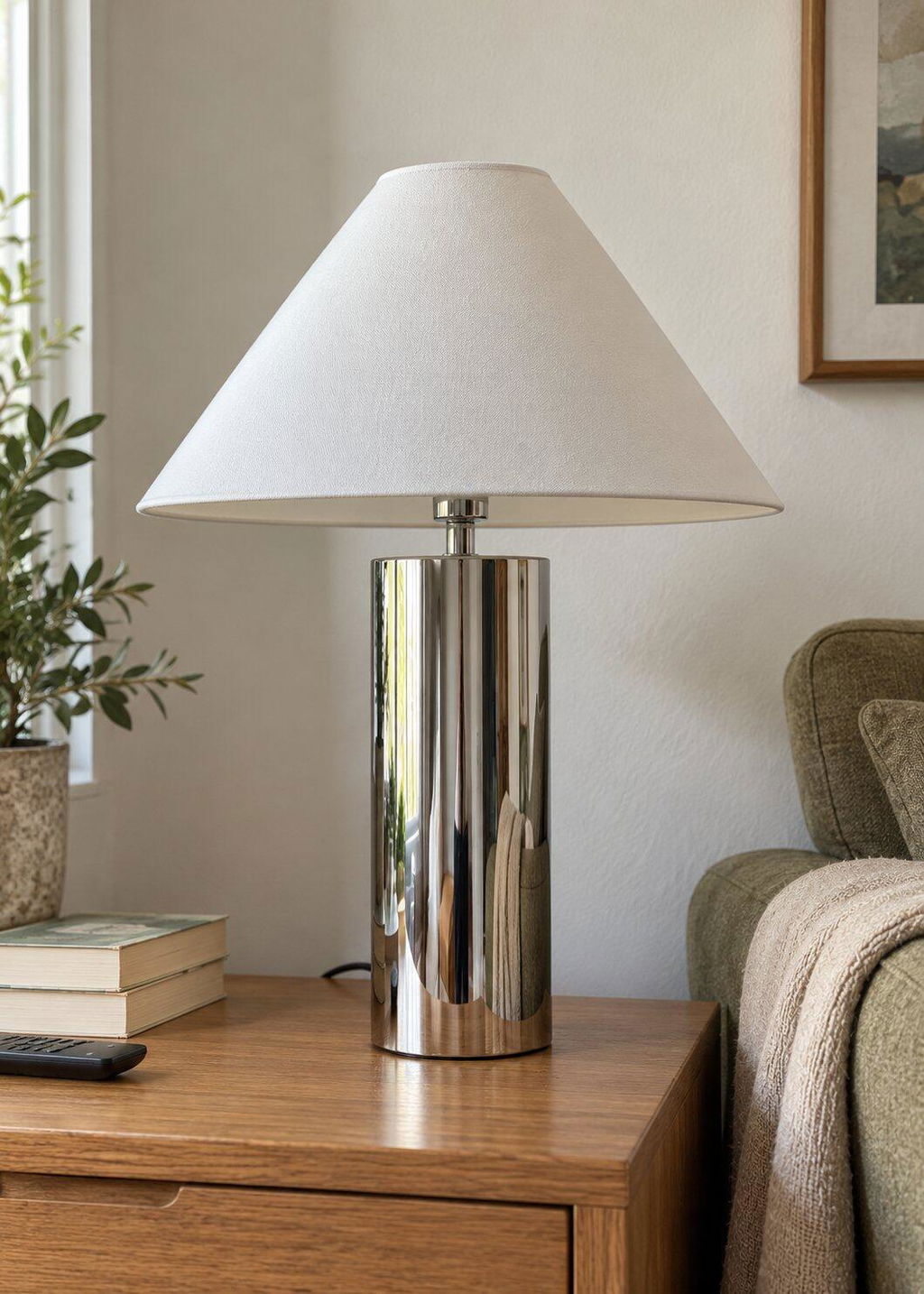
For lamps, think in layers: one floor lamp by the sofa, one table lamp at a lower height elsewhere in the room. The Kose fabric floor lamp stands 150cm with a wide fabric shade that diffuses a soft, ambient glow beside a sofa. On a sideboard or a deep windowsill, the Hikari glass table lamp gives a smooth golden light through its mushroom-shaped glass shade, close to the quality of candlelight, and the Rinkaku wooden table lamp is the quieter choice for a bedside or a reading corner. The rest are in our floor lamps and table lamps.

A note on window lights: a single lamp on a deep windowsill, or a row of flameless candles, gives the Scandinavian window effect from the street without a trailing cable of fairy lights.
Bring in natural materials
Traditional Scandinavian Christmas decorations are made, not bought, and most are made from paper, straw or wood.
- Woven paper hearts (julehjerter). The Danish pleated heart is woven from two colours of paper into a small basket that can hold sweets or a sprig of pine. The Hans Christian Andersen Museum in Odense holds a heart made by Andersen himself in 1860, and the National Museum of Norway keeps one dated 1873. They took off as tree decorations in the early twentieth century, and they are still the easiest Scandinavian Christmas decoration to make at the kitchen table.
- Straw mobiles (himmeli). Geometric mobiles of straw, traditionally rye straw from the best of the harvest, hung over the dining table. In the old tradition, the larger the himmeli, the bigger the rye crop the following year.
- Branches, not bouquets. A few cut stems of fir, spruce, eucalyptus or bare birch in a vase do more than a florist's arrangement. Cut them a little longer than feels right; height is what makes them look deliberate.
For branches, choose a vase with weight and a wide base so tall stems do not tip. The Cognac step vase, a deep amber to burnt-orange glaze on a round body, suits a single tall spray of fir. The Sora pleated vase is low and wide, better for a loose pile of short evergreen cuttings, pine cones and a few dried seed heads in the centre of a table. Our guide to choosing and styling ceramic vases covers proportion in more detail, and the full range is in our ceramic and stoneware vases.

Scandinavian Christmas tree decorations
A Scandinavian tree is lighter than the British default. Keep it to one or two materials and let the branches show through.
- Paper hearts and paper stars, in white with one other colour.
- Straw ornaments, wooden beads or simple wooden shapes.
- Warm white lights only, threaded deep into the tree rather than wrapped around the outside.
- Real candles on the tree are still a Danish tradition. We would not do it at home; flameless candles give a similar effect.
If there is no room for a full tree, a few branches in a heavy vase, hung with three or four paper hearts, is a very Scandinavian alternative.
A Scandinavian Christmas table
In Denmark, Sweden and Norway the main celebration is on Christmas Eve, and the table is where the decorating effort goes. The same rules apply: low light, natural materials, nothing that stops people seeing each other across the table.
Our Christmas table setting decoration ideas, in order:
- Start with a cloth or a linen runner in a natural colour. A plain surface makes everything on it look intentional.
- Use plates with character. Hand-thrown pieces like the Mura hand-thrown plates, with their deliberately uneven rims, look festive on their own without needing a pattern. For a larger table, the Yume stoneware dinner set covers four people in a calm cream, and the Tetsu brushed steel side plates add a little shine next to ceramic.
- Run greenery down the centre, low. Loose sprigs of fir, a few pine cones and clementines, kept below eye level.
- Light it with candles at different heights. Tapers and tealights together, grouped rather than spaced evenly. Keep the overhead light dimmed or off; our guide to dining room lighting explains how to balance a pendant with candlelight.
- One small thing at each place. A paper heart, a sprig of rosemary tied with string, or a handwritten name on a card.

For more on mixing handmade pieces with what you already own, see our guide to handmade tableware, or browse our handmade ceramic tableware.
Textiles for the long evenings
Wool, linen and heavier weaves come out in December. In a Scandinavian living room that usually means a knitted throw over the arm of the sofa and one or two cushion covers swapped for something warmer in colour.
The Kohi herringbone cushion cover in caramel chenille and the Edo patterned cover, a woven branch motif in deep brown with flecks of gold, both work as a seasonal swap without turning the sofa red and green. Pair either with plain linen in oat or stone. Our guide to arranging cushions on a sofa covers numbers and placement, and the full range is in our textured cushion covers.
What to leave out
Scandinavian Christmas decor is as much about editing as adding. In our view, these are the things that undo the look fastest:
- Cool white or colour-changing lights. Stick to warm white throughout the house.
- Tinsel, glitter and metallic plastics. If you want shine, let it come from candlelight on glass and polished steel.
- Too many colours. Pick white, wood and green, then one accent, and repeat it rather than adding more.
- Decorating every surface. Choose two or three places, usually the window, the table and one corner of the living room, and leave the rest calm.
- The big light. Turn it off for the evening and let the lamps and candles do the work.
Candle safety
A home lit by candles needs a little care, especially in December when trees dry out and decorations are close together. London Fire Brigade's advice is to keep candles well away from Christmas decorations, use a heat-resistant holder on a stable surface, never leave them burning unattended, and make sure they are fully out before bed. They also suggest battery-powered flameless candles, which are a good choice for windows, trees and anywhere near children or pets.
Shop the Scandinavian Christmas edit
Start with light, then add one or two natural pieces. If you are buying for someone else this year, our gift guide for the home has ideas by budget.
Several of our lamps are made to order. If you want one in place for December, order early, or email contact@fjordandfuji.com to check timings first.
Frequently Asked Questions
What is Scandinavian Christmas decor?
Scandinavian Christmas decor is a calm, natural way of decorating built around light. It uses candles, warm lamps and window lights first, then natural materials such as wood, paper, straw, linen and evergreen branches, in a palette of white, wood and green with one accent colour.
How do you decorate for Christmas the Scandinavian way?
Start with light: candles in groups, lamps on at dusk and the ceiling light off. Add a few natural decorations such as woven paper hearts, straw ornaments and branches in a heavy vase, set a low, candlelit table, and leave most surfaces calm.
What colours are used in Scandinavian Christmas decorations?
White and cream, pale and dark wood, and the green of fir and spruce, with one accent used sparingly, most often red. Warm white lights keep the palette soft.
What are traditional Scandinavian Christmas tree decorations?
Woven paper hearts, paper stars, straw ornaments and simple wooden shapes, with warm white lights. Danish families still sometimes use real candles on the tree; flameless candles are the safer choice at home.
How do you set a Scandinavian Christmas table?
Use a natural linen cloth or runner, plates with character such as hand-thrown stoneware, a low line of greenery down the centre, and candles at different heights. Keep the overhead light dimmed or off.